VA Loan Calculator Guide: Payment, Funding Fee, Eligibility, and No-PMI Mortgage Math
People searching for a VA loan calculator usually are not looking for generic mortgage math. They are trying to see how zero-down buying power, the VA funding fee, taxes, insurance, and lender approval rules fit together before they make an offer. In July 2026 that search intent remains highly commercial because elevated mortgage rates still make every payment detail matter, while eligible buyers keep comparing VA benefits against conventional and FHA alternatives.
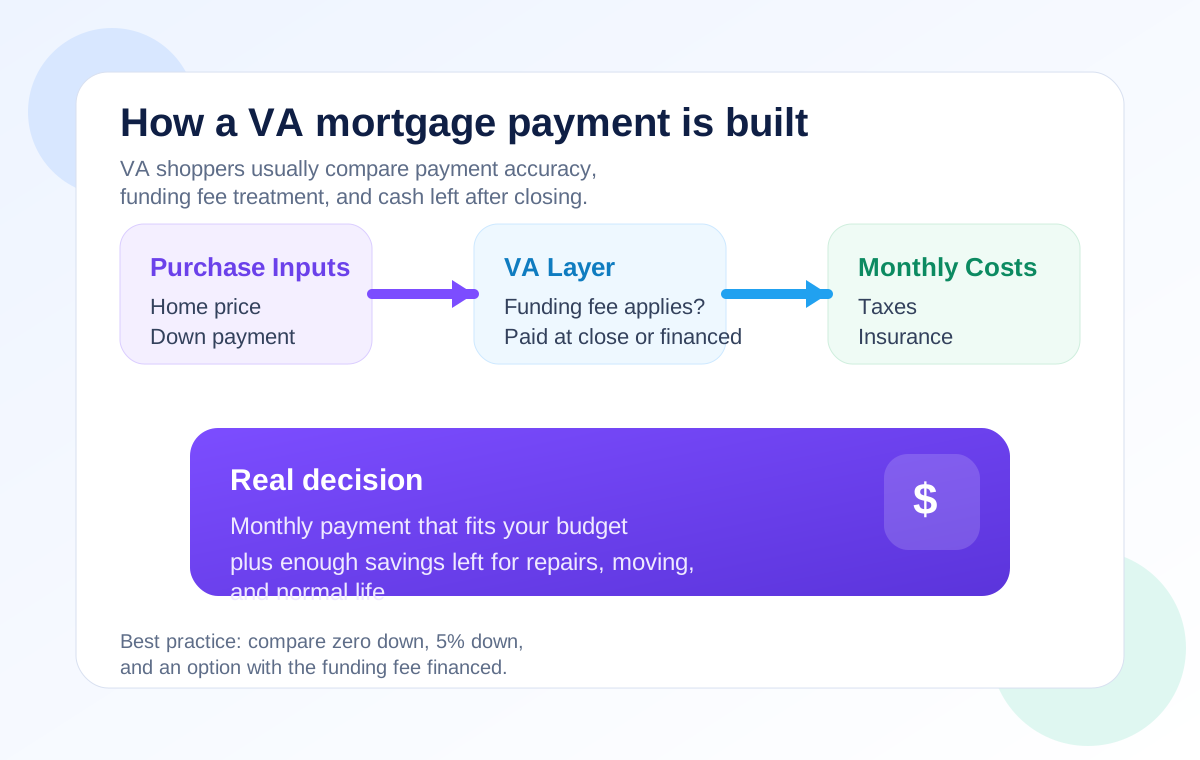
Run the base mortgage math first, then layer in the VA-specific costs.
Open the Mortgage CalculatorQuick answer: what a VA loan calculator should do
A useful VA loan calculator should estimate principal and interest, property taxes, homeowners insurance, and the VA funding fee when it applies, while helping you compare zero-down convenience against the higher financed balance that can follow.
If the calculator skips the funding fee or ignores taxes and insurance, it misses the reason most people search for this topic.
What people are obviously searching for
The main keyword cluster is direct and purchase-oriented:
- va loan calculator
- va mortgage calculator
- va home loan calculator
- va loan calculator with funding fee
- va monthly payment calculator
- va loan closing costs calculator
- va mortgage calculator with taxes and insurance
- va loan affordability calculator
- va vs conventional calculator
- va refinance calculator
What people are really asking before they buy
The more revealing long-tail questions are about the pieces borrowers are afraid they are missing:
- How much does the VA funding fee change my monthly payment?
- Can I roll the VA funding fee into the loan or should I pay it at closing?
- Do VA loans really have no PMI, and what replaces it?
- How much house can I afford with a VA loan and current rates?
- Is a VA loan still worth it if I can put money down conventionally?
- What credit score and debt ratio do lenders usually want for a VA loan?
- Why is my VA payment higher than a simple mortgage estimate?
- How do taxes and homeowners insurance affect a no-down-payment VA purchase?
- Can I use a VA loan more than once?
- What makes a VA loan payment safer or riskier in 2026?
Why VA calculator intent is strong right now
Mortgage rates still make payment accuracy matter
Freddie Mac said the 30-year fixed-rate mortgage averaged 6.43% on July 2, 2026. Even though VA pricing can differ from conventional pricing, that rate environment keeps buyers focused on payment precision, not just eligibility.
The funding fee still changes the real loan amount
VA says the funding fee is a one-time charge and borrowers can either pay it at closing or finance it into the loan. For purchase loans, the rate chart effective April 7, 2023 and still posted by VA in January 2026 shows first-use funding fees of 2.15% with less than 5% down, 1.5% with at least 5% down, and 1.25% with at least 10% down. That means the payment question is rarely just rate times balance.
Searchers are comparing VA against conventional, not viewing it in isolation
VA loans do not require monthly mortgage insurance, which is a major advantage. But buyers still want to know whether a conventional loan with a larger down payment, different rate, or lower financed balance might compete. That comparison intent is why so many searches cluster around payment, fees, and affordability together.
How to use Calcsy for VA mortgage math
1. Start with the home price and true down payment plan
Even if you expect to use zero down, run at least two scenarios: no down payment and a modest down payment. VA funding fee tiers change with down payment, so the better answer is sometimes not strictly zero down versus pay cash. It is how much cash lowers the fee and improves the monthly number.
2. Estimate the base principal-and-interest payment
Use Calcsy's Mortgage Calculator with home price, down payment, interest rate, and term. That gives you the clean payment baseline before you account for VA-specific details.
3. Add taxes, insurance, and the funding fee treatment
VA explains that borrowers may finance the funding fee into the loan, but on purchase loans they cannot finance every other closing cost. That makes the monthly payment and the cash-to-close decision two separate questions. The Mortgage Calculator With Taxes and Insurance Guide and Closing Costs Calculator Guide are useful companions here.
4. Compare the payment with a budget you can defend
Zero down can preserve savings, but it also produces a larger balance. Before you rely on lender maximums, pressure-test the payment with the guardrails in the How Much House Can I Afford Calculator Guide and the ratio framing in the Debt-to-Income Ratio Calculator Guide.
What the calculator should help you compare
VA zero-down versus putting some money down
Many people assume zero down is automatically optimal because it preserves cash. Sometimes it is. But a small down payment can reduce the loan amount and lower the funding fee tier at the same time. The Down Payment Calculator Guide helps frame that tradeoff more clearly.
VA versus conventional low-down-payment math
The biggest difference is often monthly mortgage insurance. A conventional loan may look competitive on rate or fee structure, but the monthly payment can change once private mortgage insurance enters the picture. The PMI Calculator Guide is the cleanest side-by-side follow-up.
Purchase loan versus refinance path
If you already own with a conventional mortgage and are comparing whether a VA refinance helps, the search intent changes from home-buying math to break-even math. That is where the Refinance Calculator Guide becomes more relevant than a basic purchase estimate.
Common mistakes to avoid
Assuming no PMI means no extra cost
VA loans do not require monthly mortgage insurance, but many borrowers still owe the one-time funding fee unless they qualify for an exemption.
Forgetting that financed fees increase the balance
Rolling the funding fee into the loan can preserve cash at closing, but it also increases the financed amount and the interest paid over time.
Using a rate-only calculator
The real monthly payment depends on taxes, insurance, and any fee rolled into the balance, not just the quoted rate.
Letting eligibility optimism replace affordability discipline
VA eligibility is valuable, but a sustainable payment still matters more than the maximum loan a lender is willing to approve.
Related calculators and guides
- Mortgage Calculator for the base monthly payment estimate.
- Mortgage Calculator With Taxes and Insurance Guide for the full housing payment view.
- Down Payment Calculator Guide for comparing zero down with partial down payment scenarios.
- PMI Calculator Guide for the conventional-loan comparison.
- How Much House Can I Afford Calculator Guide for budget-first guardrails.
FAQ
What should a VA loan calculator include?
It should include home price, down payment, interest rate, term, taxes, insurance, and the VA funding fee when it applies.
Do VA loans have PMI?
No monthly mortgage insurance is required on VA-backed home loans, but many borrowers do pay a one-time funding fee unless they are exempt.
Can I finance the VA funding fee?
Yes. VA says borrowers can pay it at closing or include it in the loan and repay it over time.
Can I use a VA loan benefit more than once?
Often yes, depending on entitlement and transaction details. That is one reason repeat-use funding fee questions show up so often in search intent.
Why is my VA payment higher than the first estimate I got?
Usually because taxes, insurance, and any financed funding fee were missing from the simple payment estimate.