Refinance Calculator Guide: Check Mortgage Savings, Costs, and Break-Even
Refinance calculator searches usually come from homeowners who are asking a very practical question: if I replace my current mortgage now, will I actually save money after fees. The 2026 planning question is highly cost-sensitive because rates remain well above the ultra-low mortgage era, so people are comparing current payments, break-even timing, cash-out options, FHA-to-conventional moves, and whether it is smarter to wait for lower rates or act now.
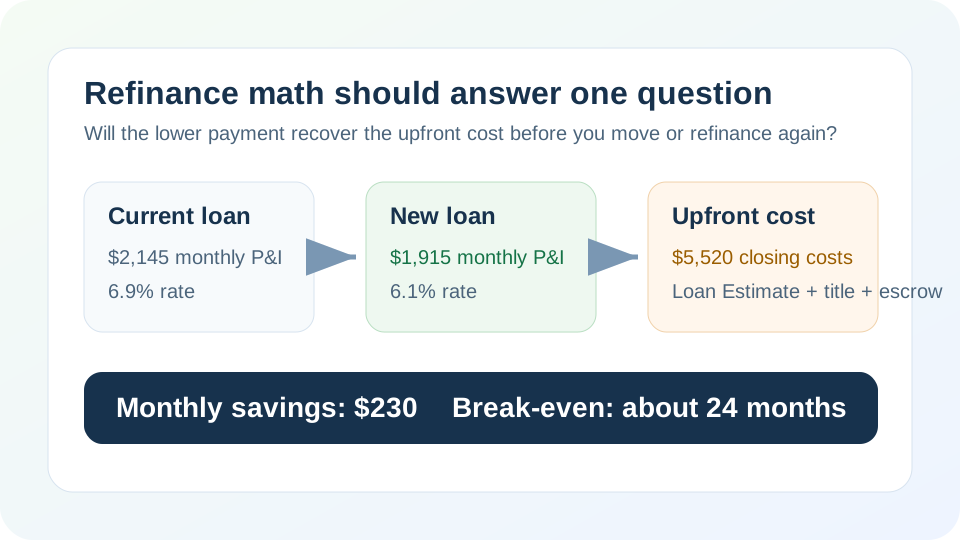
Model the replacement loan payment before you compare lenders.
Open the Mortgage CalculatorQuick answer: what a refinance calculator should tell you
A useful refinance calculator should show the new monthly payment, the total upfront cost, and how long it takes to recover those costs.
If it only shows a lower payment, it is missing the decision-making part. Refinance math is not just about the new rate. It is about savings after lender fees, title costs, escrow effects, and your likely time in the home.
What people are obviously searching for
The main refinance intent cluster is direct and transactional:
- refinance calculator
- mortgage refinance calculator
- should I refinance my mortgage
- refinance break even calculator
- cash out refinance calculator
- refinance closing costs calculator
- FHA to conventional refinance calculator
- 15 year refinance calculator
- no closing cost refinance calculator
- rate and term refinance calculator
What people are really asking before they refinance
The most useful refinance questions are usually more specific:
- How much does my rate need to drop before refinancing is worth it?
- How do I calculate refinance break-even with closing costs?
- Should I refinance from a 30-year mortgage into another 30-year loan?
- Will refinancing remove FHA mortgage insurance?
- Should I pay points or keep more cash?
- How much does a no-closing-cost refinance really cost over time?
- Is a cash-out refinance better than a HELOC for a project or debt payoff?
- Can refinancing lower my payment but increase total interest?
- Should I refinance now or wait for rates to fall more?
- What if I may move before I hit break-even?
Why refinance intent is strong right now
Rates are still meaningful enough to force comparison shopping
Freddie Mac reported on June 18, 2026 that the average 30-year fixed-rate mortgage was 6.47% and the average 15-year fixed-rate mortgage was 5.81%. That means homeowners with materially higher existing rates may still see refinance potential, while borrowers sitting on older sub-4% loans usually need a very different reason than just monthly savings.
People are not only chasing lower rates
Many homeowners are using refinance calculators to compare three different goals: lowering monthly payment, shortening the loan term, or replacing FHA mortgage insurance once equity improves. Others are exploring cash-out refinance math, which often overlaps with debt-consolidation stress and renovation budgeting.
Break-even is the real decision point
Closing costs can easily erase the benefit of a lower payment if you may sell, move, or refinance again before the savings catch up. That is why refinance planning question has shifted toward break-even timing and total-cost clarity rather than just chasing the lowest advertised rate.
How to use a refinance calculator with Calcsy
1. Estimate the replacement payment
Use Calcsy's Mortgage Calculator with the approximate remaining balance, proposed rate, and new loan term. That gives you the principal-and-interest baseline you need before comparing fees.
2. Compare it to your current payment honestly
Do not compare only against a total escrowed payment if the tax and insurance parts are unchanged. Refinance savings often live mostly in principal and interest, while taxes and insurance may keep moving regardless. Calcsy's Mortgage Payment Guide is useful if you need to separate payment components clearly.
3. Add closing costs and divide by monthly savings
If the new loan saves $220 per month and total refinance costs are $5,500, your rough break-even is 25 months. If you are unlikely to stay in the home that long, the refinance may not be worth it even if the payment looks better.
Refinance scenarios people compare most often
Rate-and-term refinance
This is the classic use case: replace the old loan with a lower rate or better term. Searchers in this group usually want a lower payment, less total interest, or both.
Shorter term refinance
Some homeowners move from a 30-year loan to a 15-year or 20-year term to pay less interest overall and build equity faster. The catch is that the monthly payment can still rise even when the rate falls, which is why term comparison matters as much as rate comparison.
FHA to conventional refinance
This intent usually comes from homeowners trying to remove long-running FHA mortgage insurance once they have enough equity. The savings can be meaningful, but the refinance still needs to justify its own costs.
Cash-out refinance
This is where the planning question becomes more cautious. People want cash for renovations, debt consolidation, or emergency liquidity, but they also worry about replacing a manageable old mortgage with a larger new one. If the goal is flexibility, compare the refinance idea against a tighter payoff plan using the Loan Payment Calculator or the strategy tradeoffs in the Debt Payoff Calculator Guide.
Common refinance calculator mistakes
Ignoring the reset of the amortization clock
A new 30-year mortgage can reduce the payment but stretch interest costs much farther into the future.
Forgetting cash-to-close
Rolling costs into the loan reduces upfront pain but can increase lifetime cost because you pay interest on those added dollars too.
Assuming no-closing-cost means free
Usually it means the lender recovers those costs through a higher rate or a larger balance.
Comparing only advertised rates
Loan Estimates, lender credits, points, and actual closing costs matter. Rate alone is not the deal.
When refinancing tends to make less sense
- You already have a much lower rate than the new offer.
- You may move before reaching break-even.
- You need a lower payment so badly that you are extending the loan without solving the underlying budget problem.
- You are turning unsecured debt into debt secured by your home without a durable repayment plan.
Related calculators and guides
- Mortgage Calculator for the replacement payment estimate.
- Mortgage Payment Guide for principal-and-interest basics.
- APR Calculator Guide for comparing rate versus fee tradeoffs.
- Extra Payment Calculator Guide if you may be better off prepaying instead of refinancing.
- How Much House Can I Afford Calculator Guide as a reminder that affordability decisions should start from budget, not lender maximums.
FAQ
How do I know if refinancing is worth it?
Estimate the new payment, total the refinance costs, and calculate the break-even month. Then compare that timing with how long you realistically expect to keep the loan.
What is a refinance break-even point?
It is the number of months it takes for monthly savings to recover the refinance costs.
Can refinancing lower my payment but still cost more overall?
Yes. If you restart a long loan term, the lower payment can come with more total interest over time.
Does a no-closing-cost refinance avoid fees?
Usually no. It normally means the costs are offset with a higher interest rate, lender credits, or a larger balance.
Should I refinance just because rates dip a little?
Not automatically. The payment change, costs, term, and your time horizon matter more than the headline rate move by itself.