Extra Payment Calculator Guide: Pay Off Loans Faster and Cut Interest
Searchers looking for an extra payment calculator are usually not browsing casually. They are asking whether adding $50, $100, or one extra payment a year will materially change a mortgage, car loan, or personal loan. Current intent is strongly action-oriented: payoff speed, interest savings, extra principal rules, and whether an overpayment beats other uses of cash.
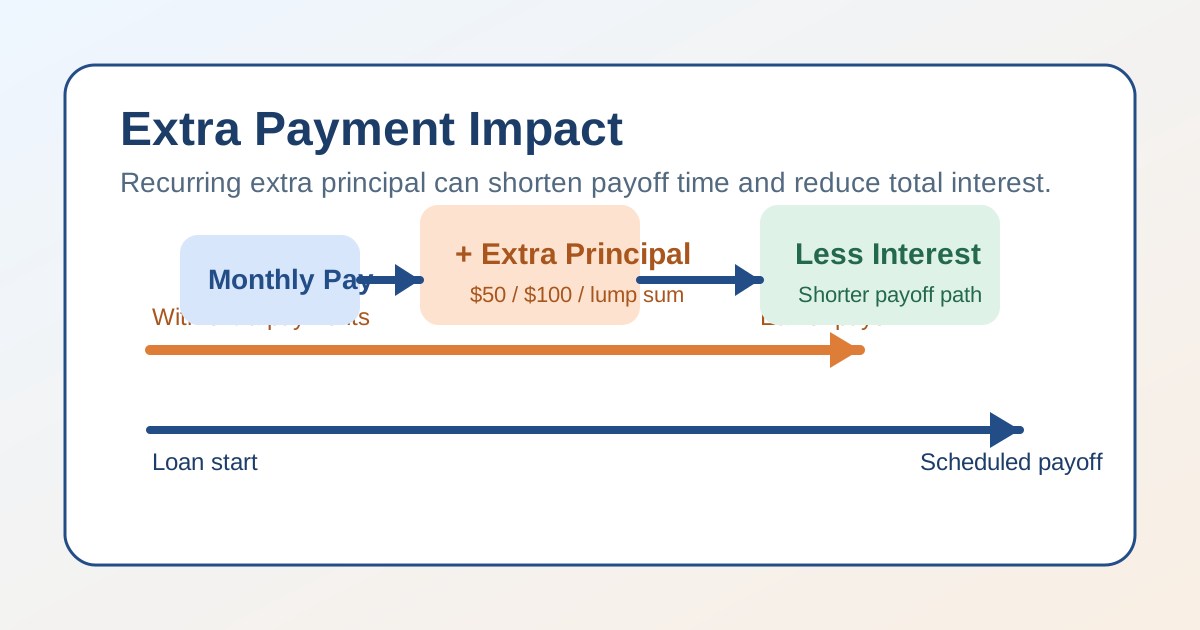
Model the base loan while you read.
Open the Loan Payment CalculatorQuick answer: what extra payments usually do
On most fixed-rate installment loans, extra principal payments reduce total interest and shorten the payoff timeline.
They do not usually reduce the required scheduled monthly payment immediately unless the lender formally recasts or restructures the loan.
What people are obviously searching for
Common calculator questions around overpayment is clear:
- extra payment calculator
- loan extra payment calculator
- mortgage payoff calculator extra payments
- extra principal payment calculator
- pay off loan faster calculator
- mortgage overpayment calculator
- amortization calculator with extra payments
- how much interest do extra payments save
- biweekly mortgage payment calculator
- principal prepayment calculator
What borrowers are really trying to decide
Useful follow-up questions behind those calculations are where the decision happens:
- Does extra principal lower my payment or just shorten the term?
- How much interest will one extra payment a year actually save?
- Should I make extra payments on a mortgage, car loan, or personal loan first?
- When do extra payments stop being worth it?
- Is it better to pay extra monthly or save up lump sums?
- Can the lender apply my extra payment the wrong way?
- Do prepayment penalties change the math?
- Should I pay extra on a low-rate loan if I still have high-rate debt?
- What is the difference between extra payment, recast, and refinance?
- How do I compare overpaying debt versus investing or building cash reserves?
Why extra payments work
Interest is tied to the remaining balance
On a standard amortizing loan, interest is charged against the balance that is still outstanding. If an extra payment goes to principal, the next interest calculation is usually based on a smaller number. That is why even a modest recurring overpayment can create outsized long-term savings.
Earlier extra payments usually matter more
Extra payments made earlier in the life of the loan tend to save more interest because they reduce a balance that would otherwise generate many future interest charges. This is also why extra-payment intent often overlaps with amortization schedule searches.
The scheduled payment often stays the same
Many borrowers expect extra payments to reduce next month's bill. On most fixed-rate loans, the scheduled payment stays in place and the payoff date moves earlier instead. That distinction drives a lot of "does extra principal lower monthly payment" searches.
A recast is different from an ordinary extra payment
If a borrower wants a lower required payment rather than a shorter payoff schedule, they are usually asking about recasting, restructuring, or refinancing rather than a standard extra principal payment. That distinction shows up repeatedly in current planning question because borrowers want to know whether the lender will actually recalculate the monthly bill.
How to estimate extra-payment impact with Calcsy
1. Run the baseline loan first
Use Calcsy's Loan Payment Calculator to record the normal monthly payment, total paid, and total interest for the current balance, APR, and term.
2. Set an overpayment amount you can actually sustain
Searchers often ask about $50, $100, or one extra payment per year because that is where decision friction lives. A realistic recurring amount is more valuable than an aggressive plan you abandon after two months.
3. Compare the debt plan against your cash flow
If the extra payment squeezes essentials or emergency savings, the plan can backfire. Calcsy's Salary Calculator helps translate gross income into a more realistic take-home view before you lock in an overpayment target.
Extra payments on different loan types
Mortgage
Mortgage People are often focused on interest savings over many years. The extra payment decision can be meaningful because the loan horizon is long and early payments are interest-heavy.
Car loan
Auto borrowers usually care about faster payoff and avoiding negative equity for too long. If you are modeling a vehicle loan, Calcsy's Car Loan Calculator is the better starting point.
Personal loan
Personal-loan overpayment is often a clean win when the APR is meaningfully above savings yields and the lender does not charge a prepayment penalty.
Common mistakes to avoid
Assuming every lender handles extra payments the same way
Some lenders require explicit principal-only instructions, and some loan products have special posting rules.
Ignoring higher-rate debt elsewhere
If you are overpaying a low-rate mortgage while expensive credit-card debt is still growing, the overall household math may be weak. That is where a broader debt payoff plan matters more than one loan in isolation.
Forgetting opportunity cost
Extra payments can be attractive, but they compete with emergency reserves, retirement contributions, and other goals. Searchers often need the best tradeoff, not the fastest raw payoff.
Expecting the required payment to fall automatically
Unless the lender recasts or restructures the loan, extra payments usually shorten the term instead of shrinking the required installment.
Skipping the prepayment-penalty check
Small recurring extra principal often avoids penalties, but some mortgages and other loans still have payoff or large-lump-sum rules. It is worth checking the note, lender portal, or servicing documents before assuming every extra dollar works the same way.
Related calculators and guides
- Loan Payment Calculator for the base monthly payment, total paid, and total interest.
- Loan Payment Calculator Guide for the fixed-payment formula behind the numbers.
- Amortization Schedule Calculator Guide for principal-versus-interest timing.
- Debt Payoff Calculator Guide if you are deciding which debt should get the extra cash first.
- Car Loan Calculator for overpayment scenarios tied to auto financing.
FAQ
Do extra payments lower the monthly payment or shorten the loan?
Usually they shorten the payoff period and reduce total interest. The scheduled payment often stays the same unless the lender formally changes the loan terms.
When do extra payments save the most interest?
Usually earlier in the loan, when the balance is larger and more future interest is still ahead.
Can I use a regular loan calculator to estimate extra-payment impact?
Yes for planning. It helps you benchmark the current loan cost before deciding whether an overpayment target is worth it.
Should I make extra payments every month or once a year?
Monthly can reduce balance sooner, but the best answer depends on cash-flow stability and how disciplined you are with lump sums.
Are extra payments always the best use of cash?
No. High-interest debt, missing emergency savings, and employer retirement matches can all change the best choice.