Down Payment Calculator Guide: Compare 3%, 10%, 20%, Payment, and PMI
People searching for a down payment calculator are rarely asking only, "What is 20% of this home price?" They are trying to compare smaller-down-payment flexibility against a larger monthly payment, possible mortgage insurance, and the risk of arriving at closing with too little cash left over. In late June 2026, that question is even sharper because mortgage rates are still hovering around the mid-6% range, so every extra dollar borrowed can move the payment noticeably.
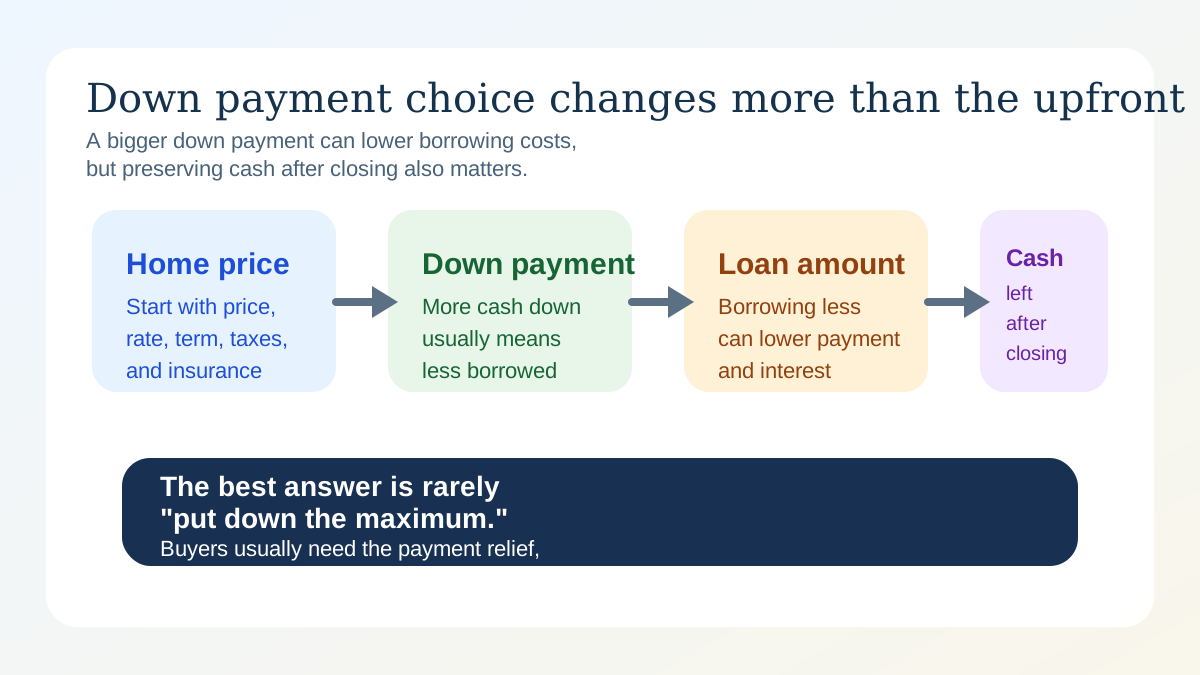
Test different down payment sizes with the same home price and rate.
Open the Mortgage CalculatorQuick answer: what a down payment calculator should show
A useful down payment calculator should show the upfront cash amount, the remaining loan amount, the estimated monthly payment effect, and the cash-reserve tradeoff after closing.
A percentage alone is not enough. Buyers usually need to compare the mortgage outcome against real liquidity, closing costs, and stress tolerance.
What people are obviously searching for
The current head-term cluster is practical and decision-ready:
- down payment calculator
- home down payment calculator
- mortgage down payment calculator
- how much down payment do I need
- 20 percent down calculator
- 3 percent down calculator
- 10 percent down on a house calculator
- house payment with down payment calculator
- PMI calculator with down payment
- cash to close calculator
What people are really asking before they make an offer
The long-tail questions are more revealing and more financially meaningful:
- Do I really need 20% down to buy a house?
- Is it better to put 10% down and keep more cash?
- How much does a bigger down payment lower the monthly payment?
- At what point does PMI become worth avoiding?
- Should I use savings for a bigger down payment or keep an emergency fund?
- How much cash do I need besides the down payment?
- What happens if rates stay near 6.5% and I borrow more?
- Is a lower down payment smarter if I expect to move in a few years?
- Can seller credits or assistance change how much cash I need?
- Should I wait to reach 20% down or buy earlier with less?
Why down payment planning matters right now
Mortgage rates still make the payment gap matter
According to the Associated Press report on Freddie Mac's weekly survey published June 26, 2026, the average 30-year fixed mortgage rate was about 6.49%. In that rate range, a smaller down payment can raise the monthly payment enough to change whether a home still fits the budget comfortably.
Buyers are balancing payment against liquidity
Many people are not only asking how to avoid PMI. Many are deciding whether keeping extra reserves for repairs, moves, and job uncertainty is more valuable than borrowing less on day one.
Loan programs vary, but cash pressure is universal
Different loan types allow different minimum down payments, yet every buyer still has to solve the same core problem: cash to close versus monthly carrying cost.
The basic down payment formulas
Start with two simple relationships:
down payment amount = home price x down payment percentage
loan amount = home price - down payment amount
Those formulas are simple, but the hard part is what comes after: how the lower loan amount affects payment, mortgage insurance, total interest, and your remaining savings.
Example: $400,000 home at three down payment levels
- 3% down: $12,000 down payment, $388,000 loan amount
- 10% down: $40,000 down payment, $360,000 loan amount
- 20% down: $80,000 down payment, $320,000 loan amount
That looks straightforward, but the real comparison is not the cash gap alone. It is how each choice changes the monthly payment, insurance costs, and how much cash you still have after closing.
How to use a down payment calculator the right way
1. Compare at least three scenarios
Run the same home price, rate, taxes, and term at several down payment levels. A single number is less useful than a side-by-side comparison.
2. Separate monthly payment from total cash to close
Many buyers fixate on the down payment and forget about closing costs, prepaids, reserves, moving costs, and immediate repairs. The Closing Costs Calculator Guide is the natural companion here.
3. Check whether the extra cash actually improves the full plan
A larger down payment usually helps the payment, but it may not be the best move if it drains emergency reserves. planning question often centers on this tension more than on the math itself.
4. Re-test affordability after taxes and insurance
Down payment decisions only make sense inside the full monthly housing budget. If you need to sanity-check that budget first, the How Much House Can I Afford Calculator Guide walks through that framework.
What a bigger down payment can change
Lower loan amount
This is the immediate effect. Borrowing less usually lowers both monthly principal-and-interest cost and total interest paid over time.
Potentially lower mortgage insurance pressure
Smaller down payments can trigger mortgage insurance or similar costs depending on the loan structure. Buyers often search for 20% down not because it is universally required, but because it is a familiar threshold in mortgage conversations.
More equity from day one
A larger down payment can reduce the chance of feeling overleveraged if values stagnate or if you need to sell sooner than planned.
Less cash left after closing
This is the tradeoff users worry about most. A house with a slightly better payment can still become stressful if the purchase leaves no emergency cushion.
Common decision scenarios
Put 20% down and keep the payment leaner
This path often appeals to buyers who prioritize monthly flexibility and want less long-term interest exposure.
Put less down and keep more liquidity
This path can make sense if the buyer wants reserves for repairs, relocation, childcare changes, or a more conservative emergency fund.
Buy earlier versus wait for a bigger down payment
This is one of the highest-intent search clusters because the decision depends on price trends, rates, rent, and personal timing. There is no universal answer, but a calculator helps make the tradeoff visible instead of emotional.
Common mistakes to avoid
Thinking the down payment is the only cash you need
Closing costs and prepaid items often surprise first-time buyers.
Using every spare dollar for the down payment
Running too close to zero after closing can turn an affordable payment into a fragile situation.
Ignoring the rate environment
At higher mortgage rates, reducing the loan amount can matter more than buyers expect.
Comparing only home price instead of full payment
The real decision lives in monthly cash flow, not just sticker price.
Related calculators and guides
- Mortgage Calculator for testing payment changes across different down payment levels.
- Mortgage Payment Guide for the core principal-and-interest formula.
- Closing Costs Calculator Guide to estimate the other upfront cash buyers need.
- How Much House Can I Afford Calculator Guide for payment-first affordability planning.
- Mortgage Points Calculator Guide if you are choosing between more cash down and more cash toward rate buy-down.
FAQ
Do you need 20% down to buy a house?
No. Many buyers purchase with less than 20% down, but smaller down payments usually mean a larger loan and may add mortgage insurance or tighter monthly affordability.
What does a bigger down payment change?
It lowers the loan amount, usually lowers the payment, reduces total interest, and can improve the overall borrowing profile.
Should I put more money down or keep extra cash?
That depends on your rate, savings cushion, closing costs, and how much monthly payment relief the bigger down payment actually creates.
How much cash do I need besides the down payment?
Usually more than buyers first expect, because closing costs, prepaids, movers, and immediate repair needs often sit outside the headline down payment number.
What is the first calculation I should run?
Start with the home price, estimated rate, and three down payment scenarios. Then compare the payment difference against the reserves each option leaves behind.