Mortgage Points Calculator Guide: Check Rate Buy-Down Cost and Break-Even
Searchers looking for a mortgage points calculator are usually comparing two lender quotes that feel almost the same until the fees appear. The current user need is straightforward but practical: buyers want to know whether paying points upfront is better than accepting a slightly higher rate, how fast the savings break even, and whether the decision still makes sense if they may move or refinance within a few years.
Model the monthly payment at different rates before you buy down the loan.
Open the Mortgage CalculatorQuick answer: what a mortgage points calculator should tell you
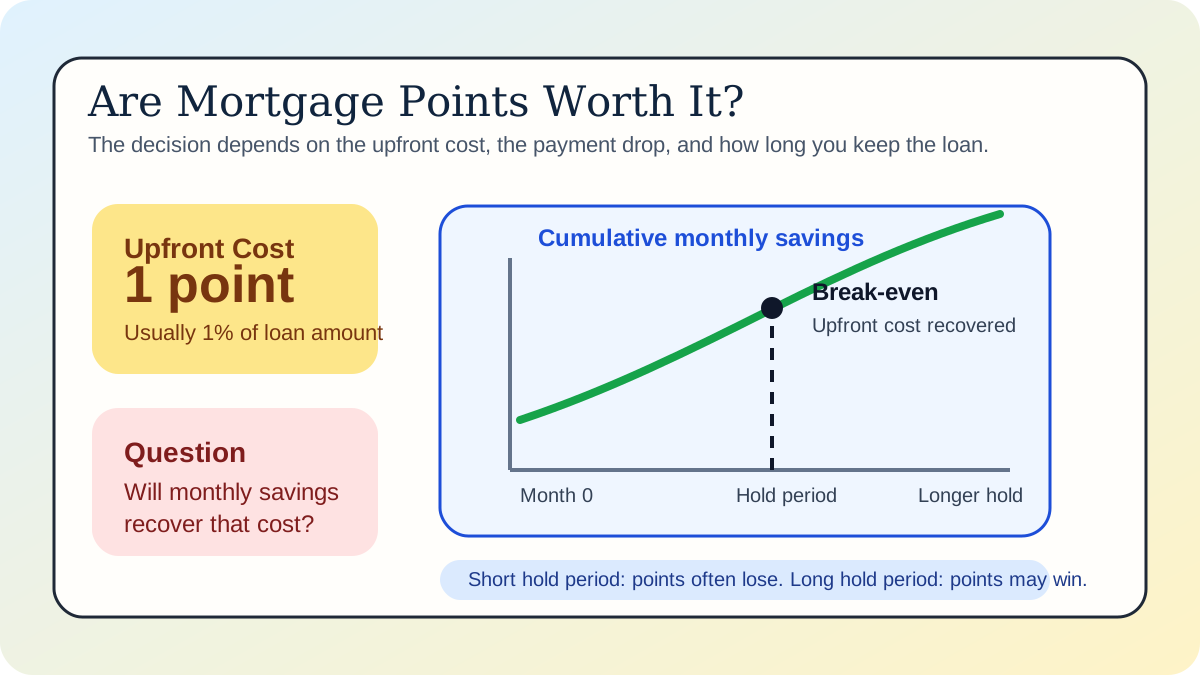
A useful mortgage points calculator should show the upfront cost of the points, the lower monthly payment from the reduced rate, and the break-even month.
That break-even line matters because points can be rational for a long hold and wasteful for a short hold. The calculator should help you compare the cash tradeoff, not just show a lower rate and stop there.
What people are obviously searching for
The head-term intent cluster is highly transactional:
- mortgage points calculator
- discount points calculator
- buy down mortgage rate calculator
- are mortgage points worth it
- mortgage points break even calculator
- 1 point mortgage cost
- origination points vs discount points
- rate buy down calculator
- APR vs points calculator
- refinance points calculator
What people are really asking before choosing a quote
The long-tail question intent is more decision-oriented:
- How much does one point lower my mortgage rate?
- How long do I need to keep the loan for points to pay off?
- Should I buy points if I may refinance in two years?
- Are points better than a bigger down payment?
- Do mortgage points count toward closing costs?
- How do lender credits compare with paying points?
- Can I finance points into the loan instead of paying cash?
- Should I pay points on a refinance?
- Do points matter more when rates are near 6.5%?
- Why does one quote have a lower rate but much higher APR?
Why mortgage-points intent is strong right now
Rates are still high enough for small quote differences to matter
On June 26, 2026, the Associated Press reported Freddie Mac's average 30-year fixed mortgage rate at 6.49% and the 15-year fixed rate at 5.84%. In that rate environment, borrowers keep seeing quote sheets where a small rate change costs real money upfront, so points math becomes a live question instead of a niche one.
Buyers want payment relief without guessing
Many people are often trying to lower the monthly payment just enough to stay within budget. That makes points feel tempting, but the right answer depends on hold period, cash reserves, and whether a lower note rate is worth a larger cash-to-close number.
Lender quotes are easier to compare when points are decoded
CFPB's Loan Estimate and Closing Disclosure materials matter here because points appear inside the same broader closing-cost conversation. Searchers want to understand whether they are paying for a better long-term deal or just shifting cost around the form.
What mortgage points are
Discount points
Discount points are upfront charges paid to reduce the interest rate. One point usually equals 1% of the loan amount, although the exact rate reduction per point varies by lender and market conditions.
Origination points
Origination charges pay for making the loan. They are not the same thing as discount points even if both are described in points language. That distinction matters when you compare offers.
How to estimate whether points are worth it
1. Compare the rate-and-fee versions of the same loan
Start with two quotes for the same product: one with fewer points and a higher rate, and one with more points and a lower rate. Use Calcsy's Mortgage Calculator to estimate the monthly payment under each rate.
2. Find the monthly savings
If paying points lowers the monthly payment by $82, that $82 becomes the stream of savings you compare against the extra upfront cost.
3. Calculate a rough break-even
If the points cost $2,460 and monthly savings are $82, the break-even is about 30 months. If you are likely to keep the loan longer than that, the points may be reasonable. If you may refinance or move earlier, they may not be.
Common mortgage-points scenarios
Buyer stretching to stay within budget
This buyer uses points to pull the payment under a monthly threshold. That can work, but it should not drain the reserves needed for moving, repairs, or emergency savings. The How Much House Can I Afford Calculator Guide helps keep that broader budget discipline in view.
Buyer deciding between points and a larger down payment
Sometimes more cash down reduces the loan size enough to matter more than a small rate buy-down. Other times points create better savings for the same cash. The only defensible answer comes from comparing both side by side with the loan amount and payment math visible.
Refinance shopper comparing no-point and point-heavy quotes
This is one of the highest-intent versions of the search. The borrower already has a payment and wants to know whether paying more upfront improves the refinance enough to recover the cost before the next likely move or refinance. The Refinance Calculator Guide covers the broader break-even frame.
Common mistakes to avoid
Assuming one point always lowers the rate by the same amount
Lenders price points differently, so the rate change per point is not fixed across all offers.
Ignoring break-even timing
Points can be a bad trade if you will not keep the loan long enough for the monthly savings to recover the upfront cost.
Draining emergency reserves for a slightly lower payment
A cleaner quote is not always worth becoming cash-poor on day one.
Looking only at note rate and ignoring APR
APR helps reflect how upfront costs reshape the effective borrowing cost over time. Use it as a comparison tool, not as the only decision number.
Related calculators and guides
- Mortgage Calculator for monthly payment comparisons at different rates.
- APR Calculator Guide for fee-versus-rate comparisons.
- Closing Costs Calculator Guide for the full upfront cash picture.
- Down Payment Calculator Guide for comparing alternative uses of cash.
- Refinance Calculator Guide for break-even decisions on replacement loans.
FAQ
What is one mortgage point?
One mortgage point is usually 1% of the loan amount. It may be used as a discount point to buy down the rate or appear as part of origination pricing.
How do I know if buying points is worth it?
Compare the extra upfront cost against the monthly payment savings and estimate how long you expect to keep the loan.
Do points lower APR and monthly payment the same way?
Not exactly. Points usually lower the note rate and payment, while APR reflects how upfront fees affect the overall cost over time.
Do points count toward closing costs?
Yes. They are part of the broader closing-cost picture, which is why they should be evaluated alongside other fees and cash-to-close needs.
Should I pay points if I may refinance soon?
Usually not unless the break-even arrives before the likely refinance or move. Short hold periods weaken the case for points.