PMI Calculator Guide: Estimate Mortgage Insurance, Payment, and 20% Equity Exit
People searching for a PMI calculator are rarely asking only what one line item costs. They are trying to judge whether buying sooner with less money down is worth the higher monthly payment, how much mortgage insurance changes affordability, and how long it may take to reach the equity level where PMI can fall away. As of July 2, 2026, Freddie Mac's average 30-year fixed mortgage rate was 6.43%, which keeps pressure high on every extra dollar added to the monthly housing bill.
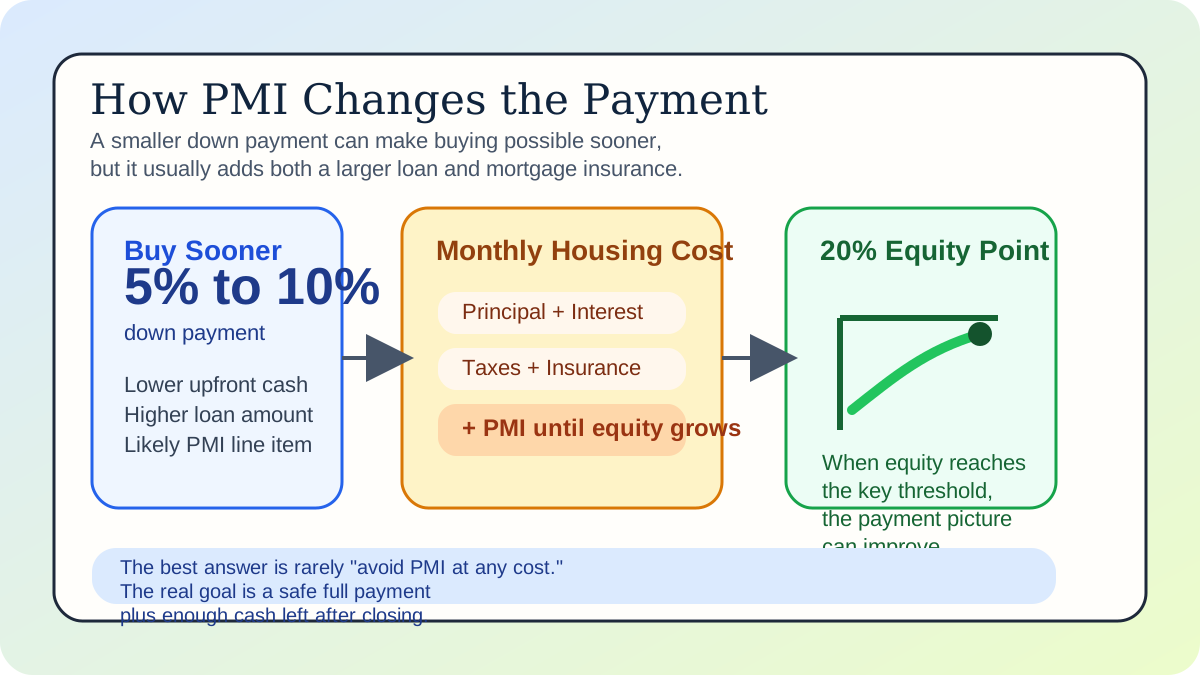
Model the mortgage payment first, then layer in likely mortgage insurance pressure.
Open the Mortgage CalculatorQuick answer: what a PMI calculator should do
A useful PMI calculator should help you compare low-down-payment scenarios against the full monthly housing cost, not just estimate a standalone insurance number.
The practical decision is whether a smaller down payment gets you into the home safely without creating a payment that feels brittle once principal, interest, taxes, insurance, and PMI all stack together.
What people are obviously searching for
The head-term intent is direct and transaction-adjacent:
- PMI calculator
- private mortgage insurance calculator
- mortgage insurance calculator
- PMI calculator with down payment
- monthly PMI calculator
- how much is PMI on a mortgage
- mortgage calculator with PMI
- PMI payment calculator
- 20 percent down vs PMI calculator
- how to avoid PMI calculator
What people are really asking before they submit an offer
The deeper questions reveal the actual decision:
- Should I buy now with 10% down or wait until I have 20%?
- How much does PMI change my monthly housing payment?
- Is paying PMI better than draining my emergency fund?
- How fast can I get rid of PMI if home values rise?
- Do I pay PMI forever on a conventional loan?
- Does a better credit score lower PMI cost enough to matter?
- Should I choose lender-paid PMI if the rate is higher?
- What is cheaper: PMI or waiting and renting longer?
- How does PMI interact with taxes, insurance, and HOA dues?
- Is FHA mortgage insurance cheaper or more expensive than PMI for me?
Why PMI intent is strong right now
Rates still punish larger loan balances
Freddie Mac reported on July 2, 2026 that the average 30-year fixed mortgage rate was 6.43% and the 15-year fixed averaged 5.79%. In that rate environment, buyers feel both sides of the decision at once: borrowing more is expensive, but waiting to save another large chunk of cash can also delay the move they want to make.
PMI is tied to a familiar 20% threshold
CFPB explains that private mortgage insurance may be required on a conventional loan when the down payment is less than 20% of the purchase price. That makes PMI one of the first affordability topics buyers run into after they move beyond browsing listing prices.
Searchers are comparison-shopping, not just learning a definition
Current search intent is rarely educational only. People want to compare 5%, 10%, and 20% down scenarios, weigh lender-paid versus borrower-paid structures, and understand whether the payment still works after adding taxes and homeowners insurance.
How to estimate PMI pressure with Calcsy
1. Start with the principal-and-interest payment
Use Calcsy's Mortgage Calculator to model home price, down payment, rate, and term. This gives you the base monthly payment before you layer in tax, insurance, and mortgage insurance.
2. Compare smaller and larger down payment scenarios
The Down Payment Calculator Guide is the best companion page here because the PMI decision is really a cash-allocation question. A bigger down payment can lower the payment, but it can also leave you thin on reserves after closing.
3. Keep the full housing payment in view
PMI is only one slice of the bill. The How Much House Can I Afford Calculator Guide and Mortgage Interest Calculator Guide help reconcile principal and interest with taxes, insurance, HOA dues, and the broader affordability picture.
4. Stress-test the exit path
CFPB notes that PMI increases loan cost and can be paid monthly, up front, or through combined structures. The relevant follow-up question is how long you realistically expect to carry it before hitting an equity level where the loan economics improve.
What changes the answer most
Down payment size
A larger down payment reduces the loan amount and may eliminate the PMI requirement altogether. But the smartest answer is not always the biggest possible down payment. It is the one that still leaves enough liquidity for closing costs, repairs, and normal life surprises.
Credit profile and loan pricing
CFPB's rate comparison tool shows how credit score and down payment can materially change mortgage pricing. The same borrower can see different economics not only from rate movement, but also from the cost structure around mortgage insurance.
How long you expect to keep the loan
If you expect to move, refinance, or make aggressive principal payments sooner than planned, PMI may be a shorter-lived issue than it first appears. If you expect a long hold with slow equity growth, the added monthly cost matters more.
Available cash after closing
Many buyers focus on avoiding PMI and forget that being cash-poor after closing can be the more serious risk. A lower down payment can be the safer choice if it preserves a proper emergency buffer.
Three PMI decision paths people usually compare
Buy now with less than 20% down
This path favors speed and flexibility. It often wins when the monthly payment remains manageable and the buyer values keeping reserves more than eliminating PMI immediately.
Wait and save for 20% down
This path can reduce the monthly cost and simplify underwriting, but it exposes you to more months of rent, more time for rates to move, and the chance that home prices rise before you are ready.
Compare conventional with PMI against FHA-style alternatives
CFPB's mortgage rate tool notes that VA or FHA-style options can look cheaper on rate for some borrowers. But the better route depends on the full cost stack, not just the headline interest rate.
Common mistakes to avoid
Obsessing over PMI while ignoring the total payment
A mortgage can be unaffordable even without PMI, and it can be manageable even with PMI. The full monthly bill is what matters.
Treating 20% down as the only safe answer
It is an important threshold, but not a universal rule for every buyer. Cash reserves, job stability, and closing costs matter too.
Comparing only principal and interest
Taxes, homeowners insurance, and HOA dues can erase the comfort you think you gained by tweaking the down payment.
Not asking how PMI is being charged
CFPB notes that PMI may show up as a monthly premium, an upfront premium, or both. Different structures change how you should compare offers.
Related calculators and guides
- Mortgage Calculator for principal-and-interest payment scenarios.
- Down Payment Calculator Guide for 3%, 10%, and 20% comparisons.
- How Much House Can I Afford Calculator Guide for full-payment budgeting.
- Closing Costs Calculator Guide for cash-to-close planning.
- Mortgage Interest Calculator Guide for separating loan interest from the rest of the housing bill.
FAQ
What should a PMI calculator help me estimate?
It should help you compare how a smaller down payment affects monthly payment, mortgage insurance cost, and the path toward 20% equity.
Do I always pay PMI if I put less than 20% down?
With a conventional loan, PMI is commonly required below 20% down, though lender structure and pricing options can vary.
Is avoiding PMI always worth using all my savings?
No. Lower monthly cost is valuable, but leaving yourself with too little cash after closing can be a bigger problem than paying PMI temporarily.
Can PMI show up in more than one form?
Yes. CFPB notes that it may be charged monthly, paid up front at closing, or split between up-front and monthly premiums.
Should I compare conventional with PMI against FHA-style loans?
Yes. Rate, insurance structure, and time in the home can all change which loan path is cheaper overall.