FHA vs Conventional Loan Calculator Guide: Compare Payment, PMI vs MIP, Cash to Close, and Refinance Exit
As of July 16, 2026, FHA-versus-conventional intent is less about theory and more about surviving today's housing math. Associated Press reported on July 10, 2026 that Freddie Mac's average 30-year fixed rate rose to 6.49%, while current buyer coverage keeps stressing that the old 20%-down ideal is not how many households are actually entering the market. Searchers want one practical comparison: if they buy with limited cash and imperfect credit, which path produces the safer monthly payment and the cleaner exit later?
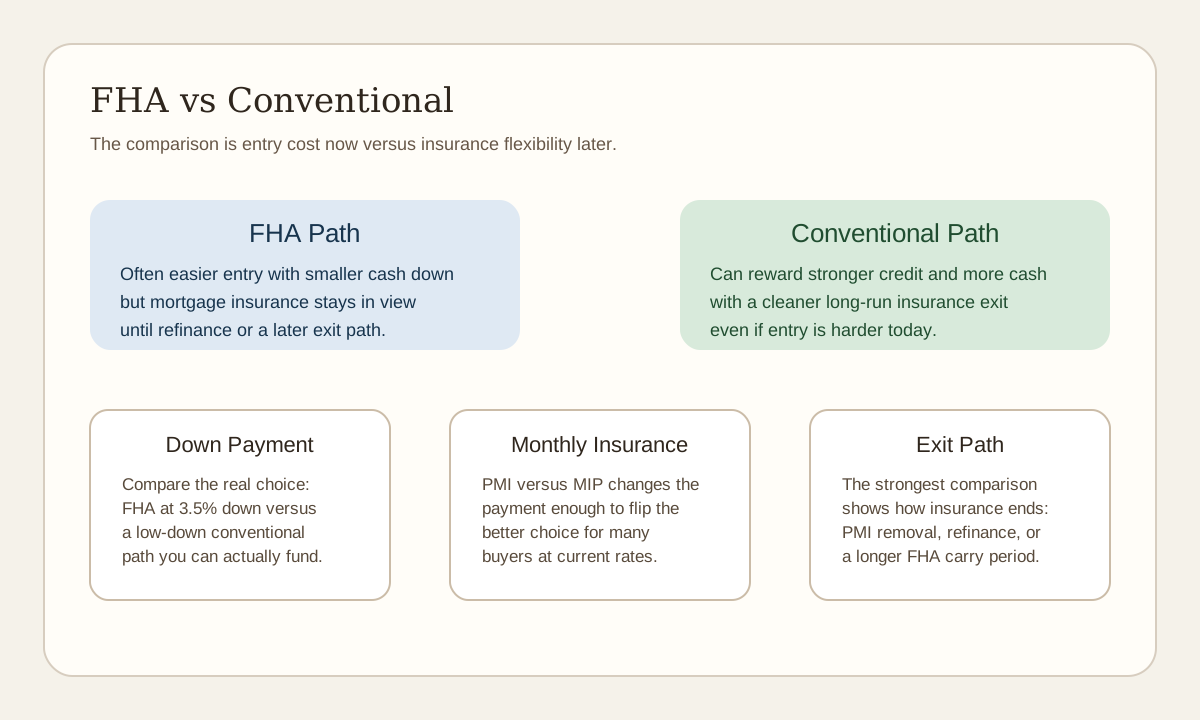
Build the base payment first, then compare the insurance layers.
Open the Mortgage CalculatorQuick answer: what an FHA vs conventional calculator should show
A useful FHA vs conventional calculator should compare down payment, monthly payment, mortgage insurance, cash to close, and what happens later if you refinance or cancel insurance.
The comparison is weak if it stops at interest rate, because buyers often choose between one loan that is easier to enter and another that may be easier to optimize later.
What people are obviously searching for
The direct keyword set shows strong purchase and lender-selection intent:
- FHA vs conventional calculator
- FHA vs conventional loan calculator
- FHA versus conventional mortgage calculator
- FHA or conventional loan calculator
- PMI vs MIP calculator
- FHA vs conventional payment calculator
- 3.5 down FHA vs 5 down conventional
- FHA vs conventional closing costs calculator
- FHA vs conventional mortgage insurance calculator
- which is better FHA or conventional loan
What buyers are really asking underneath those keywords
The long-tail questions show the real decision points:
- Is FHA cheaper than conventional if I only have 3.5% to 5% down?
- Does better credit make conventional the smarter move even with less cash?
- How much does FHA mortgage insurance change the monthly payment?
- When does PMI go away compared with FHA MIP?
- Is FHA just a bridge until I can refinance?
- How much more cash do I need to choose conventional instead?
- What if conventional has a slightly higher rate but lower long-run insurance cost?
- Can seller credits make FHA easier to close?
- Should I compare FHA with 3% down or 5% down conventional?
- Which option is safer if my budget is already tight at current rates?
Why this comparison intent is strong right now
Mortgage rates are high enough that insurance costs matter more
At a 6.49% average 30-year rate reported by Freddie Mac through Associated Press on July 10, 2026, a buyer does not have much room for sloppy assumptions. Mortgage insurance, taxes, and cash-to-close choices can be the difference between a workable payment and one that strains the budget immediately.
Many buyers are not choosing between 20% down and FHA
Recent homebuyer coverage from last week has focused on how difficult the 20% down rule is to follow in practice. That is why the real comparison for many households is FHA versus 3% or 5% down conventional, not FHA versus an idealized no-insurance scenario.
The exit path matters almost as much as the entry path
Searchers increasingly want to know not only which loan gets them in, but which one leaves them with the cleaner path out of insurance later. That is why the calculator comparison needs to include refinance intent and PMI-cancellation logic, not only today's payment.
How to compare FHA and conventional with Calcsy
1. Build the same home price under both paths
Use the Mortgage Calculator with the same purchase price, then change the down payment and note rate assumptions for each loan type. Keeping the property constant prevents the comparison from drifting.
2. Add FHA mortgage insurance and conventional PMI separately
Use the FHA Loan Calculator Guide for the FHA side and the PMI Calculator Guide for the conventional side. This is where many decisions flip, especially when one option has a slightly lower rate but a very different insurance path.
3. Compare cash to close, not just down payment
The buyer who can stretch to 5% down may still be constrained by total funds due at closing. The Closing Costs Calculator Guide is the right companion because the total check at closing matters as much as the monthly payment.
4. Test the comfort level, not just the lender maximum
If one option technically qualifies but pushes your monthly housing cost too high, it is not the safer loan. The How Much House Can I Afford Calculator Guide and the Debt-to-Income Ratio Calculator Guide help keep the comparison grounded.
The cost layers buyers most often miss
FHA upfront and ongoing mortgage insurance
FHA can lower the entry barrier, but it usually adds both upfront and ongoing insurance cost. If the calculator skips those, the comparison is incomplete.
Conventional PMI sensitivity to credit and down payment
Conventional is not one universal number. PMI can change materially depending on the borrower's credit strength and equity position.
Future insurance exit
The long-run value of conventional financing often improves when PMI can be removed earlier than an FHA borrower can realistically exit MIP. That does not always decide the purchase, but it should be visible.
Cash reserves after closing
The cheapest-looking mortgage is not always the safest choice if it empties your savings and leaves no room for repairs, moving costs, or escrow surprises.
Common decision scenarios
Buyer with limited cash and middling credit
FHA often stays competitive here because access matters as much as pure optimization. The key question is whether the buyer can carry the payment safely after insurance is included.
Buyer with improving credit and enough cash for 5% down
This is where conventional can become more compelling. The buyer may accept a slightly different rate structure in exchange for a cleaner long-run insurance exit.
Buyer planning to refinance later
Some households are choosing the loan that gets them into the home now while assuming they will improve the structure later. That is a valid scenario only if today's payment still works without a rescue refinance.
Common mistakes to avoid
Comparing FHA with an unrealistic 20% down conventional scenario
That comparison may be mathematically interesting but useless if 20% down is not a live option.
Ignoring how mortgage insurance changes the monthly picture
This is the mistake that makes one path look falsely cheaper.
Choosing the lowest upfront cash without checking the future exit
Sometimes the accessible option is still the right one. It just should be chosen with full awareness of the later refinance or insurance-removal path.
Confusing approval with comfort
A buyer can qualify for a loan that still leaves too little room in the monthly budget.
Related calculators and guides
- Mortgage Calculator for the base payment on the same target home price.
- FHA Loan Calculator Guide for the FHA-specific insurance and cash-to-close structure.
- PMI Calculator Guide for conventional low-down-payment insurance tradeoffs.
- Closing Costs Calculator Guide for the real cash number due before move-in.
- Down Payment Calculator Guide for testing 3.5%, 5%, 10%, and 20% paths on the same purchase.
FAQ
What should an FHA vs conventional calculator compare?
It should compare down payment, monthly payment, mortgage insurance, cash to close, and the future path to refinance or insurance removal.
Is FHA always cheaper than conventional with a small down payment?
No. FHA can be more accessible, but the better choice depends on credit, rate, insurance, and total closing cash.
Why do buyers compare FHA with 3% or 5% down conventional loans?
Because for many households that is the real decision on the table, not FHA versus a theoretical 20% down option.
What is the biggest comparison mistake?
Stopping at rate or principal-and-interest payment while ignoring PMI, MIP, and the total funds needed to close.
Which loan type has the cleaner long-run exit?
Often conventional, because PMI may be removable sooner, but the right answer still depends on whether you can qualify for a conventional structure that works today.