Student Loan Payoff Calculator Guide: Estimate Payment, Extra-Payment Savings, and Repayment Tradeoffs
As of July 1, 2026, student loan payoff calculator intent is unusually strong because federal repayment rules changed on the same date many borrowers were already trying to regain control of their balances. People are not only asking how much to pay each month. They are comparing standard payoff math against the new repayment-plan landscape, extra-payment strategy, refinancing risk, and the tradeoff between lower monthly relief and faster debt exit.
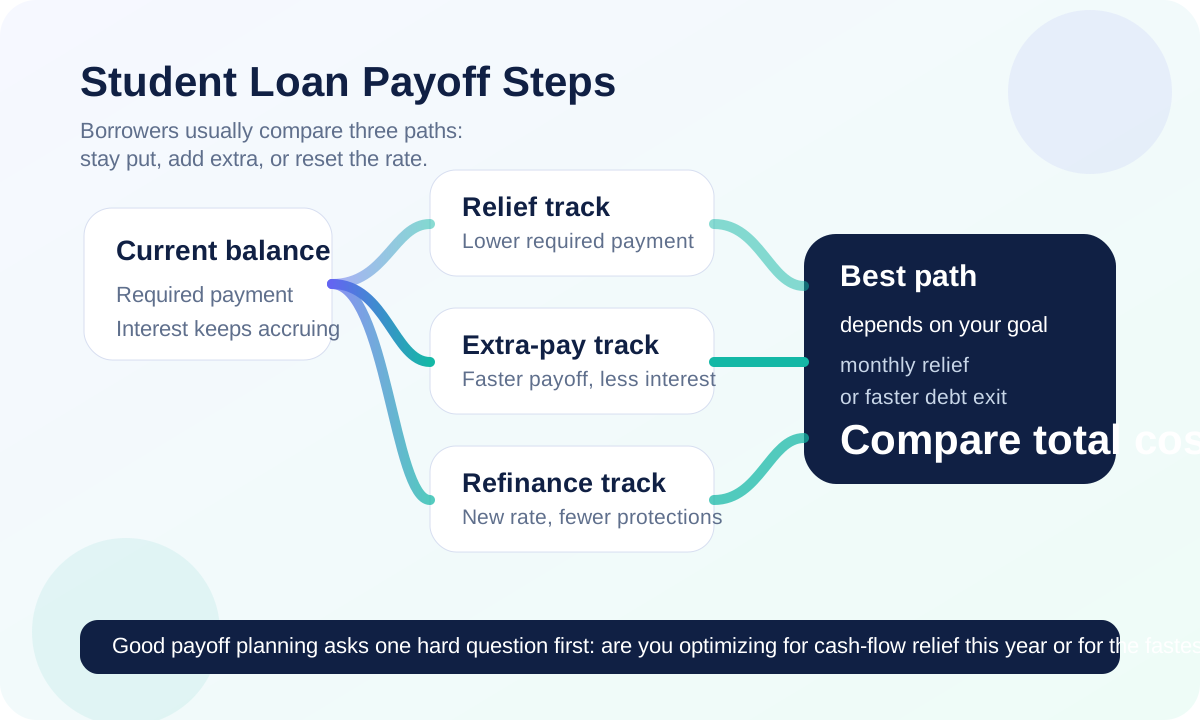
Estimate a payoff target with fixed-payment math while you read.
Open the Loan Payment CalculatorQuick answer: what a student loan payoff calculator should show
A useful student loan payoff calculator should estimate the monthly payment needed to clear the balance by a target date, total interest paid, and how extra payments or refinancing would change the outcome.
It should also help borrowers distinguish between payoff optimization and payment relief, because those are often two different goals.
What people are obviously searching for
The main keyword cluster is close to action:
- student loan payoff calculator
- student loan repayment calculator
- student loan interest calculator
- pay off student loans fast calculator
- extra payment student loan calculator
- monthly payment to pay off student loans
- student loan refinance calculator
- federal student loan payoff calculator
- private student loan payoff calculator
- student loan amortization calculator
What people are really asking right now
The long-tail question intent is more specific and more urgent:
- How much extra do I need to pay to clear my loans in five years?
- Is it better to make extra payments or switch repayment plans?
- Should I refinance private loans but keep federal loans separate?
- What happens if my servicer advances the due date instead of lowering principal?
- Will paying off one student loan help my debt-to-income ratio enough for a mortgage?
- How do I compare standard repayment with the new RAP option?
- Should I pay student loans faster or build emergency savings first?
- Can I still use payoff math if my payment changes with income?
- What interest savings come from one large lump-sum payment?
- When does refinancing stop making sense because I lose federal protections?
Why student-loan payoff intent is strong on July 1, 2026
Federal repayment options changed on July 1, 2026
Many people are reacting to an immediate policy date, not a vague future headline. Multiple July 1, 2026 news reports describe the end of the SAVE plan and a shift toward a simpler but more restrictive federal repayment menu for many borrowers. That pushes more users toward side-by-side payoff and repayment comparisons.
Borrowers want clarity between relief and payoff
A lower required payment can protect cash flow, but it can also keep the balance alive longer. That is why a student-loan payoff calculator is often used alongside the official federal repayment tools rather than instead of them.
Refinancing questions remain commercially strong
Searchers with stable income still compare private refinance offers against existing balances, but now they do it with more caution because federal protections matter more when the plan landscape is changing.
How to think about payoff math
Pick a target date first
A payoff calculator is most useful when you decide whether you want the debt gone in three years, five years, or by another specific date. Without a target date, the result usually collapses into whatever the current required payment happens to be.
Separate federal strategy from private strategy
Federal loans and private loans should not automatically be treated the same. Private-loan payoff math is mostly rate, term, and payment. Federal-loan strategy also includes protections, alternative payment formulas, and forgiveness rules.
Extra payments matter only when they hit the balance correctly
Borrowers often ask whether an extra $50 or $100 actually reduces principal. The answer depends on how the servicer applies the overpayment and whether the account is simply being pushed ahead to a later due date.
How to estimate a student-loan payoff plan with Calcsy
1. Start with the cleanest fixed-payment version
Use Calcsy's Loan Payment Calculator to estimate what fixed monthly payment would clear the current balance at the current rate over your chosen target window.
2. Compare that target against the required monthly payment
If your required payment is far lower than the target payoff payment, you have identified the gap between relief and acceleration. That gap is the real planning question.
3. Test extra-payment scenarios
The Extra Payment Calculator Guide is helpful when you want to see whether recurring overpayments or a lump sum save more time and interest.
4. Check the income side before committing
Use the Paycheck Calculator Guide or Salary Calculator to translate gross pay into a sustainable monthly debt-payment amount.
5. Compare payoff strategy against mortgage goals
If home buying is close, read the Debt-to-Income Ratio Calculator Guide next. Student-loan payoff decisions are often really DTI decisions in disguise.
How current federal tools fit in
Federal Student Aid's official repayment calculator is the right tool for comparing federal repayment plans. Calcsy's role is different: it helps you judge how much faster payoff costs, how much interest extra payments can save, and whether a fixed target is realistic inside your broader budget.
Common student-loan payoff scenarios
Borrower with one private refinance-ready balance
This is the cleanest math. The searcher usually wants to know whether a lower rate plus the same monthly payment would erase years of interest.
Borrower with federal loans and a mortgage goal
Here the real question is whether a faster payoff improves debt-to-income enough to justify giving up cash flow or emergency-fund progress.
Borrower choosing between relief and speed
This user often does not need a more complicated formula. They need permission to choose either lower payments for stability or higher payments for a faster finish, intentionally.
Common mistakes to avoid
Refinancing federal loans without pricing the lost protections
A lower rate can look great until income changes, job stability shifts, or federal options become more valuable than expected.
Sending extra money without confirming application rules
If the servicer advances the due date instead of reducing principal the way you expected, the payoff benefit can be weaker than planned.
Optimizing for the lowest payment when you really want the debt gone
Relief and payoff are different goals. Confusing them leads to frustration.
Ignoring emergency savings entirely
Fast payoff can backfire if every surprise expense ends up going back onto high-interest cards.
Related calculators and guides
- Loan Payment Calculator for the base fixed-payment estimate.
- Extra Payment Calculator Guide for recurring or lump-sum payoff acceleration.
- Debt Payoff Calculator Guide for prioritizing student loans against other balances.
- Paycheck Calculator Guide for turning income into a sustainable monthly payment.
- Debt-to-Income Ratio Calculator Guide for borrowers balancing payoff against mortgage qualification.
FAQ
What should a student loan payoff calculator show?
It should show a target monthly payment, payoff timeline, total interest, and how extra payments or refinancing would change the result.
Do extra payments always go to principal on student loans?
Not automatically in every setup. Confirm how your servicer applies overpayments and whether you need to direct them toward the current balance rather than just advancing the due date.
Should I refinance federal student loans to pay them off faster?
Only if you are confident the lower rate is worth losing federal protections such as income-based options, deferment, and forgiveness-related paths.
Can I still use payoff math if my payment changes with income?
Yes. Use fixed-payment math as a planning benchmark, then compare it with your current federal-plan payment to see the cost of faster payoff.
Should I pay student loans faster or build emergency savings first?
Many borrowers need both. If you have no cash buffer, some emergency savings may protect the payoff plan from collapsing under the next surprise expense.