Paycheck Calculator Guide: Estimate Net Pay, Taxes, and Withholding
People searching for a paycheck calculator are usually trying to answer a practical question right now: how much money will actually land in the bank after taxes and deductions. The current user need is less about annual salary math and more about paycheck-by-paycheck planning, job offers, withholding changes, overtime, and why one check looks different from the last one. Since U.S. tax rules changed for 2025 returns, part of that intent now also includes confusion about whether overtime changes withholding or final tax owed.
Estimate gross and take-home pay while you read.
Open the Salary CalculatorQuick answer: what a paycheck calculator should show
A useful paycheck calculator should show gross pay for the pay period, estimated taxes, other deductions, and realistic net pay.
It should also help you compare pay frequencies such as weekly, biweekly, and semi-monthly, because the same annual salary can feel different depending on how each check is structured.
What people are obviously searching for
The head-term paycheck intent cluster is direct and high action:
- paycheck calculator
- take home pay calculator
- net pay calculator
- gross to net calculator
- salary paycheck calculator
- after tax paycheck calculator
- biweekly paycheck calculator
- weekly paycheck calculator
- paycheck tax calculator
- withholding calculator
What people are really asking before payday
The longer-tail question intent is more personal and more urgent:
- Why is my paycheck so much lower than my salary?
- How much tax should come out of each paycheck?
- Why did my paycheck change after updating my W-4?
- How do benefits and 401(k) contributions affect take-home pay?
- What is the difference between gross pay and net pay?
- How much will I take home if I am paid biweekly instead of semi-monthly?
- Why are there sometimes 26 paychecks and sometimes 27?
- Why does overtime not add as much take-home pay as expected?
- How do I estimate a paycheck from an annual salary offer?
- How do I avoid a tax surprise while keeping my paycheck realistic?
Gross pay versus net pay
Gross pay is the starting number
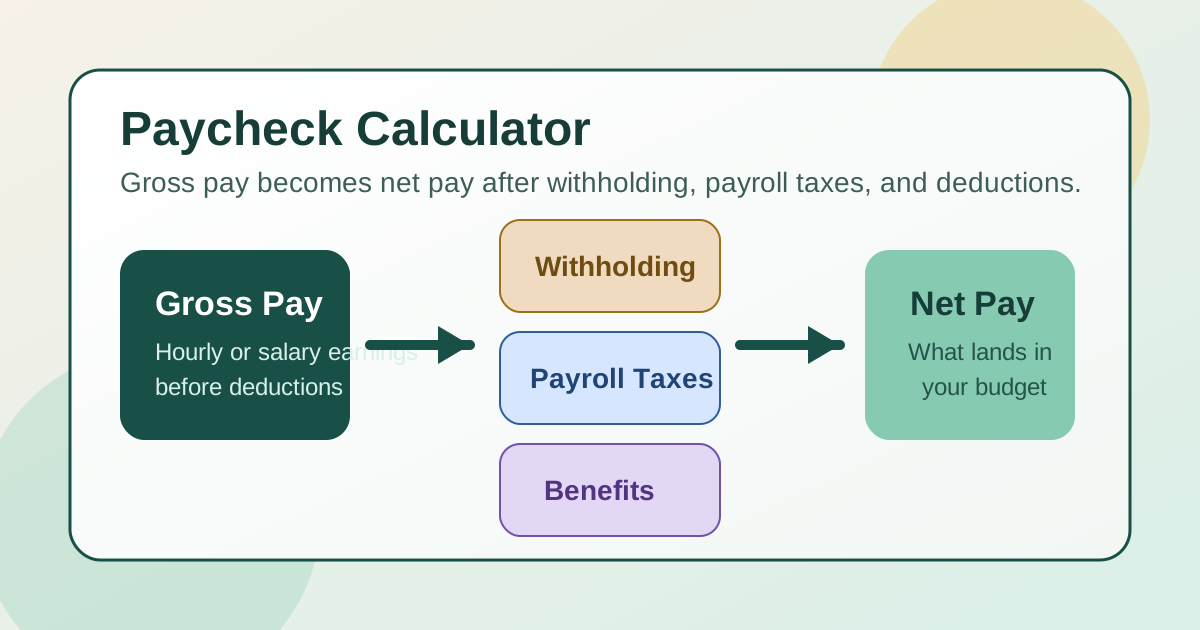
Gross pay is your pay before withholding and deductions. It may come from an hourly rate, a fixed salary, commissions, overtime, bonuses, or some combination of those.
Net pay is the spendable number
Net pay is what remains after federal income tax withholding, Social Security and Medicare payroll taxes, possible state or local taxes, and any deductions for benefits or retirement contributions. That is why paycheck People usually care more about net pay than annual salary headlines.
Pay frequency changes the feel of the same salary
A $60,000 salary can be split across 52 weekly checks, 26 biweekly checks, or 24 semi-monthly checks. The annual total may match, but the size of each paycheck does not. This is why many users search both paycheck calculator and biweekly pay calculator even when the yearly salary is already known.
How to estimate a paycheck with Calcsy
1. Start with gross income you trust
Use Calcsy's Salary Calculator to convert hourly or annual pay into monthly, weekly, or annual gross income. If you are comparing a job offer, run a realistic schedule instead of assuming every year is a perfect 40 hours times 52 weeks.
2. Translate annual pay into your actual pay rhythm
If you are paid every two weeks, compare the result with the patterns in Calcsy's Biweekly Pay Calculator Guide. This helps when you are budgeting rent, debt payments, childcare, or commuting around real paycheck timing.
3. Subtract withholding and deductions conservatively
Federal withholding depends on Form W-4 settings, income level, and household context. Benefits, retirement contributions, and other deductions then push take-home pay lower. If your goal is budgeting, a conservative estimate is safer than an optimistic one.
Why one paycheck can look wrong even when it is not
Withholding changed
If you changed your W-4, got married, added a dependent, started a second job, or added extra withholding, your check can move noticeably. The IRS Tax Withholding Estimator exists for exactly this reason.
Overtime can change withholding, but that is not the same as a special overtime tax
Searchers often ask why overtime "gets taxed more." Usually what changed is withholding on a larger check, not a separate overtime tax rate. The check can feel smaller than expected because a bigger gross amount triggers more withholding in that period.
For 2025 through 2028, some workers may also qualify for a federal overtime deduction
As of tax year 2025, the IRS has separate guidance for qualified overtime compensation. That does not mean overtime disappears from payroll taxes or from paycheck withholding in real time. It means some workers may be able to claim a federal income-tax deduction later when they file, subject to eligibility rules and recordkeeping. That distinction matters because paycheck searchers often confuse a year-end deduction with a bigger immediate net check.
Benefit elections can create a permanent shift
Health insurance, dental coverage, HSA contributions, retirement deferrals, commuter benefits, and other deductions can all change net pay. That is why paycheck intent often overlaps with "gross to net" and "after tax paycheck" queries.
Common paycheck calculator scenarios
Job offer comparison
People compare two salaries, two hourly rates, or hourly versus salary roles, then ask which one produces the better monthly life. That question is really about net pay, schedule, and benefits, not just gross compensation.
Debt and affordability planning
Many paycheck People are budgeting around a car payment, loan payment, or rent threshold. A useful next step is to compare estimated take-home pay with Calcsy's Loan Payment Calculator so the paycheck and the debt number live in the same monthly plan.
W-4 and withholding checkups
Another strong current intent cluster comes from people who got a refund that felt too large or a tax bill that felt too painful. They want a better balance between take-home pay now and tax accuracy later.
Common mistakes to avoid
Budgeting from gross pay
If you budget from gross pay, your real spending room will almost always be overstated.
Ignoring deductions outside tax
Insurance, retirement, garnishments, and other deductions can change a paycheck just as much as withholding.
Using one unusually high check as your baseline
Bonus checks, overtime-heavy periods, and three-paycheck months can distort what your normal budget can support.
Comparing annual salary without pay frequency
The annual number matters, but the paycheck cadence matters too when recurring bills are due on fixed dates.
Related calculators and guides
- Salary Calculator for hourly, monthly, annual, and estimated take-home comparisons.
- Salary Calculator Guide for the base gross-pay conversion formula.
- Hourly to Salary and Take-Home Pay Guide for job-offer conversion examples.
- Biweekly Pay Calculator Guide for 26-paycheck budgeting and pay-frequency comparisons.
- Loan Payment Calculator if you are matching paycheck reality to monthly obligations.
FAQ
Why is my paycheck smaller than my salary suggests?
Because each paycheck reflects withholding, payroll taxes, and other deductions, not just the gross salary divided by the number of pay periods.
How do I estimate take-home pay from a gross paycheck?
Start with gross pay for the pay period, then subtract estimated federal and state withholding, payroll taxes, and benefit or retirement deductions.
Can changing my W-4 change my paycheck amount?
Yes. W-4 changes can alter federal income tax withholding, which changes the amount you take home.
Why does overtime not increase take-home pay as much as I expected?
Because a larger check usually leads to more withholding in that pay period, and other percentage-based deductions may rise too.
What matters more for budgeting: annual salary or net paycheck?
Net paycheck usually matters more for short-term budgeting because it reflects what is actually available to spend after deductions.