Biweekly Pay Calculator Guide: Convert Hourly Pay to Gross and Estimated Take-Home
People searching for a salary or paycheck calculator are usually not doing abstract math. They are comparing job offers, checking whether a raise changes take-home pay, or trying to answer practical questions like "25 an hour is how much biweekly?" or "what is my monthly pay after taxes?"
Use Calcsy to model the pay schedule and a simple withholding estimate.
Open the Salary Calculator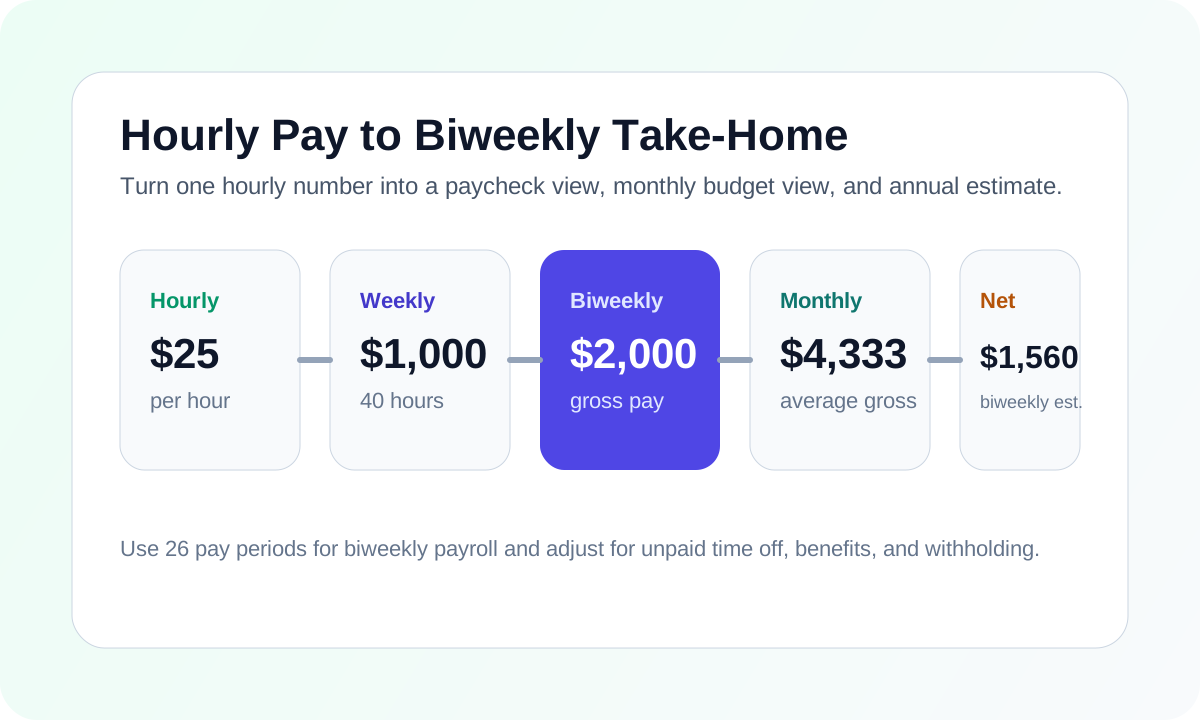
What people usually need from paycheck calculators
Most people use this guide to convert hourly pay into weekly, biweekly, monthly, or annual income, then sanity-check the difference between gross pay and take-home pay.
Useful follow-up questions are more decision-focused: is biweekly the same as twice monthly, should I use 52 weeks or fewer for unpaid time off, how does overtime change annual pay, how much tax should I expect to come out, how do deductions affect take-home pay, can I compare two job offers with different schedules, what happens if I am part-time, how do bonuses change withholding, is 26 paychecks the same as 24, and why does my paycheck not match simple hourly math.
Core formulas
weekly gross pay = hourly rate x hours per week
biweekly gross pay = weekly gross pay x 2
annual gross pay = hourly rate x hours per week x weeks per year
estimated take-home pay = gross pay - estimated withholding and deductions
Example: $25 an hour
If you work 40 hours per week at $25 per hour, weekly gross pay is $1,000. A simple biweekly estimate is $2,000. Annual gross pay at 52 weeks is $52,000. If you use a rough 22% withholding estimate, annual take-home becomes about $40,560 before any other deductions or benefits.
This example covers several common searches at once: 25 an hour is how much a year, how much is 25 an hour biweekly, how much is 25 an hour monthly, and what is my take-home pay after taxes.
Quick check: biweekly does not mean twice a month. Biweekly usually creates 26 pay periods in a year, while twice-monthly payroll usually creates 24. That difference can change budget planning even when the annual salary is identical.
How to answer the questions hidden inside paycheck searches
How much is my hourly wage per paycheck?
Start with hours per week, then match the pay schedule. Weekly, biweekly, monthly, and annual views are all useful because employers do not all pay on the same cadence.
Should I use 52 weeks per year?
Use 52 only if you expect a full year of paid work. Searchers asking salary calculator with unpaid time off or part-time annual pay are usually trying to correct an overestimate.
How do taxes affect take-home pay?
This is where planning question moves from gross pay to take-home pay. A simple calculator can estimate withholding, but real paychecks also change because of benefits, retirement contributions, health insurance, filing status, local taxes, and any pre-tax deductions.
How does overtime fit in?
Searchers often ask whether overtime is included in an hourly to salary estimate. The safest answer is no unless you model it intentionally. Regular hourly math can understate or overstate pay if overtime is routine.
Can I compare job offers with different schedules?
Yes. Convert each offer to annual gross pay first, then compare estimated take-home and pay frequency. This is a common reason people search biweekly vs semimonthly pay or hourly vs salary calculator.
Long-tail scenarios that matter in practice
Biweekly vs twice-monthly pay
Budgeting problems often come from mixing up 26 paychecks with 24. The annual amount may be the same, but the paycheck size and timing are different.
Monthly pay from an hourly job
Many job seekers want a monthly number for rent and debt planning. That search usually signals downstream intent tied to apartments, car loans, or other affordability decisions.
Take-home pay after benefits
People asking why their net pay looks low are often running into retirement contributions, health insurance, or other deductions. A rough calculator is still useful, but it should be framed as an estimate.
Part-time or variable-hour work
If hours change week to week, run a few scenarios rather than relying on one annual number. This is especially helpful for gig work, shift work, and seasonal roles.
Related tools and guides
- Salary Calculator for hourly, weekly, monthly, annual, and take-home estimates.
- Salary Calculator Guide for the base conversion formula.
- Hourly to Salary and Take-Home Pay Guide for a deeper walkthrough with examples.
- Loan Payment Calculator when you want to compare debt payments against income.
- Car Loan Calculator if paycheck math is part of a vehicle affordability check.
FAQ
How do I calculate biweekly pay from an hourly wage?
Multiply hourly pay by weekly hours, then multiply that number by two for a simple gross biweekly estimate.
Is biweekly the same as twice a month?
No. Biweekly usually means 26 paychecks per year, while twice monthly usually means 24.
Why does my paycheck not match the gross pay formula exactly?
Withholding, benefits, retirement deductions, local taxes, and any unpaid time off can change the final amount.
Can this help compare two job offers?
Yes. Convert both offers to annual gross pay first, then compare estimated take-home and pay frequency.
Is this tax advice?
No. This guide provides educational paycheck math, not tax, payroll, or legal advice.