Mortgage Calculator With Taxes and Insurance Guide: Estimate PITI, Escrow, PMI, and Real Payment
People searching for a mortgage calculator with taxes and insurance are usually close to a decision. They already know that a base mortgage payment is not enough. They want the real monthly number after property taxes, homeowners insurance, mortgage insurance, and sometimes HOA dues. That intent is especially strong in July 2026 because even a modest mismatch between principal-and-interest math and the full housing payment can change whether a purchase still fits the budget.
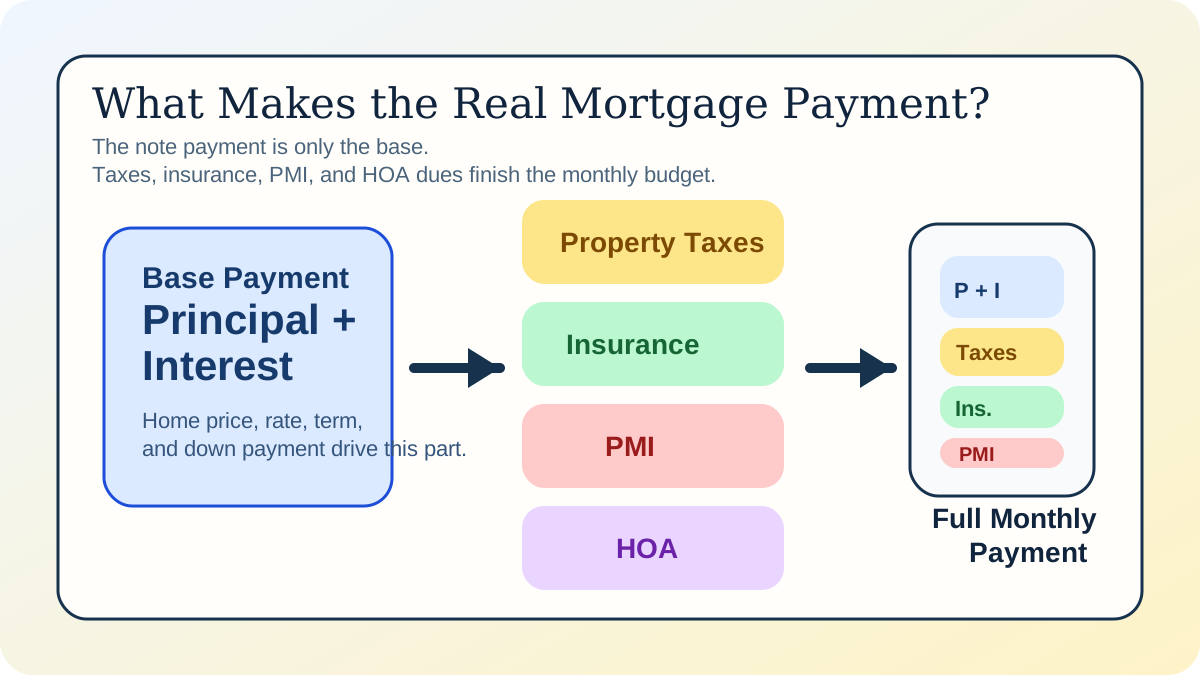
Run the base payment first, then pressure-test the full housing bill.
Open the Mortgage CalculatorQuick answer: what this calculator should actually do
A useful mortgage calculator with taxes and insurance should show principal and interest, then layer in property taxes, homeowners insurance, PMI when relevant, and any HOA dues so you can judge the full monthly payment.
If the tool only shows principal and interest, it is answering the smaller math question instead of the budgeting question buyers actually care about.
What people are obviously searching for
The head-term intent here is direct and high value:
- mortgage calculator with taxes and insurance
- monthly mortgage payment calculator with taxes and insurance
- PITI calculator
- house payment calculator with taxes and insurance
- mortgage calculator with PMI and taxes
- escrow mortgage calculator
- mortgage calculator with HOA
- how much is my mortgage with taxes and insurance
- real monthly mortgage payment calculator
- mortgage affordability calculator with taxes and insurance
What people are really asking before they make an offer
The long-tail question intent is more diagnostic:
- Why is the lender estimate so much higher than the principal-and-interest number?
- How much do property taxes raise my monthly payment?
- Is homeowners insurance included in my mortgage payment or paid separately?
- How do I estimate PMI with less than 20% down?
- How much do HOA dues reduce what I can really afford?
- Why does escrow make the payment change after closing?
- Should I budget from principal and interest or from full PITI?
- How do taxes and insurance change a refinance or affordability decision?
- What costs stay fixed and what costs can rise later?
- How much extra cash should I keep if taxes and insurance rise after year one?
Why this search intent is strong right now
Mortgage rates are still high enough that every extra housing cost matters
Freddie Mac's Primary Mortgage Market Survey showed the average 30-year fixed rate at 6.43% as of July 2, 2026. When the base loan payment is already elevated, property taxes, insurance, and PMI become the difference between a manageable payment and a stretched one.
Buyers are comparing full costs, not just rates
The CFPB's rate-comparison guidance makes the same point from a different angle: interest rate matters, but fees, points, mortgage insurance, and closing costs add up too. Searchers therefore want calculators that reflect the real payment they will live with, not the simplified marketing version.
Escrow confusion remains one of the biggest budgeting mistakes
People often understand that taxes and insurance exist, but they do not always realize how those annual costs get translated into a monthly escrow amount. That gap is why this query stays strong even among buyers who already used a basic mortgage calculator once.
What goes into a real mortgage payment
Principal and interest
This is the base loan payment created by the loan amount, interest rate, and term. Calcsy's Mortgage Calculator is the right starting point for this piece.
Property taxes
Property taxes are often paid monthly through escrow even though the bill is assessed on an annual cycle. The Property Tax Calculator Guide helps translate annual tax into the monthly pressure buyers actually feel.
Homeowners insurance
Insurance is another monthly affordability line even though it is not loan interest. If the lender escrows it, the amount lands inside the same monthly payment and can rise at renewal.
PMI or other mortgage insurance
If the down payment is below the threshold that avoids mortgage insurance, the monthly payment can move higher than many first-pass estimates suggest. The PMI Calculator Guide is useful when you are comparing low-down-payment scenarios.
HOA dues when relevant
HOA dues are not part of the loan, but they are part of the payment reality. Condo and planned-community buyers often miss this until they compare neighborhoods side by side.
How to use Calcsy for a better estimate
1. Start with the note payment
Use the mortgage calculator to model home price, down payment, rate, and term. That gives you a clean principal-and-interest baseline.
2. Add monthly tax and insurance estimates
Translate annual property tax and annual insurance into monthly amounts and add them on top. This is where simplified payment estimates usually fail.
3. Pressure-test low-down-payment scenarios
If you are below 20% down, layer in PMI and compare the result with the 10%, 15%, and 20% scenarios in the Down Payment Calculator Guide.
4. Compare the full payment against your actual budget
The more useful companion question is often affordability, not math alone. The How Much House Can I Afford Calculator Guide helps work backward from a payment you can defend.
Common use cases behind this query
First-time buyer sanity check
Many first-time buyers see a listing price that seems manageable, then discover the real payment is higher once tax, insurance, and PMI are included.
Rate-lock comparison
Borrowers comparing lender quotes often need to separate what changed because of rate from what changed because of escrow or insurance assumptions.
Condo and HOA-heavy markets
Search intent rises in areas where HOA dues are common because buyers need a full-payment calculator, not a loan-only calculator.
Refinance reality check
Some owners see a lower rate and assume the payment will drop dramatically. But if taxes and insurance keep moving, the full monthly number may not change as much as expected. The Refinance Calculator Guide helps frame that decision more carefully.
Common mistakes to avoid
Budgeting from principal and interest alone
This is the most common failure mode. Buyers feel the full payment, not only the loan note.
Using stale tax assumptions
Taxes can differ by location, exemptions, assessment timing, and whether the listing reflects recent reassessment reality.
Assuming insurance stays flat forever
Insurance is not fixed in the same way as the loan rate. Build margin for renewals and local market changes.
Forgetting the closing side of escrow
Monthly payment is one issue, but upfront escrow funding can also enlarge cash to close. The Closing Costs Calculator Guide separates those pieces.
Related calculators and guides
- Mortgage Calculator for the base principal-and-interest estimate.
- Property Tax Calculator Guide for monthly escrow translation.
- PMI Calculator Guide for low-down-payment scenarios.
- How Much House Can I Afford Calculator Guide for payment-based budgeting.
- Mortgage Interest Calculator Guide for separating loan interest from other housing costs.
FAQ
What should a mortgage calculator with taxes and insurance include?
It should include principal, interest, property taxes, homeowners insurance, mortgage insurance when relevant, and any HOA dues or recurring housing costs that shape the real monthly payment.
Why is my real payment so much higher than principal and interest?
Because principal and interest are only one layer. Escrowed taxes, homeowners insurance, PMI, and HOA dues can add meaningful monthly cost.
Do taxes and insurance change the mortgage interest amount?
No. They change the total payment you make each month, but they do not change the interest charged on the loan balance.
Is escrow the same thing as taxes and insurance?
No. Escrow is the payment method many lenders use to collect monthly amounts for taxes and insurance before those bills come due.
Should I compare homes by listing price or by full payment?
Full payment is the safer comparison because it captures the recurring costs you actually have to carry each month.