Closing Costs Calculator Guide: Estimate Cash to Close, Prepaids, and Seller Credits
People who search for a closing costs calculator usually think they want one percentage. What they actually want is a reliable cash-to-close estimate before an offer, rate lock, or refinance decision gets more expensive. The current user need is highly practical: buyers want to separate lender fees from title charges, understand prepaids and escrow funding, and see how seller credits change the final wire amount.
Start with the monthly mortgage scenario, then add the upfront cost layer.
Open the Mortgage CalculatorQuick answer: what a closing costs calculator should show
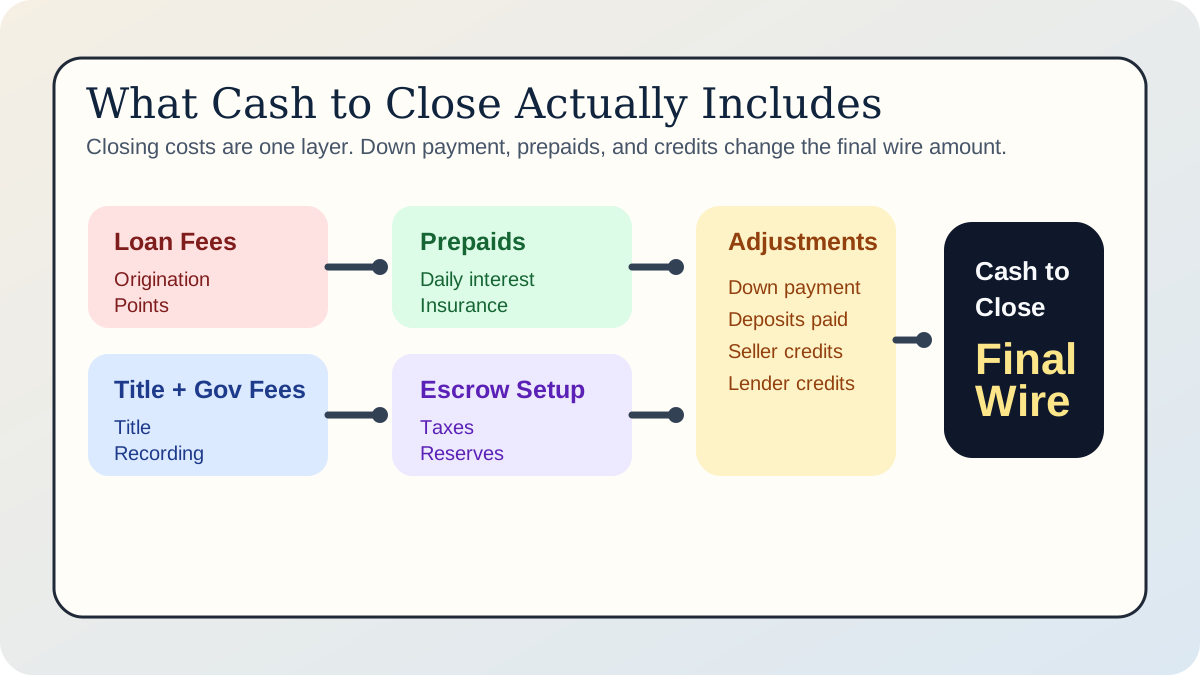
A useful closing costs calculator should break upfront home-buying costs into loan fees, title and government charges, prepaids, escrow funding, and the final cash-to-close amount.
If it only gives a broad percentage, it misses the reason most people search for the tool: they are trying to avoid being surprised by the wire amount a few days before closing.
What people are obviously searching for
The head-term closing cluster is direct and commercial:
- closing costs calculator
- cash to close calculator
- mortgage closing costs calculator
- home buying closing costs calculator
- refinance closing costs calculator
- seller credits closing costs calculator
- title fees calculator
- prepaid closing costs calculator
- how much are closing costs on a house
- closing costs estimate mortgage
What people are really asking before they wire money
The deeper long-tail intent is more situational:
- What is the difference between closing costs and cash to close?
- How much cash do I really need in addition to the down payment?
- Why did my cash-to-close number change from the Loan Estimate?
- Do prepaids count as closing costs?
- Can seller credits cover all of my closing costs?
- Should I roll closing costs into the loan?
- How much do title and government fees usually add?
- What fees can I shop for before closing?
- Why does a refinance still need cash even when the payment drops?
- How do points affect my closing costs and APR?
Why closing-cost intent is strong right now
Searchers care about liquidity, not just approval
Late-June 2026 mortgage rates are still hovering around the mid-6% range, which keeps both monthly payments and upfront rate-shopping decisions under pressure. Buyers are therefore asking not only whether they qualify, but whether they can close without exhausting reserves.
Cash to close is where surprises happen
CFPB's Loan Estimate and Closing Disclosure explainers both center on one reality: buyers often confuse total closing costs with the larger cash-to-close number. That confusion drives searches because the final wire includes more than lender fees alone.
Seller credits and rate-cost tradeoffs matter more in a slower market
When buyers negotiate for credits or compare points versus higher rates, they need a calculator that reflects those choices directly. Current intent is less about abstract averages and more about how one concession or fee change affects the actual closing table math.
The pieces of a closing-cost estimate
Lender and origination charges
These are upfront charges tied to making the loan. CFPB's Closing Disclosure explainer lists origination charges separately so borrowers can see what they are paying the lender itself.
Title, recording, and government fees
These costs are tied to transferring the property and recording the mortgage. They can vary meaningfully by state, county, and the title company involved.
Prepaids
Prepaids typically include daily interest before the first full payment period and often the first year's homeowners insurance premium. These items are not throwaway fees. They are real housing costs collected upfront.
Initial escrow funding
If the loan uses escrow, the lender may collect an initial balance for property taxes and insurance. That can make the upfront number feel much larger than borrowers expected from online percentage estimates.
Seller credits and deposits already paid
Credits can reduce what you must bring, while earnest money or other amounts already paid can also lower the final wire amount. That is why cash to close and total closing costs are not identical.
How to estimate closing costs with Calcsy
1. Build the loan payment first
Use Calcsy's Mortgage Calculator to estimate the mortgage size that matches your home price and down payment plan. That gives you the loan amount many lender fees will be based on.
2. Separate monthly affordability from upfront affordability
A buyer can afford the payment and still be short on closing cash. Pair this guide with the How Much House Can I Afford Calculator Guide so the monthly budget and upfront budget stay aligned.
3. Add rate-and-fee choices carefully
If you are comparing lender credits or discount points, read those decisions through the lens of both upfront cash and long-run cost. The APR Calculator Guide and the new Mortgage Points Calculator Guide help with that tradeoff.
Common closing-cost scenarios
First-time buyer with limited cash reserves
This searcher usually needs to know how much cash is required beyond the down payment and how much a seller credit could realistically offset.
Buyer comparing lenders
Here the real question is not which rate looks smallest. It is which offer creates the best balance between rate, points, credits, and total cash due.
Homeowner refinancing
Refinance searchers want to know whether the lower payment is worth the upfront cost. That usually means comparing closing costs against expected monthly savings and time to break even. The Refinance Calculator Guide covers that next step.
Common mistakes to avoid
Treating closing costs as one flat percentage
That shortcut can be fine for a rough draft, but it is too weak for an offer, rate lock, or final cash planning.
Forgetting prepaids
Many borrowers underestimate how much prepaid interest, insurance, and escrow setup can add to the upfront total.
Assuming seller credits replace the down payment
Credits can help with eligible closing charges, but they do not usually eliminate the need for buyer funds entirely.
Ignoring the revised Closing Disclosure
CFPB explicitly recommends using the three business days before closing to compare the Closing Disclosure against the Loan Estimate and question anything unexpected.
Related calculators and guides
- Mortgage Calculator for the underlying loan scenario.
- How Much House Can I Afford Calculator Guide for the monthly budget view.
- Down Payment Calculator Guide for cash-versus-borrowing tradeoffs.
- APR Calculator Guide for comparing fee-heavy versus lower-fee offers.
- Mortgage Points Calculator Guide for buy-down break-even math.
FAQ
What is the difference between closing costs and cash to close?
Closing costs are the loan and settlement charges. Cash to close is the total you need to bring after adding down payment and prepaid items and subtracting credits or deposits already paid.
Why are prepaids and escrow funding part of my upfront cost?
Because the lender often collects interest, insurance, and starting escrow balances at closing so the loan begins with required reserves in place.
Can seller credits reduce what I bring to closing?
Yes. They can offset eligible closing charges and reduce the final amount you need to bring, though they usually do not replace the need for your own down payment funds.
Can I roll closing costs into the loan?
Sometimes, but doing so usually means borrowing more and paying interest on those extra dollars over time.
When should I compare the Loan Estimate and Closing Disclosure?
As soon as you receive each form. CFPB says lenders must provide the Closing Disclosure at least three business days before scheduled closing, and that window is the time to resolve surprises.