RV Loan Calculator Guide: Estimate Monthly Payment, APR, Down Payment, and Total RV Cost
As of July 11, 2026, RV loan search intent is strongly payment-first. People are not asking abstract questions about recreational vehicle financing. They are trying to estimate whether a travel trailer, fifth wheel, camper van, or motorhome payment still fits after insurance, storage, campground fees, fuel, and maintenance are added. Recent July 2026 lender coverage still frames RV financing as a high-ticket borrowing decision with long terms, credit-sensitive pricing, and meaningful used-versus-new tradeoffs, so the calculator intent is commercial and close to application.
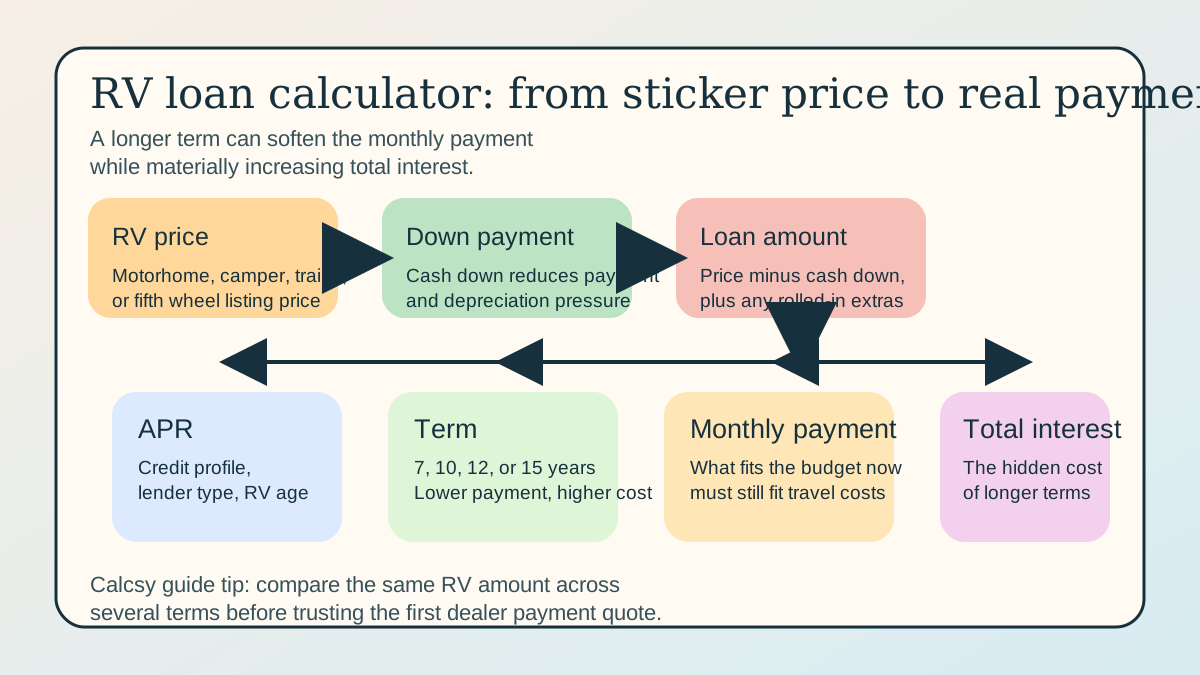
Model a motorhome, camper, or trailer payment while you read.
Open the Loan Payment CalculatorQuick answer: what an RV loan calculator should show
A useful RV loan calculator should show the monthly payment, total interest, and total paid after you enter the financed amount, APR, and term.
It should also make down payment, used-RV pricing, and longer-term tradeoffs obvious, because most serious RV shoppers are comparing affordability today against total cost and depreciation later.
What people are obviously searching for
The direct query cluster is transactional and comparison-heavy:
- rv loan calculator
- motorhome loan calculator
- camper loan calculator
- travel trailer loan calculator
- rv monthly payment calculator
- used rv loan calculator
- rv finance calculator
- rv loan payment calculator
- rv down payment calculator
- rv affordability calculator
What people are really asking before they finance an RV
The long-tail questions reveal budget anxiety and purchase hesitation:
- How much would a $60,000 RV payment be at today's rates?
- Is a 15-year RV loan too long for a used motorhome?
- How much down payment do I need for an RV loan?
- Do RV loans have higher rates than car loans?
- Should I finance a travel trailer through a dealer or credit union?
- Can I afford the RV payment after insurance, storage, and campground costs?
- Is buying used worth the higher rate if the sticker price is lower?
- What credit score do I need for an RV loan?
- How much interest do I save by shortening the RV term?
- Will I be upside down if I finance too much of the RV price?
Why RV calculator intent is strong right now
Long terms make the monthly payment look safer than the total cost
Investopedia's RV term explainer, published on May 30, 2023, notes that RV loans commonly run 10 to 15 years, with longer options available depending on amount and collateral. That structure keeps payment intent high because shoppers want the lowest monthly number first, then discover how much extra interest the longer schedule creates.
Credit-union and specialty-lender shopping is active in July 2026
WSJ Buy Side's July 8, 2026 credit-union roundup specifically called out American Heritage for RV financing, including trailers and motorhomes. That is a useful signal that serious searchers are not just price-checking RVs. They are actively comparing lender types and eligibility rules before applying.
Used RV financing creates a second search layer
Many buyers can tolerate the payment on a used RV faster than they can tolerate a new sticker price, but used inventory often brings older-model restrictions, different rates, and more uncertainty about resale value. That pushes users toward calculator searches that compare down payment and term combinations instead of just browsing listings.
How to estimate an RV loan with Calcsy
1. Start with the financed amount, not just the listing price
Subtract your planned down payment and be honest about whether taxes, registration, accessories, delivery, or warranty products are getting rolled into the deal. The more you finance beyond the core vehicle price, the easier it is to create a payment that lasts longer than the excitement of the purchase.
2. Test multiple loan terms instead of trusting the first payment quote
Use Calcsy's Loan Payment Calculator to compare the same financed amount over 7, 10, 12, and 15 years. The monthly payment may fall meaningfully as the term stretches, but total interest often climbs enough to change the purchase decision.
3. Add the ownership costs that the dealer payment does not show
RV affordability is not only the loan payment. Insurance, storage, fuel, campsite fees, maintenance, winterizing, and repairs all matter. If the payment looks acceptable only when those expenses are ignored, the RV may not be affordable in the way your household actually experiences it.
4. Compare RV financing against nearby borrowing options
Some buyers qualify for unsecured lending or cross-shop against standard vehicle financing. The Personal Loan Calculator Guide, Car Loan Calculator Guide, and APR Calculator Guide help expose when the monthly payment looks similar but the fee structure or term risk is very different.
Down payment changes more than approval odds
A larger down payment can protect against fast depreciation
RVs are lifestyle purchases with real wear, storage, and resale friction. A bigger down payment does not just lower the monthly payment. It also reduces the chance that you owe more than the RV is worth if you want to sell earlier than planned.
Small down payments often create longer-term pressure
Stretching the term and keeping little cash in the deal can make a motorhome or trailer look reachable. It can also leave the borrower with a manageable-looking monthly bill and an expensive total commitment that lasts far longer than expected.
New versus used RV financing
New RVs may offer cleaner financing paths
Newer inventory can qualify for broader lender programs and sometimes simpler underwriting, but the purchase price is usually much higher.
Used RVs can lower the loan amount while raising other risks
Used units may improve the financed amount immediately, yet older model-year rules, inspection uncertainty, and higher repair risk can make the real ownership budget less predictable.
Common mistakes to avoid
Choosing the longest term just because it clears the monthly budget test
A lower payment is not automatically cheaper or safer. Long terms can leave you paying interest deep into the years when maintenance costs climb.
Ignoring the full travel budget
Fuel, storage, campground reservations, registration, and insurance can easily turn an acceptable loan payment into an uncomfortable total monthly cost.
Financing extras that do not improve long-term value
Extended products and dealer add-ons can quietly increase the financed amount and total interest.
Skipping debt-to-income reality checks
If the RV payment competes with housing goals or other debt, review the guardrails in the Debt-to-Income Ratio Calculator Guide before treating approval as proof of affordability.
Related calculators and guides
- Loan Payment Calculator for fixed monthly payment and total-interest estimates.
- Car Loan Calculator Guide for trade-in, APR, and vehicle-financing comparison logic.
- Personal Loan Calculator Guide if you are cross-shopping unsecured borrowing.
- APR Calculator Guide for understanding rate versus fee-adjusted cost.
- Debt-to-Income Ratio Calculator Guide for checking whether the payment still fits your broader borrowing profile.
FAQ
What should an RV loan calculator show?
It should show the monthly payment, total interest, total amount paid, and how down payment, APR, and term change the result.
Are RV loans usually longer than car loans?
Usually yes. RVs often use longer terms because the purchase price is higher, which lowers the monthly payment but can raise total interest.
Is a longer RV term always better for affordability?
No. It can help the monthly payment while making the overall deal much more expensive and increasing depreciation risk.
How much down payment should I plan for?
The right amount depends on lender rules and your budget, but a larger down payment usually improves both the payment and your equity position.
Is a used RV automatically the cheaper decision?
Not always. The lower price can help, but higher rates, repairs, and older-unit restrictions can narrow the savings.