Car Loan Calculator Guide: Payment, APR, Down Payment, and Trade-In Math
Current auto-loan search intent is overtly commercial. NerdWallet's auto loan page sits inside a larger financing cluster with refinance and total-cost tools, while the CFPB's auto-loan guidance tells shoppers to ask what they can afford, how credit affects rate, and what their trade-in is worth before they buy. Searchers are trying to price a real vehicle purchase, not just learn a formula.
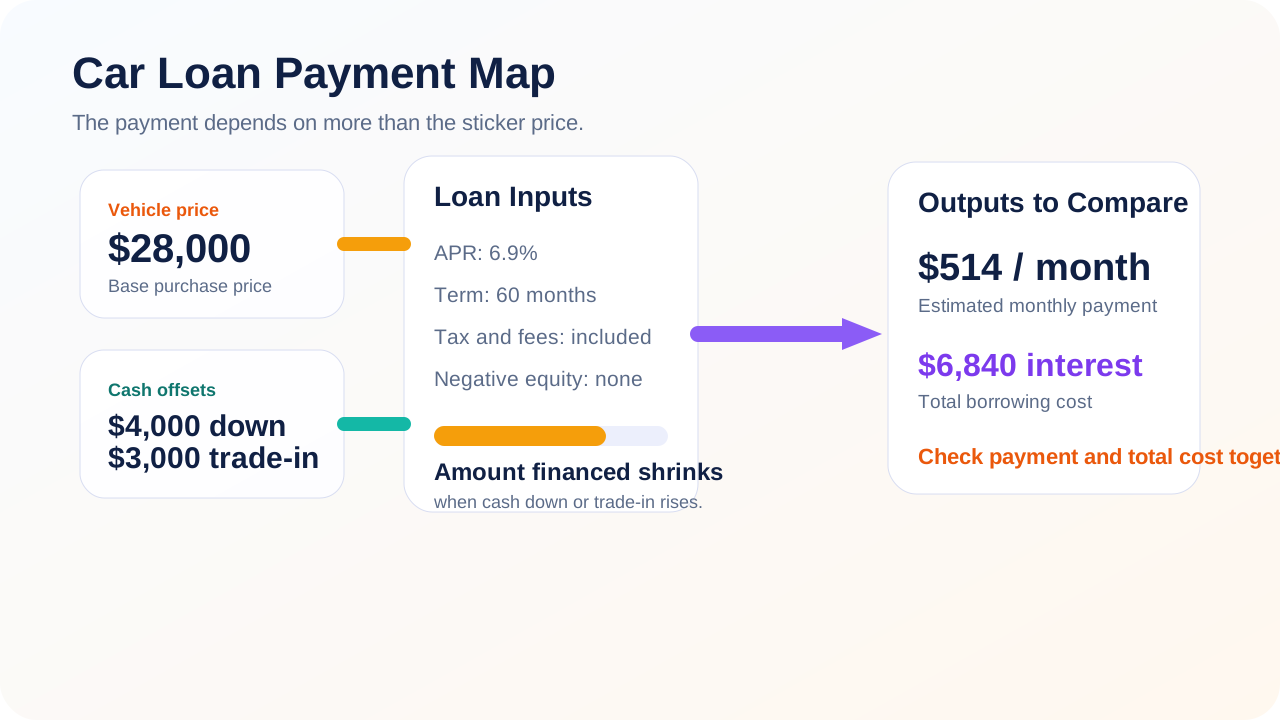
Check the monthly payment and total interest before dealer add-ons make the number fuzzy.
Open the Car Loan CalculatorWhat people search for directly
These obvious queries signal strong shopping and lead-generation intent:
- car loan calculator
- auto loan calculator
- car payment calculator
- used car loan calculator
- car loan interest calculator
- monthly car payment calculator
- down payment car calculator
- trade-in car loan calculator
- APR car payment calculator
- auto financing calculator
What people are really deciding
Long-tail searches usually show a near-term purchase or refinance decision:
- How much will my payment be on a $25,000 car?
- How much difference does 6% APR vs 9% APR make?
- Is 72 months too long for a used car loan?
- Should I put more money down or keep cash in savings?
- How much do taxes and fees add to the payment?
- What if I have negative equity on my current trade-in?
- Can I afford the car after insurance and maintenance?
- Will a bigger down payment help me get a better rate?
- Should I finance through the dealer or my bank?
- How much total interest will I pay over the life of the loan?
Why this search intent matters
The CFPB's current auto-loan guidance explicitly warns that shopping by vehicle price alone misses the factors that change monthly and overall loan cost: interest rate and APR, taxes and fees, optional add-ons, insurance, and ongoing maintenance. The same CFPB page also points shoppers toward three money-saving levers: a larger down payment, a less expensive vehicle, and fewer extras. That is exactly what a useful car-loan guide should help people model.
Core formula and the inputs that move the payment
Amount financed = vehicle price - down payment - trade-in credit + taxes and fees rolled into the loan
Monthly payment depends on amount financed, APR, and number of monthly payments
People searching for auto-loan help usually need five inputs before the result becomes believable:
- vehicle price
- down payment
- trade-in value and any remaining balance
- APR
- loan term
Example: same car, different financing outcome
Take a $28,000 vehicle with taxes and fees on top. One buyer puts $2,000 down at 8% APR for 72 months. Another puts $6,000 down at 6% APR for 60 months. The second deal may feel heavier upfront, but it can materially reduce both monthly payment pressure and total interest. This is why shoppers search car loan calculator, trade-in calculator, and affordability questions together.
Quick takeaway: two deals with similar monthly payments can have very different total costs. Always check both payment and lifetime interest before calling a loan affordable.
How to use a car loan calculator well
Start with the all-in price
If you only test the sticker price, you will probably understate the final payment. Taxes, registration, dealer fees, and add-ons can move the number meaningfully.
Test down payment and trade-in separately
The CFPB encourages shoppers to know what their trade-in is worth before financing. A larger down payment and a stronger trade-in both reduce the amount financed, but they affect your cash position differently. Model both.
Compare terms instead of forcing one payment
A longer term can make the monthly figure look comfortable while raising the total cost. If the only way to make the payment work is stretching the loan, the vehicle may be too expensive.
Model credit-sensitive APR outcomes
The CFPB says credit reports and scores are among the most important factors in the rates lenders offer. That means rate shopping is part of affordability planning, not something to postpone until after you pick the car.
What a bigger down payment can do
Investopedia's January 6, 2026 car down payment guide summarizes the tradeoff clearly: a larger down payment can lower monthly payments, reduce interest costs, improve loan approval odds, and help avoid upside-down loans. It does not mean everyone should drain savings, but it does mean down payment size is one of the highest-leverage inputs in the calculator.
Common mistakes people make
Shopping by payment alone
A low payment can hide a long term, high APR, or rolled-in fees. Payment is only one output.
Ignoring taxes and dealer fees
Searchers often plug in only the sale price, then get surprised by the financed total.
Forgetting insurance and maintenance
The CFPB explicitly flags these as affordability factors. A manageable loan can still create an uncomfortable car budget.
Rolling negative equity into the next loan
If you owe more than the current car is worth, the new loan can become expensive fast. Model that scenario honestly before you sign.
Related calculators and guides
- Car Loan Calculator to test price, term, APR, and trade-in assumptions.
- How Much Car Can I Afford Guide for full-budget framing.
- Sales Tax Calculator for a rough checkout estimate before fees.
- Car Sales Tax Calculator Guide for out-the-door planning.
- Loan Payment Calculator if you want the same math in a generic installment-loan format.
FAQ
How do I estimate a car payment before going to a dealer?
Estimate the all-in price, then test down payment, trade-in value, APR, taxes, fees, and term in a calculator. Sticker price alone usually understates the real payment.
Does a bigger down payment lower both payment and interest?
Usually yes. A bigger down payment reduces the amount financed, which typically lowers the monthly payment and the total interest paid over time.
Is a longer auto loan term always better for affordability?
No. A longer term can lower the monthly payment, but it often increases total interest and keeps you in the loan longer.
Does my credit score affect the payment?
Yes. Credit affects APR, and APR directly affects both the monthly payment and the total cost of borrowing.
Should I keep some cash instead of putting it all into a down payment?
Often yes. You still need room for emergency savings and post-purchase costs. The right down payment is the one that improves the loan without leaving the rest of your finances exposed.