Rule of 72 Guide: How Long Will Money Take to Double?
People searching for the Rule of 72 are usually trying to answer a bigger question than mental math. They want to know how fast savings can grow, whether a target return is realistic, and when they should switch from a rough estimate to a full compound interest calculator.
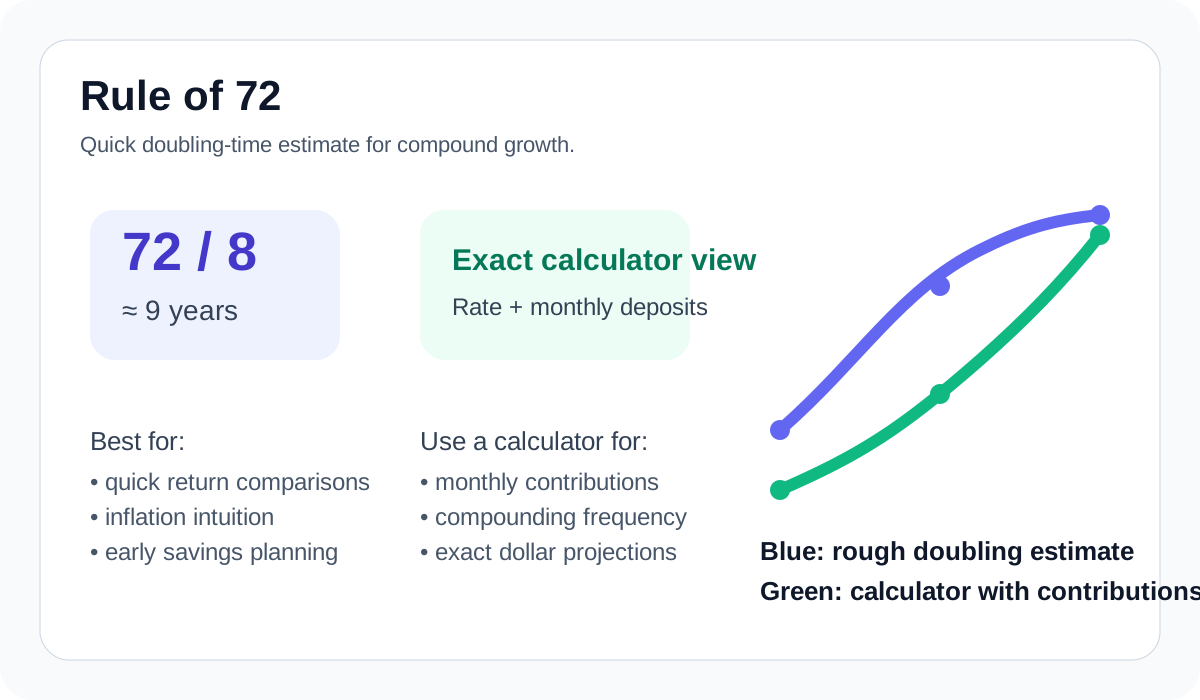
Move from quick estimate to a fuller savings projection.
Open the Compound Interest CalculatorQuick answer: the Rule of 72 formula
Estimated years to double = 72 divided by the annual return rate.
At 8%, the Rule of 72 gives about 9 years. At 6%, it gives about 12 years. It is a shortcut for compound growth, not a replacement for a detailed investment projection.
What people are obviously searching for
Common questions around this topic is heavily calculator-driven. Common direct searches include:
- rule of 72 calculator
- compound interest calculator
- how long will it take money to double
- investment growth calculator
- savings growth calculator
- future value calculator
- compound interest with monthly deposits
- double money calculator
- annual return calculator
- monthly contribution calculator
What people are actually trying to plan
Long-tail searches usually reveal a planning decision, not just curiosity:
- How long will $10,000 take to double at 7%?
- How much faster does money grow if I add $100 a month?
- Is the Rule of 72 accurate at low rates?
- Does monthly compounding matter compared with annual compounding?
- What rate do I need to double money in 10 years?
- How do fees slow down compound growth?
- Can I use the Rule of 72 for inflation and purchasing power?
- Does the Rule of 72 work for debt?
- What is the difference between APY and expected return?
- When should I stop using mental math and use a real calculator?
When the Rule of 72 is useful
Fast comparison between rates
If one savings option grows at 6% and another at 8%, the shortcut tells you the first doubles in about 12 years and the second in about 9 years. That is enough to see the direction quickly.
Reality checks during planning
It helps when you want a rough sense of whether a retirement assumption, investment pitch, or inflation estimate is even plausible before you model it more carefully.
Simple teaching tool
The Rule of 72 is popular because it makes compounding intuitive. A small difference in return rate can change doubling time by years, which is the lesson many savers miss at first.
When the Rule of 72 is not enough
Investor.gov's compound interest calculator includes an initial investment, monthly contribution, time in years, estimated interest rate, and compounding frequency. That matters because the Rule of 72 leaves out several things people actually care about:
- regular monthly contributions
- different compounding frequencies
- changing rates over time
- fees, taxes, and inflation
- specific dollar goals instead of simple doubling
Example: 72 is helpful, but contributions change the story
A saver with $10,000 at 8% can use the Rule of 72 and estimate doubling in about 9 years. That is a good start.
But if the same saver adds $100 every month, the end result is no longer just about doubling the original lump sum. It becomes a monthly contribution problem, which is exactly where a compound interest calculator is more useful than mental math.
How the Rule of 72 connects to inflation
The same shortcut is often used in reverse to estimate how long inflation can cut purchasing power in half. That does not mean inflation is an investment return, but it does show why even moderate percentage changes matter over time.
This is also why many searchers jump from rule of 72 straight into terms like savings growth, future value, compound interest monthly, and retirement calculator. They are trying to protect buying power, not just memorize a formula.
Common mistakes to avoid
Treating the shortcut as exact
The Rule of 72 is a fast estimate, not a guarantee. It works best when growth is relatively steady and the rate is in a moderate range.
Ignoring contributions
Monthly investing changes the result dramatically. If you are contributing along the way, use a calculator instead of relying only on doubling-time math.
Ignoring fees and taxes
Even a small annual fee can slow long-term growth. Searchers asking whether 1% matters are really asking how much time and compounding they lose.
Confusing borrowing and investing math
Compounding can help investments grow, but it can also make debt more expensive. The same idea that makes savings powerful can work against borrowers.
Related calculators and guides
- Compound Interest Calculator for monthly contribution and future value estimates.
- Compound Interest Calculator Guide for the full formula and assumptions.
- Invest $100 a Month Compound Interest Guide for recurring contribution examples.
- Salary Calculator if you are deciding how much monthly cash flow can go toward saving.
- Loan Payment Calculator to compare growth goals against debt costs.
FAQ
What is the Rule of 72?
It is a shortcut that estimates doubling time by dividing 72 by the annual return rate.
Is the Rule of 72 exact?
No. It is a quick estimate and becomes less precise when growth assumptions are unusual or when you need contribution-based planning.
Why use a compound interest calculator instead?
A calculator can model monthly contributions, compounding frequency, and exact dollar outcomes rather than only years to double.
Can I use the Rule of 72 for inflation?
Yes, as a rough estimate for how long purchasing power could take to halve at a steady inflation rate.
Does the Rule of 72 work for debt too?
It can illustrate how compounding affects balances, but debt products often need more precise math and loan-specific assumptions.