Invest $100 a Month: Compound Interest Guide for Long-Term Growth
People who search for "invest 100 a month" are usually asking a practical future-value question: if I start small and stay consistent, what could this turn into over 10, 20, or 30 years, and when do the gains start doing more of the work than the contributions?
Try your own monthly contribution scenario.
Open the Compound Interest Calculator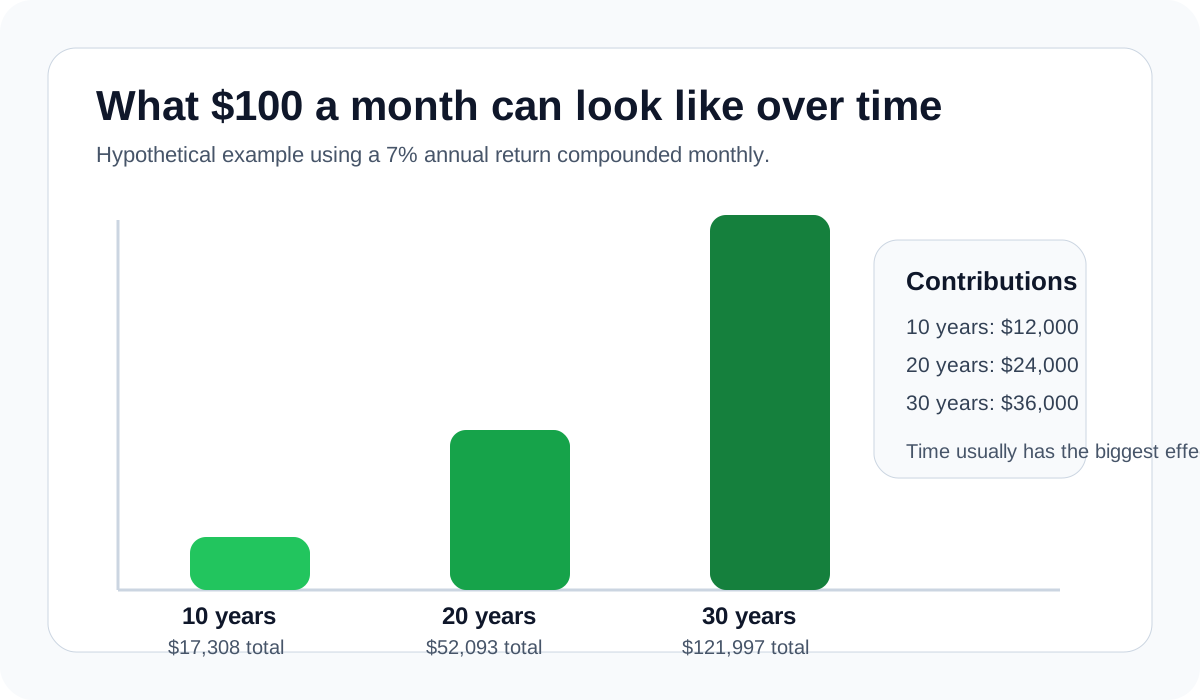
What people usually mean by "invest $100 a month"
Most people use this guide to see how a small recurring contribution could grow under different time periods and return assumptions. The point is not to predict a future balance, but to understand how time, contribution size, and compounding interact.
The decision-focused questions are usually more practical: whether $100 a month is enough to start, how 10 years compares with 20 or 30 years, what return assumption is reasonable, how inflation changes real value, and what happens if the monthly contribution rises later.
Simple formula for monthly contributions and compound growth
future value = current principal grown over time + each monthly contribution grown for however long it stays invested
You do not need to memorize the full formula to use the calculator well. The important inputs are starting balance, monthly contribution, estimated annual return, and years invested.
Example scenario: $100 per month at a 7% annual return
Using a hypothetical 7% annual return compounded monthly and starting from $0:
- After 10 years: about $17,308 from $12,000 in contributions.
- After 20 years: about $52,093 from $24,000 in contributions.
- After 30 years: about $121,997 from $36,000 in contributions.
Why this matters: the monthly contribution only triples from $12,000 to $36,000 across those windows, but the ending value grows much faster because the earnings themselves keep earning.
Why the first years feel slow
Early growth comes mostly from contributions
Searchers often expect the chart to jump immediately. In the first years, most of the account value comes from the money you put in rather than from investment gains.
Later growth comes more from compounding
That changes over time. By the later years, the accumulated balance becomes large enough that the estimated gains can contribute more than a single month of saving. That is the core reason people search 100 dollars a month for 30 years or monthly investing growth calculator.
Consistency usually matters more than perfection
planning question here is rarely about finding a magic number. It is usually about proving that a consistent habit has value even when the starting amount is small.
Questions real users ask before they start
Is $100 a month enough to invest?
For many people, yes. It may not reach every long-term goal by itself, but it is large enough to show the effect of compounding and build the habit of regular investing or saving.
What rate should I use in a calculator?
That depends on what you are modeling. A savings account, bond fund, and stock index fund can have very different return assumptions. A calculator is best used for scenario planning, not certainty.
What if I increase the contribution later?
That is one of the most common hidden intents. People often start at 100 per month, then test 150, 250, or 500 to see how much faster the ending value might grow.
Does inflation matter?
Yes. A nominal ending balance can still buy less in the future if inflation stays elevated. That is why many searchers compare nominal growth with real purchasing power.
How to use a monthly contribution calculator well
- Start with a conservative return scenario, not just an optimistic one.
- Compare 10-year, 20-year, and 30-year windows side by side.
- Test what happens if you increase the monthly amount by a small step.
- Keep emergency savings and near-term cash needs separate from long-term investing assumptions.
Small changes that usually matter most
Starting earlier
Time is usually the strongest lever in compound-growth examples. Starting earlier gives each contribution more time to earn returns on top of earlier returns.
Increasing the monthly amount
People who search 100 vs 500 a month calculator or how much should I invest monthly are usually comparing contribution size against time. Even modest increases can have a large long-term effect.
Staying consistent during uneven markets
Monthly contribution searches often overlap with dollar-cost-averaging questions because users want a repeatable process, not just a one-time estimate.
Best internal tools and related guides
- Compound Interest Calculator for future value, monthly contribution, and interest-earned scenarios.
- Salary Calculator if you want to translate a paycheck or raise into a monthly investing amount.
- Loan Payment Calculator if you are deciding between extra investing and fixed monthly debt costs.
- Compound Interest Calculator Guide for the broader future-value explanation.
- Hourly to Salary and Take-Home Pay Guide if you need to find room in your budget first.
FAQ
How much will $100 a month grow in 10 years?
At a hypothetical 7% annual return compounded monthly, it grows to about $17,308. Actual results depend on the return and timing assumptions used.
How much will $100 a month grow in 30 years?
At the same hypothetical 7% annual return compounded monthly, it grows to about $121,997. That scenario uses $36,000 of total contributions and the rest from growth.
Is a compound interest calculator exact?
No. It gives scenario estimates. Real returns, fees, taxes, account type, and market timing can change the result.
Should I use monthly or annual contributions in the calculator?
Use the timing that best matches how money is actually added. Monthly contributions usually model paycheck-based saving more accurately.
Is this investment advice?
No. This guide is educational and meant for planning scenarios only. It is not investment, tax, or legal advice.