Mortgage Recast Calculator Guide: Lower Payment After a Lump-Sum Principal Reduction
Mortgage recast calculator intent is unusually practical in 2026. People are often homeowners who have cash from a bonus, inheritance, home sale, or stock vest and want one specific answer: if I put a large lump sum toward principal, will my required monthly mortgage payment actually go down without giving up my current rate. That is a different question from extra payments and a very different question from refinancing.
Model the remaining balance and payment tradeoff while you compare options.
Open the Mortgage CalculatorQuick answer: what a mortgage recast calculator helps you estimate
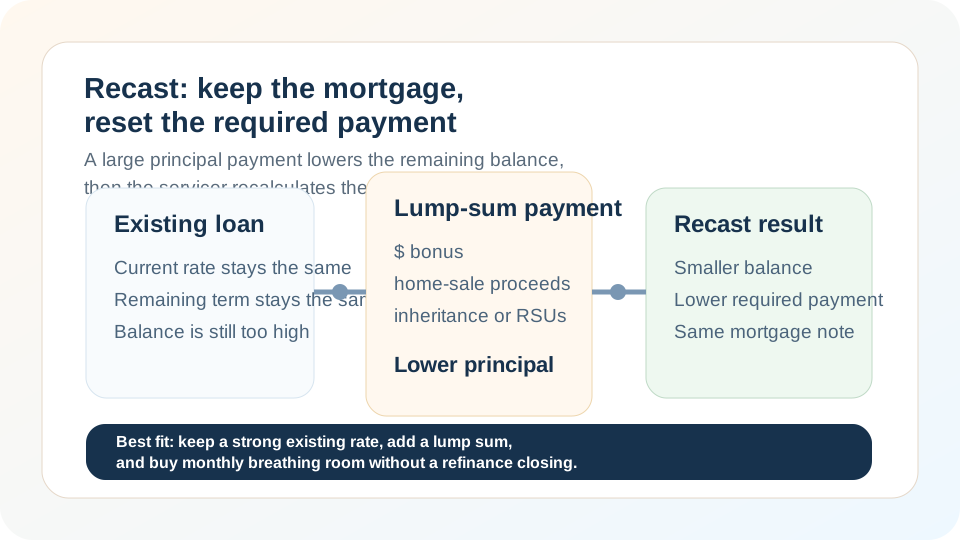
A mortgage recast estimate shows how a lump-sum principal payment can reduce the required monthly payment while keeping the same mortgage rate and original payoff date.
That makes recast intent different from refinance intent. People usually want payment relief without a new loan application, new closing costs, or a worse 2026 mortgage rate.
What people are obviously searching for
Common calculator questions are narrow and transactional:
- mortgage recast calculator
- loan recast calculator
- mortgage reamortization calculator
- recast mortgage calculator with lump sum
- mortgage recast vs refinance
- mortgage recast payment calculator
- re-amortize mortgage calculator
- recast mortgage after large principal payment
- how much does a recast lower payment
- is mortgage recasting worth it
What homeowners are really asking before they call the servicer
The long-tail questions reveal the decision friction more clearly:
- How much lump sum do I need before a recast meaningfully lowers the payment?
- Can I recast if I just bought a home and sold my old one?
- Is recasting better than making extra payments and keeping the same bill?
- Should I recast instead of refinancing if my current rate is lower than today's rates?
- Do all conventional mortgages allow recasting?
- Can I recast after applying a windfall from an inheritance or bonus?
- Does a recast shorten the loan or only lower the payment?
- How much is the typical recast fee and does it change the math?
- Should I keep cash reserves instead of using every dollar for a recast?
- What is the break-even logic between recast, refinance, and no change?
Why recast intent is strong right now
Many homeowners want payment relief without replacing a good old rate
Freddie Mac's June 25, 2026 mortgage survey showed the average 30-year fixed rate at 6.49% and the average 15-year fixed rate at 5.84%. That keeps refinance math challenging for owners who already hold materially lower legacy rates. For them, recast intent is often a way to lower the required payment without surrendering the old note.
Lump-sum cash events are common trigger points
Real planning question often comes from a specific life event: a home sale, RSU vest, annual bonus, or family transfer. People are not looking for generic mortgage education. They want to know whether turning part of that cash into lower fixed housing cost is smarter than leaving the mortgage untouched.
People are separating payment flexibility from payoff speed
The distinction matters. An ordinary extra principal payment usually saves interest and shortens payoff time. A recast usually aims to reduce the required scheduled payment. That difference shows up repeatedly across current results and user discussions because payment flexibility feels more valuable when rates and living costs are still elevated.
How to estimate a mortgage recast with Calcsy
1. Confirm the current remaining balance and term
Start with the balance still owed, the current interest rate, and the remaining years. Calcsy's Mortgage Calculator gives you a baseline principal-and-interest payment before any lump-sum change.
2. Subtract the lump sum from the balance
If the servicer allows recasting, the core math is simple: the loan is re-amortized around a smaller balance but the same rate and maturity structure. That means the lower balance is spread over the remaining term, which can reduce the required payment materially.
3. Compare the lower required payment with the opportunity cost of using cash
A lower payment is helpful only if the tradeoff is good. If the lump sum empties emergency reserves or prevents you from clearing more expensive debt, the cleaner payment may come at the wrong cost. The Extra Payment Calculator Guide and Debt Payoff Calculator Guide help frame that tradeoff.
Mortgage recast vs refinance vs extra payment
Recast
Usually lowers the required monthly payment, keeps the existing rate, and avoids a full new mortgage closing. This is attractive when your current mortgage rate is already better than the market.
Refinance
Replaces the current loan with a new one. That can help if rates, loan term, or mortgage insurance structure improve enough to justify the costs. The Refinance Calculator Guide is the better resource when the new-loan path is still realistic.
Standard extra payment
Often keeps the required payment unchanged but can reduce total interest and move the payoff date forward. That path is stronger when you care more about long-term interest savings than immediate payment relief.
When a recast tends to make sense
- You have a meaningful lump sum and want a lower required monthly payment.
- You like your existing mortgage rate and do not want to replace the loan.
- You want more monthly cash-flow flexibility after a purchase, move, or income change.
- Your servicer allows recasting and the fee is modest relative to the payment drop.
When a recast tends to make less sense
- You need the interest rate itself to fall, not just the payment.
- The lump sum would wipe out your emergency reserves.
- You have higher-rate debt elsewhere.
- Your loan type or servicer does not permit recasting.
Common mistakes to avoid
Confusing recast with ordinary prepayment
Not every extra principal payment causes the servicer to recalculate the scheduled bill. That is why borrowers should confirm the specific recast process before moving cash.
Using all available cash just to lower the payment
A cleaner monthly budget can be appealing, but homeowners still need repair reserves, job-loss protection, and liquid cash after closing or moving.
Ignoring refinance math completely
Recast is often better when your existing rate is excellent, but it is not automatically better in every case. If the market rate, term change, or insurance removal is compelling, refinancing can still win.
Assuming every mortgage is eligible
Availability depends on the lender or servicer and on the loan product. Searchers often discover that conventional loans are more likely to allow recasting than some government-backed structures.
Related calculators and guides
- Mortgage Calculator for baseline and post-lump-sum payment comparisons.
- Refinance Calculator Guide if replacing the mortgage is still on the table.
- Extra Payment Calculator Guide for payoff-speed versus payment-relief tradeoffs.
- Mortgage Payment Guide for the principal-and-interest mechanics behind the new payment.
- How Much House Can I Afford Calculator Guide if the goal is broader housing-cost control rather than only mortgage optimization.
FAQ
What does a mortgage recast do?
It applies a lump-sum principal payment to the existing mortgage and recalculates the remaining payment schedule, usually lowering the required monthly payment while keeping the same rate and final maturity date.
Is a recast the same as refinancing?
No. A recast keeps the current loan in place. A refinance replaces it with a new mortgage that may have a different rate, term, costs, and approval process.
When does a mortgage recast make sense?
It often makes sense when you have a meaningful lump sum, want a lower required payment, and already hold a rate you do not want to lose.
Does a recast save as much interest as a refinance?
Not necessarily. A recast mainly targets payment reduction on the current loan. The better total-cost outcome depends on the rate you already have, the refinance terms available now, and how long you expect to keep the mortgage.
Can I use a mortgage calculator to approximate a recast?
Yes for planning. Use the remaining balance after the lump sum, keep the same rate and remaining term assumptions, and compare that estimate against your current required payment.