Mortgage Buydown Calculator Guide: Compare 2-1 Buydowns, Points, Payment Shock, and Break-Even
As of July 12, 2026, mortgage buydown intent is highly transactional. Buyers are not just learning what a 2-1 buydown means. They are trying to decide whether a builder incentive, lender credit package, or discount-point offer actually helps in a market where Freddie Mac's average 30-year fixed rate was 6.49% on July 10, 2026. The practical search need is simple: compare the lower starting payment against the later reset payment, the upfront closing-cost impact, and the risk of betting on a refinance that may not arrive on schedule.
Run the base mortgage first, then test how the buydown changes the path.
Open the Mortgage CalculatorQuick answer: what a mortgage buydown calculator should show
A useful mortgage buydown calculator should show the monthly payment during the reduced-rate period, the full payment after the buydown expires, the upfront cost, and the break-even logic if discount points are involved.
If it only highlights the lower first-year payment, it misses the reason most people search for this term: they want to know whether the deal still works once the honeymoon period ends.
What people are obviously searching for
The head-term cluster shows strong buying and lender-comparison intent:
- mortgage buydown calculator
- 2-1 buydown calculator
- 3-2-1 buydown calculator
- rate buydown calculator
- temporary mortgage buydown calculator
- discount points calculator
- builder mortgage incentive calculator
- mortgage points break-even calculator
- seller-paid buydown calculator
- how much does a rate buydown cost
What people are really asking before they sign
The long-tail questions are more revealing and usually closer to the transaction:
- Is a 2-1 buydown better than taking a lower price?
- Can I still afford the house after the buydown expires?
- Should I use seller credits for points or for closing costs?
- How much does one point reduce the payment at today's rates?
- What happens if I never refinance?
- Does a builder's preferred lender make the buydown look better than it is?
- How long do I need to keep the mortgage for points to pay off?
- Is a temporary buydown risky if my budget is already tight?
- Does the APR make a builder buydown offer look less attractive?
- Should first-time buyers choose payment relief or more cash reserves?
Why mortgage buydown intent is active right now
Mortgage rates are still high enough for payment relief to matter
Associated Press reported on July 10, 2026 that Freddie Mac's average 30-year fixed mortgage rate was 6.49%. That is below some of the peaks from prior years, but still high enough that even a modest rate reduction can change qualification math and first-year payment stress for buyers.
Builders are using incentives instead of headline price cuts
Kiplinger reported on June 17, 2026 that builders continue leaning on mortgage incentives such as temporary buydowns and closing-cost credits rather than straightforward base-price reductions. That creates search demand because buyers need help translating the marketing pitch into a real monthly cost path.
CFPB guidance makes the fee-versus-rate tradeoff more visible
CFPB's Loan Estimate and discount-points explainers push borrowers to compare lender fees, points, APR, and total closing costs together. Searchers who see those forms realize quickly that the rate alone is not the whole decision.
Temporary versus permanent buydowns
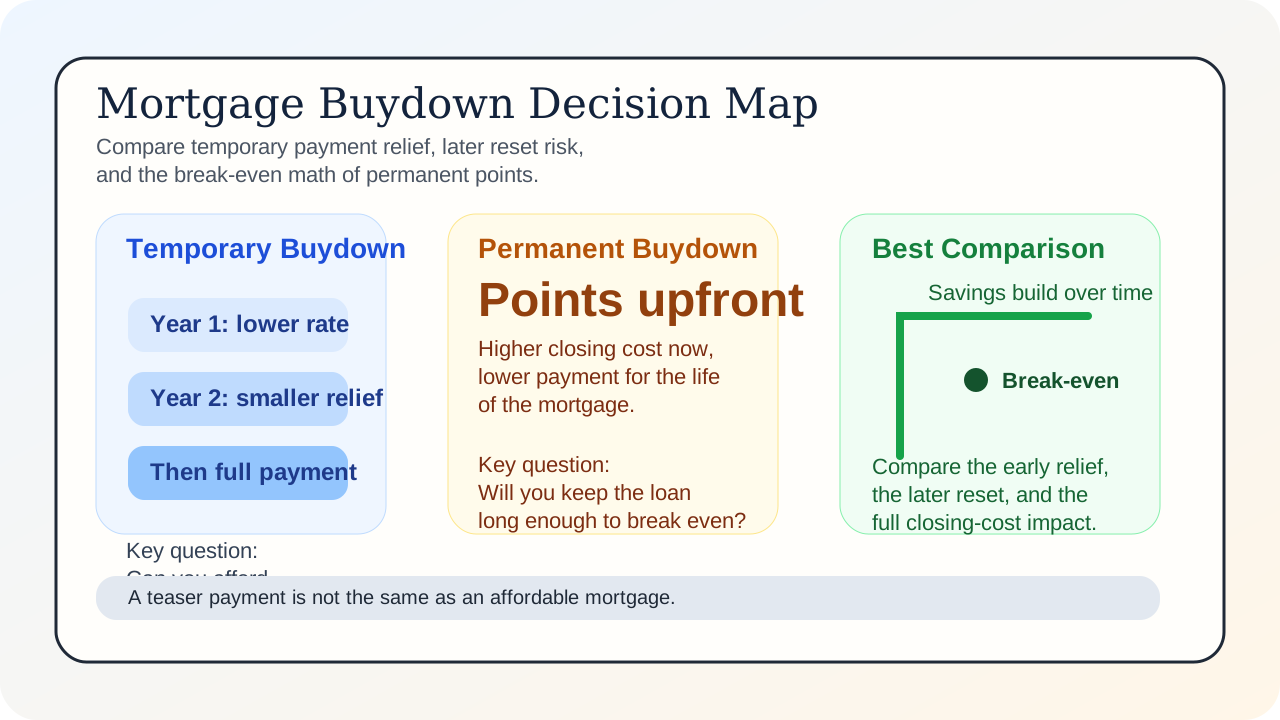
Temporary buydown: lower payment now, reset later
A 2-1 buydown usually reduces the rate by two percentage points in year one and one point in year two before the loan returns to its full note rate. The appeal is obvious: a lower starting payment. The risk is equally obvious: the payment rises later, whether or not rates have improved enough to refinance.
Permanent buydown: higher closing cost, lower payment for the life of the loan
Discount points work differently. You pay more upfront to reduce the rate across the life of the mortgage. That turns the question into break-even math: how long must you keep the loan before the monthly savings recover the extra cash paid at closing?
How to estimate a buydown with Calcsy
1. Start with the full payment
Use Calcsy's Mortgage Calculator to model the payment at the actual note rate, not the advertised teaser rate. That full-payment number is the one your long-run budget must survive.
2. Compare the early-payment relief against the reset
If the lender or builder offers a 2-1 buydown, map the first-year payment, second-year payment, and full payment side by side. If the later payment already feels stretched, the temporary relief may be solving the wrong problem.
3. Price the upfront cost honestly
Use the Closing Costs Calculator Guide to keep the buydown cost inside the total cash-to-close picture. A lower payment is less compelling if it drains emergency reserves or forces you to borrow more elsewhere.
4. Test the break-even on points
Pair this guide with the Mortgage Points Calculator Guide and the APR Calculator Guide. Those comparisons expose whether the permanent rate reduction is a real long-term win or just a fee-heavy shortcut to a smaller headline payment.
When a buydown can help
Buyers with strong long-run affordability but tight first-year cash flow
A temporary buydown can be reasonable when the borrower can already handle the full payment and simply wants short-term breathing room during a move, furnishing cycle, or income ramp.
Buyers using negotiated seller or builder credits strategically
If a seller is willing to contribute and you would otherwise leave the credit unused, directing some of it toward a payment-reduction strategy can be reasonable. The key is making sure it beats the alternatives, such as a lower purchase price or lower total closing costs.
When a buydown deserves more skepticism
The payment only works if you refinance quickly
This is the classic weak assumption. If the deal looks safe only under a future-rate forecast, the calculator should treat that as a risk case, not as the default plan.
The preferred-lender package hides a weaker overall loan
Builder incentives sometimes require using a preferred lender. That can still work, but only if the total package remains competitive on APR, fees, and long-run payment versus outside quotes.
The home price may be doing some of the subsidy work
If the buydown comes with a higher purchase price relative to nearby comparable homes, you may be financing the incentive indirectly rather than receiving a clean concession.
Common mistakes to avoid
Focusing on the first-year payment only
The first-year payment is the sales hook. The lasting decision is whether the full mortgage fits once the temporary support is gone.
Using all seller credits on rate reduction without checking cash needs
Many buyers still need reserves for moving, repairs, furnishings, or normal homeownership surprises. Using every available credit on the rate can create a neater payment and a weaker balance sheet.
Ignoring APR and total fee structure
A buydown can improve the note rate while leaving the all-in cost less attractive than another lender's quote.
Skipping the affordability backstop
Before you treat a teaser payment as proof the house works, compare the full housing burden with the framework in the How Much House Can I Afford Calculator Guide and the debt limits in the Debt-to-Income Ratio Calculator Guide.
Related calculators and guides
- Mortgage Calculator for the full note-rate payment.
- Mortgage Points Calculator Guide for permanent rate buy-down math.
- Closing Costs Calculator Guide for upfront cash planning.
- APR Calculator Guide for comparing fee-heavy offers more honestly.
- How Much House Can I Afford Calculator Guide for long-run housing-budget sanity checks.
FAQ
What should a mortgage buydown calculator show?
It should show the reduced payment during the buydown period, the full payment after reset, the upfront cost, and the break-even math for a permanent buydown.
What is the difference between a temporary buydown and discount points?
A temporary buydown lowers the rate for the first one to three years. Discount points reduce the rate for the full life of the mortgage by charging more upfront.
When does a mortgage buydown usually make sense?
Usually when you can already afford the full payment, the upfront cost is reasonable, and the strategy still works even if refinancing takes longer than hoped.
Should I choose a lower purchase price instead of a buydown?
Often that is the better comparison to run. A lower price helps every month and can also improve resale and refinance flexibility later.
Can seller credits pay for a buydown?
Often yes, subject to lender and program rules. The better question is whether that is the best use of the credit after cash-to-close needs are considered.