Jumbo Loan Calculator Guide: Payment, 2026 Conforming Limits, Down Payment, and Rate Tradeoffs
People searching for a jumbo loan calculator are usually close to a real purchase decision. They are trying to figure out whether a target home price pushes them above the local conforming limit, how much down payment keeps them in or out of jumbo territory, and whether the monthly payment still works after taxes and insurance. In July 2026 that intent is especially valuable because home prices remain elevated while borrowers still need to judge larger loan balances in a rate environment that has only modestly improved.
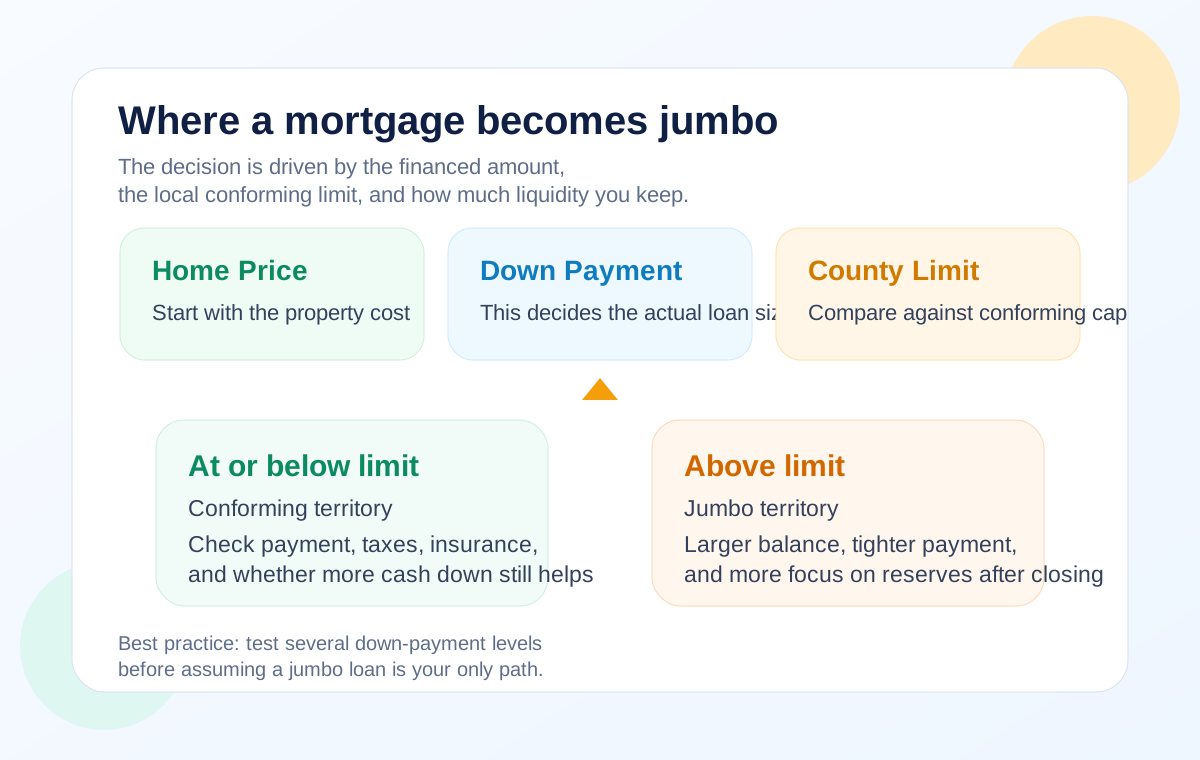
Work backward from payment and loan size before you shop above the conforming line.
Open the Mortgage CalculatorQuick answer: what a jumbo loan calculator should do
A useful jumbo loan calculator should show the monthly payment, total housing cost, and how changing the down payment moves the loan amount below or above the county's conforming limit.
If it only calculates one payment without the conforming-limit comparison, it misses the decision buyers actually need to make.
What people are obviously searching for
The head-term cluster is high intent and loan-size specific:
- jumbo loan calculator
- jumbo mortgage calculator
- jumbo payment calculator
- jumbo mortgage calculator with taxes and insurance
- jumbo loan affordability calculator
- jumbo vs conventional calculator
- conforming loan limit calculator
- jumbo loan down payment calculator
- jumbo mortgage rate calculator
- 2026 conforming loan limit calculator
What people are really asking before they borrow
The long-tail search intent is more tactical and more revealing:
- How much do I need to put down to avoid a jumbo loan?
- What is the 2026 conforming loan limit in my area?
- Are jumbo rates still higher than conforming rates in 2026?
- How much income do I need for a jumbo mortgage payment?
- Should I borrow jumbo or put more cash down?
- How do taxes and insurance change a large mortgage payment?
- What credit score do lenders usually want for jumbo loans?
- Is a jumbo loan worth it if I may refinance later?
- How much cash reserve should I keep after closing on a jumbo purchase?
- When does a higher-priced home still fit a safe monthly budget?
Why jumbo calculator intent is strong right now
The conforming line moved again for 2026
FHFA notes that loans above the conforming loan limit are jumbo loans, and its 2026 values were set under the HERA formula. Associated Press reported on November 25, 2025 that the 2026 baseline one-unit conforming limit rose to $832,750 for most of the U.S., with a high-cost ceiling of $1,249,125. That keeps search intent tied closely to county-level loan sizing and down payment strategy.
Large balances still magnify payment pressure
Freddie Mac said the average 30-year fixed mortgage rate was 6.43% on July 2, 2026. At jumbo-sized balances, even a small shift in rate or financed amount can move the monthly payment dramatically, which is why so many buyers start with a jumbo calculator instead of a generic mortgage explainer.
Buyers are solving for both approval and post-closing comfort
Once a purchase moves into jumbo territory, the math usually stops being about the maximum lender approval and becomes more about cash discipline. Searchers want to know whether keeping liquidity, crossing the conforming threshold, or lowering the balance with a bigger down payment leads to the safer outcome.
How to use Calcsy for jumbo mortgage math
1. Identify the likely loan amount, not just the home price
A high purchase price alone does not always create a jumbo loan. The real trigger is the financed amount after down payment. Start with the home price you are considering, then subtract several down payment scenarios.
2. Compare the result against the local conforming limit
FHFA publishes conforming loan limits because the line between conforming and jumbo is county dependent. That means two homes with the same price can create different financing categories in different markets.
3. Run the payment using the full housing picture
Use Calcsy's Mortgage Calculator to estimate principal and interest, then add realistic taxes and insurance. The Mortgage Calculator With Taxes and Insurance Guide is especially relevant for jumbo shoppers because escrow items can add a meaningful amount to an already large payment.
4. Pressure-test affordability before stretching to the edge
The How Much House Can I Afford Calculator Guide, Property Tax Calculator Guide, and Debt-to-Income Ratio Calculator Guide are the right follow-ups when the payment technically works on paper but may be too tight in real life.
The biggest jumbo tradeoffs
Put more down or accept the jumbo balance
Sometimes a modestly larger down payment is enough to move the loan back under the conforming line. Other times the extra cash is better held in reserve because the conforming line is too far away to matter. The Down Payment Calculator Guide helps structure that comparison.
Monthly payment versus liquidity after closing
A bigger down payment can lower the monthly number, but using too much cash on day one can leave the household exposed. On large purchases, post-closing liquidity often matters almost as much as the note rate.
Shorter term versus flexibility
Some buyers look at 15-year jumbo payments to reduce interest. That can work, but only when the monthly payment still leaves room for the rest of life. The 15-Year vs 30-Year Mortgage Calculator Guide helps frame the tradeoff.
Common mistakes to avoid
Thinking home price alone defines jumbo status
What matters is the loan amount relative to the applicable conforming limit, not the list price by itself.
Ignoring county-level differences
High-cost areas can have materially higher conforming limits, which can completely change the financing category.
Budgeting from principal and interest only
Taxes, insurance, HOA dues, and maintenance can turn an acceptable estimate into an uncomfortable real payment.
Putting every spare dollar into the down payment
Lowering the balance can help, but jumbo buyers usually need a larger cash cushion than they expect after closing.
Related calculators and guides
- Mortgage Calculator for base principal-and-interest payment estimates.
- How Much House Can I Afford Calculator Guide for budget-first home shopping guardrails.
- Down Payment Calculator Guide for testing whether extra cash moves you below the conforming line.
- Property Tax Calculator Guide for annual-to-monthly carrying-cost math.
- 15-Year vs 30-Year Mortgage Calculator Guide for term tradeoffs on larger balances.
FAQ
What is a jumbo loan?
A jumbo loan is a mortgage with an origination amount above the conforming loan limit that applies in the property's county.
What is the 2026 conforming loan limit?
For most one-unit properties in the United States, the 2026 baseline conforming loan limit is $832,750, with higher limits in designated high-cost areas.
What should a jumbo loan calculator include?
It should include home price, down payment, rate, term, taxes, insurance, and a comparison against the local conforming limit.
Are jumbo rates always higher than conforming rates?
Not always, but buyers should not assume parity. The payment difference at a large balance is big enough that quote shopping matters.
Should I avoid jumbo by putting more money down?
Sometimes, but not automatically. The right answer depends on how much cash you would spend, how much payment relief you gain, and how much liquidity you still keep afterward.