How Much House Can I Afford Calculator Guide: Budget, DTI, Taxes, and Payment
People searching for a house affordability calculator are usually not asking for one number. They are trying to reconcile a payment they can live with, a lender maximum they may qualify for, today's mortgage rates, and all the hidden monthly housing costs that make a home feel affordable or dangerous. In 2026, that intent is even sharper because rates remain elevated enough that small changes in interest rate, taxes, insurance, and HOA dues can move the answer a lot.
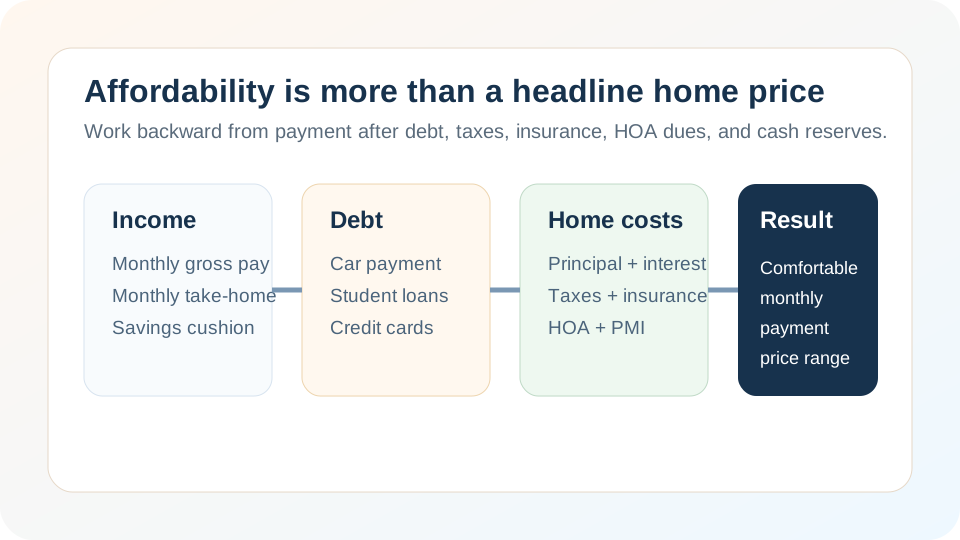
Start with a monthly payment estimate, then work backward into price range.
Open the Mortgage CalculatorQuick answer: what a home affordability calculator should do
A useful affordability calculator should translate your comfortable monthly payment into a realistic price range after debt, down payment, taxes, insurance, and other housing costs.
The key word is realistic. People usually do not want the maximum theoretical approval amount. They want a number that still leaves room for saving, repairs, and the rest of life.
What people are obviously searching for
The head-term affordability cluster is broad but highly actionable:
- how much house can I afford calculator
- home affordability calculator
- mortgage affordability calculator
- house budget calculator
- how much mortgage can I afford
- house affordability calculator with taxes and insurance
- how much house can I afford on 100k salary
- how much house can I afford with FHA loan
- DTI mortgage calculator
- payment to home price calculator
What people are really asking before they shop
The long-tail question intent is more personal and more revealing:
- How much house can I afford if I do not want to feel house poor?
- Should I use gross income or take-home pay to set my budget?
- How do taxes and insurance change the price I can afford?
- How much does HOA reduce buying power?
- Is 20% down required to afford a home safely?
- What monthly payment should I target before talking to a lender?
- How much house can I afford with student loans or a car payment?
- Why is the lender's preapproval number higher than what feels safe?
- How much emergency savings should I keep after closing?
- Should I buy less house and keep more cash?
Why affordability intent is so strong right now
Mortgage rates still reshape budgets fast
Freddie Mac's June 18, 2026 survey put the average 30-year fixed mortgage rate at 6.47%. At that rate range, a modest shift in interest cost can change monthly payment enough to push a buyer into or out of a target neighborhood. People are therefore working backward from payment, not just browsing listing prices.
Taxes, insurance, and HOA fees are part of the real answer
planning question has moved well beyond simple principal-and-interest math. Buyers increasingly want calculators that include PITI, mortgage insurance, and local carrying costs because those are the numbers that decide whether the payment still works six months after closing.
People want a safe budget, not just a qualifying ratio
Current affordability People are often skeptical of lender maximums. They want to know what fits alongside groceries, childcare, retirement saving, travel, repairs, and job uncertainty. That is a healthier question than chasing the highest number a lender might allow.
How to estimate affordability with Calcsy
1. Start with a monthly housing payment you can defend
Before you choose a home price, decide what monthly number feels sustainable. That number should still leave room for your other obligations and some margin for surprise expenses.
2. Use the mortgage payment math in reverse
Run scenarios in Calcsy's Mortgage Calculator using today's likely rate range, an estimated down payment, and several home prices. If you need the payment formula explained more plainly, the Mortgage Payment Guide breaks down the core calculation.
3. Add the costs that buyers forget
Property taxes, homeowners insurance, possible PMI, HOA dues, and maintenance reserve all sit on top of principal and interest. CFPB closing guidance also reminds buyers that cash-to-close and closing costs are separate from the monthly payment, so your affordability answer should leave room for both.
The biggest factors that change the answer
Debt-to-income ratio
Lenders look closely at debt relative to gross income, but your personal comfort level may need to be stricter than the lender's upper boundary. Existing student loans, car loans, and credit card minimums reduce the mortgage payment you can carry comfortably.
Down payment
A larger down payment lowers the loan amount and may improve pricing. But draining every dollar into the down payment can leave you exposed after closing. The Down Payment Calculator Guide is a good companion if you are comparing 5%, 10%, and 20% scenarios.
Rate and term
Shorter loan terms can reduce total interest but they often raise the monthly payment. CFPB rate examples show how credit score, down payment, and term can materially reshape cost over time, which is why house affordability intent often overlaps with rate-shopping intent.
Taxes, insurance, and HOA dues
These line items are where many buyers get surprised. A home that looks affordable on listing price alone can become uncomfortable once taxes, insurance, and neighborhood fees are included.
Common affordability scenarios
How much house can I afford on a salary?
This search often starts with annual income but quickly becomes a monthly budget problem. Calcsy's Salary Calculator helps translate income into monthly rhythm before you compare it against housing costs.
How much house can I afford with debt?
This is where homebuyers realize that a car payment or student loan can reduce buying power more than expected. Debt does not just affect approval odds. It affects your stress level after closing.
How much house can I afford with less than 20% down?
This intent cluster usually includes questions about PMI, reserves, and whether keeping cash back is smarter than stretching for a larger down payment. There is no universal answer, but the right calculation always compares monthly payment with post-closing liquidity.
Common mistakes to avoid
Using the lender maximum as your target
Qualification is not the same as comfort. Your future self pays the real bill.
Ignoring maintenance and move-in costs
Closing is not the end of spending. Buyers often underestimate repairs, furniture, and immediate fixes.
Forgetting that taxes and insurance can change
Even fixed-rate borrowers can see total monthly housing cost move when escrowed items rise.
Thinking in home price instead of payment
Payment is the number that interacts with the rest of your life. Home price is only one input.
Related calculators and guides
- Mortgage Calculator for payment-first affordability testing.
- Salary Calculator to convert annual or hourly income into monthly planning numbers.
- Down Payment Calculator Guide for cash-versus-borrowing tradeoffs.
- APR Calculator Guide if you are comparing mortgage offers with different fee structures.
- Refinance Calculator Guide if you already own and are comparing buy-versus-refi budget paths.
FAQ
How do I estimate how much house I can afford?
Start with a monthly payment that feels sustainable, then work backward using mortgage rate, term, down payment, taxes, insurance, and your other monthly debts.
Is lender approval the same as affordability?
No. A lender can approve more than what feels safe in your day-to-day budget because underwriting does not fully account for your personal savings goals and lifestyle priorities.
Why do property taxes and insurance change the answer so much?
Because they are usually part of the monthly housing cost and can materially shrink the share of payment available for principal and interest.
Should I use gross income or take-home pay?
Lenders often underwrite from gross income, but many buyers set safer personal budgets using take-home pay and a conservative buffer.
How much should I keep in savings after closing?
There is no single rule, but affordability is stronger when the purchase still leaves emergency cash for repairs, job changes, and normal life surprises.