CD Calculator Guide: Estimate APY, Maturity Value, and Ladder Tradeoffs
CD calculator intent in June 2026 is not just "how much interest will I earn?" Savers are comparing short-term versus long-term CDs after the Federal Reserve held rates steady on June 17, 2026, and they want to know whether to lock in current yields, keep more flexibility, build a ladder, or just stay in a high-yield savings account. The practical questions are about maturity value, APY versus rate, monthly income, early-withdrawal penalties, and whether the bank is actually offering a deal worth losing liquidity for.
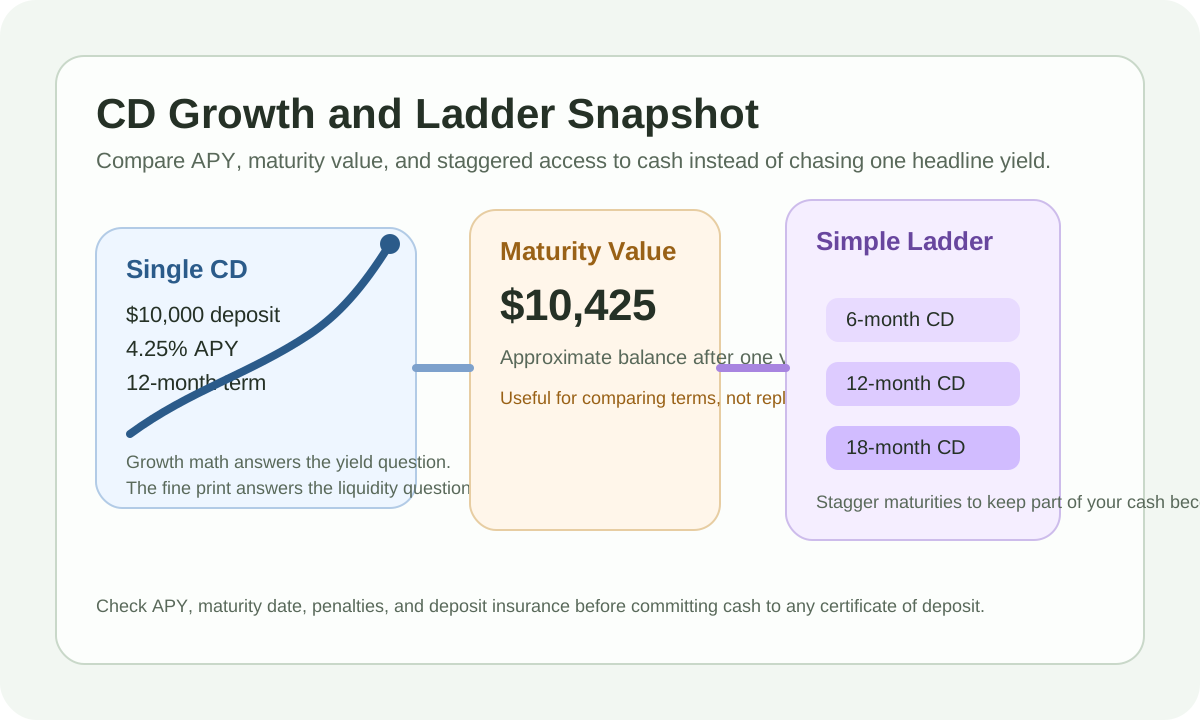
Estimate future value and compare CD scenarios while you read.
Open the Compound Interest CalculatorQuick answer: what a CD calculator should show
A useful CD calculator should estimate how much a deposit grows by maturity, how much interest it earns, and how different APYs or terms change the tradeoff between yield and access to cash.
It should also remind you that a good-looking rate is not the whole decision if the penalty, insurance limit, or maturity timing does not fit your plan.
What people are obviously searching for
The head-term cluster is direct and highly transactional:
- CD calculator
- certificate of deposit calculator
- CD interest calculator
- CD earnings calculator
- CD maturity calculator
- APY calculator for CDs
- bank CD calculator
- monthly interest on CD calculator
- jumbo CD calculator
- CD ladder calculator
What savers are really asking now
The long-tail intent is about timing and fine print:
- How much will $10,000 earn in a 1-year CD?
- Should I lock into a 5-year CD right now or stay short term?
- Is APY the same as the stated CD rate?
- How much monthly income does a CD actually pay?
- Is a CD ladder better than putting everything into one term?
- What happens if I need the money before maturity?
- Are online bank CDs safe if they are FDIC-insured?
- How much can I keep in CDs at one bank before insurance runs out?
- Should I choose a CD or a high-yield savings account?
- Do I pay taxes on CD interest even if I leave it in the account?
How CD math works
APY is the comparison shortcut people actually need
APY is useful because it reflects compounding over a year. Two CDs can advertise similar-looking rates but produce slightly different outcomes once compounding and payout structure are considered.
Maturity value matters more than headline yield alone
A short-term CD with a strong APY can still earn less total dollars than a longer term because the money is invested for less time. Searchers often want both numbers: yield quality and total dollars earned.
Liquidity is part of the calculation
Early-withdrawal penalties can reduce the value of a CD if the money is not truly set aside. That is why many CD searches now include words like "penalty," "ladder," and "vs savings account."
How to estimate a CD with Calcsy
1. Enter the deposit you are actually willing to lock up
Use Calcsy's Compound Interest Calculator with the amount you can keep untouched until maturity. The estimate is cleaner when the principal reflects true spare cash, not emergency funds you might need next month.
2. Match the APY and term as closely as possible
Run the available term length and approximate APY from the bank you are considering. Compare 6-month, 12-month, and longer-term scenarios side by side instead of assuming the longest term is automatically better.
3. Use comparisons, not one perfect forecast
The point of the estimate is decision support. Compare a short CD, a longer CD, and a laddered approach. If the choice is really between saving and debt reduction, compare the result with the costs shown in the Loan Payment Calculator.
Why current CD planning question is so term-sensitive
Shorter maturities remain competitive in June 2026
Recent June 19, 2026 CD rate roundups still show many of the strongest advertised APYs clustered in shorter terms. That makes people hesitant to lock everything away for several years without a clear reward for giving up flexibility.
Fed uncertainty pushes laddering questions
When people are unsure whether future rates will rise, fall, or stay flat, laddering becomes the compromise search. They want some money maturing soon without abandoning current yields entirely.
Cash-management intent is stronger than pure investing intent
Most CD People are not trying to maximize long-run market returns. They are trying to park cash safely, keep pace with short-term needs, and avoid making a dumb mistake with money they may need on a timeline.
Common CD scenarios
Parking cash for a known date
A CD can fit money for a tuition payment, house project, tax reserve, or near-term purchase when the date is reasonably known and the saver wants more certainty than a variable savings rate provides.
Building a ladder
A ladder splits money across maturities so some cash becomes available at regular intervals. This is attractive when savers want yield plus optionality instead of one all-or-nothing term.
Comparing CDs with debt payoff
Sometimes the more important question is not which CD to choose, but whether the money should be used to pay down expensive debt first. That comparison is often more valuable than chasing an extra fraction of a point in APY.
Mistakes to avoid
Confusing APY with a simple annual rate
APY already bakes in compounding, so it is the better comparison figure for most savers.
Ignoring early-withdrawal penalties
A strong yield can become a weak choice if you are likely to break the CD before maturity.
Forgetting deposit-insurance limits
FDIC coverage is not unlimited, and the exact protection depends on ownership category and institution.
Letting the CD auto-renew without checking new terms
Maturity is a decision point. Do not assume the renewal rate will still be competitive.
Related calculators and guides
- Compound Interest Calculator for future value and interest-earned estimates using a CD-like growth assumption.
- Compound Interest Calculator Guide for the broader future-value formula.
- Rule of 72 Guide for quick growth intuition before running exact scenarios.
- Invest $100 a Month Compound Interest Guide if you are comparing locked cash with longer-term growth habits.
- Loan Payment Calculator if you need to compare safe yield against the cost of carrying fixed-rate debt.
FAQ
What should a CD calculator estimate?
It should estimate maturity value, total interest earned, and how APY and term length change the final result.
Is APY the same as the interest rate?
No. APY reflects compounding over a year, while the stated rate may be a nominal figure before compounding effects.
When does a CD ladder make sense?
It makes sense when you want some funds maturing regularly instead of locking all cash into one date and one rate.
Are CDs safe?
They can be very safe when they are held at FDIC-insured banks or NCUA-insured credit unions and kept within coverage limits.
What is the biggest mistake with CDs?
Chasing yield without checking the maturity date, call features, penalties, and insurance coverage.