Boat Loan Calculator Guide: Estimate Monthly Payment, APR, Down Payment, and Marine Loan Cost
As of July 11, 2026, boat loan search intent is highly commercial and comparison-driven. People are trying to price a real purchase, not casually learn what a marine loan is. They want to know whether a secured boat loan or unsecured personal loan creates the better payment, how much down payment a lender may expect, how used-boat age affects financing, and whether the monthly payment still makes sense once storage, insurance, fuel, maintenance, and winterization are counted. Current July 2026 lender coverage also shows a wide pricing range for boat borrowing, which makes calculator use part of the lender-shopping process rather than a separate step.
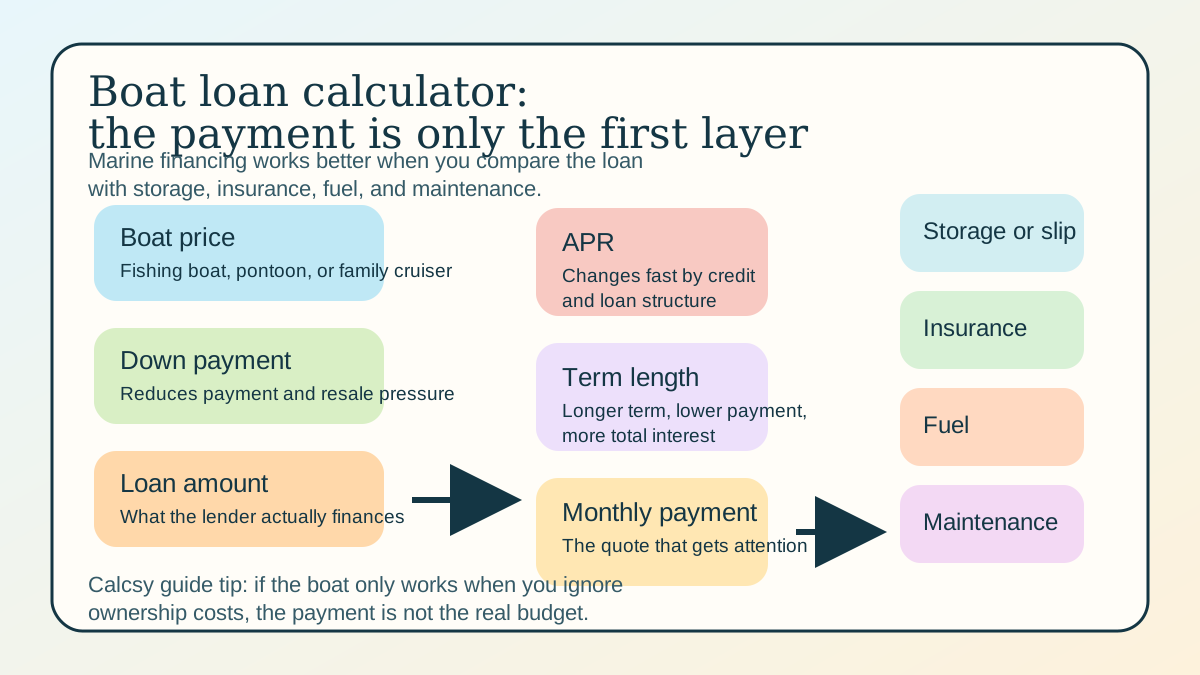
Estimate a fishing boat, pontoon, or family cruiser payment while you read.
Open the Loan Payment CalculatorQuick answer: what a boat loan calculator should show
A useful boat loan calculator should show the monthly payment, total interest, and total paid after you enter price, down payment, APR, and term.
It should also help you compare secured marine financing with unsecured personal-loan alternatives, because search intent is often really about choosing the better borrowing path.
What people are obviously searching for
The direct query cluster shows purchase-ready intent:
- boat loan calculator
- boat payment calculator
- marine loan calculator
- used boat loan calculator
- fishing boat loan calculator
- pontoon boat loan calculator
- boat finance calculator
- boat monthly payment calculator
- boat down payment calculator
- boat affordability calculator
What people are really asking before they buy the boat
The longer-tail questions are practical and often cost-sensitive:
- How much would a $40,000 boat payment be over 10 or 15 years?
- Do I need 10% to 20% down for a boat loan?
- Is a personal loan better than a secured boat loan?
- Can I finance an older used boat?
- How much does interest add to a long boat loan?
- What credit score do I need for a boat loan?
- Do lenders finance pontoon boats and fishing boats the same way?
- Is a shorter boat term worth the higher monthly payment?
- How much should I budget beyond the boat payment?
- Will depreciation make the loan a bad idea if I resell in a few years?
Why boat loan calculator intent is active now
Current 2026 rate coverage is broad, not narrow
WSJ Buy Side's July 8, 2026 roundup for boat borrowing described personal-loan options ranging from 5.96% to 35.99% depending on credit profile and lender type. That wide span is exactly why calculator intent stays strong: shoppers need a tool that shows how the same boat becomes either manageable or expensive depending on the rate and structure.
Term length and age rules create uncertainty
Investopedia's December 5, 2023 boat calculator explainer notes that lenders commonly use terms around 10 to 15 years and that typical down payments often fall between 10% and 30%. Its December 1, 2023 boat-term explainer also notes that terms can extend toward 20 years depending on the loan and the vessel. Those ranges are useful because users rarely know which part of the range their situation actually fits until they run scenarios.
Used-boat shoppers do not trust sticker price alone
Boat buyers know the purchase is not only about the hull price. Financing older inventory can trigger more questions about inspections, insurance, value, and lender limits, so searchers use calculators to test whether the lower purchase price still wins after the financing terms are adjusted.
How to estimate a boat loan with Calcsy
1. Separate the boat price from the financed amount
Start with the actual price, then subtract your planned down payment and decide whether taxes, registration, trailer cost, electronics, safety gear, and dealer fees are being financed too. This gives you the true amount the loan must carry.
2. Run several term scenarios before accepting the dealer quote
Use Calcsy's Loan Payment Calculator to compare the same loan over 7, 10, 12, and 15 years. A longer term may make the boat appear affordable monthly while materially increasing the total amount paid.
3. Compare secured boat financing against unsecured borrowing
Some borrowers can qualify for unsecured financing and want to know whether the convenience or flexibility is worth the pricing. The Personal Loan Calculator Guide and APR Calculator Guide are useful when the rate, fee structure, or collateral tradeoff becomes the real decision.
4. Add the recurring ownership costs before calling the loan affordable
Slip fees, marina storage, insurance, fuel, maintenance, winterization, and towing equipment can turn an acceptable boat payment into a poor household fit. A calculator is most useful when it sits inside the complete ownership budget, not outside it.
Down payment and term length are the biggest levers
Down payment improves both payment and exit flexibility
A stronger down payment can reduce the monthly bill and lower the odds that you are trapped by depreciation if you want to sell after a few seasons.
Long terms lower the payment but can hide the real cost
Boat loans are especially vulnerable to this trap because the purchase is emotional. The lower monthly number feels like permission to proceed even when the total interest suggests a slower, safer purchase would be wiser.
New versus used boat financing
New boats can have cleaner underwriting
Newer boats may be easier to finance because the collateral is easier to value and the lender has fewer age-related concerns.
Used boats may be cheaper upfront but more complex overall
Older units can lower the amount borrowed while adding inspection, repair, and financing restrictions that narrow the apparent savings.
Common mistakes to avoid
Budgeting only for the loan payment
Boat ownership costs do not stay small just because the payment looks manageable.
Ignoring depreciation and resale timing
If you may sell within a few years, a long term with a small down payment can make the exit much less flexible.
Financing too many extras
Accessories and bundled dealer add-ons can quietly expand the loan without improving long-term value.
Skipping broader debt checks
If the boat competes with other borrowing goals, compare the payment against the guardrails in the Debt-to-Income Ratio Calculator Guide and the monthly planning logic in the How Much Car Can I Afford Guide.
Related calculators and guides
- Loan Payment Calculator for fixed monthly payment and total-cost estimates.
- Personal Loan Calculator Guide for unsecured borrowing comparisons.
- APR Calculator Guide for comparing rate and fee structure across lenders.
- Car Loan Calculator Guide for installment-loan comparison logic and term tradeoffs.
- Debt-to-Income Ratio Calculator Guide for checking whether the payment fits your overall borrowing picture.
FAQ
What should a boat loan calculator show?
It should show monthly payment, total interest, total paid, and how the result changes with the down payment, APR, and term.
How long are boat loans usually?
Many boat loans fall in the 10- to 15-year range, though some are shorter and some can stretch longer depending on the lender and the boat.
Is financing a used boat riskier than financing a new one?
Often yes, because age limits, inspections, and maintenance uncertainty can complicate the purchase even when the price is lower.
How much down payment should I expect?
Requirements vary, but many shoppers compare 10% to 30% scenarios because that range can meaningfully change approval flexibility and cost.
Is a personal loan ever better than a boat loan?
Sometimes. It depends on the rate, fees, loan amount, term, and whether avoiding collateral restrictions outweighs the pricing difference.