Assumable Mortgage Calculator Guide: Compare Seller Rate, Equity Gap, Second Loan, and Closing Costs
As of July 13, 2026, assumable-mortgage intent is highly transactional. Freddie Mac's average 30-year fixed rate was 6.49% on July 10, 2026, according to Associated Press coverage, while many existing FHA, VA, and USDA loans still carry much lower rates from earlier years. That gap changes the search question from “what is an assumable mortgage?” to “how much do I actually save after the seller's equity gap, second financing, and closing costs are included?”
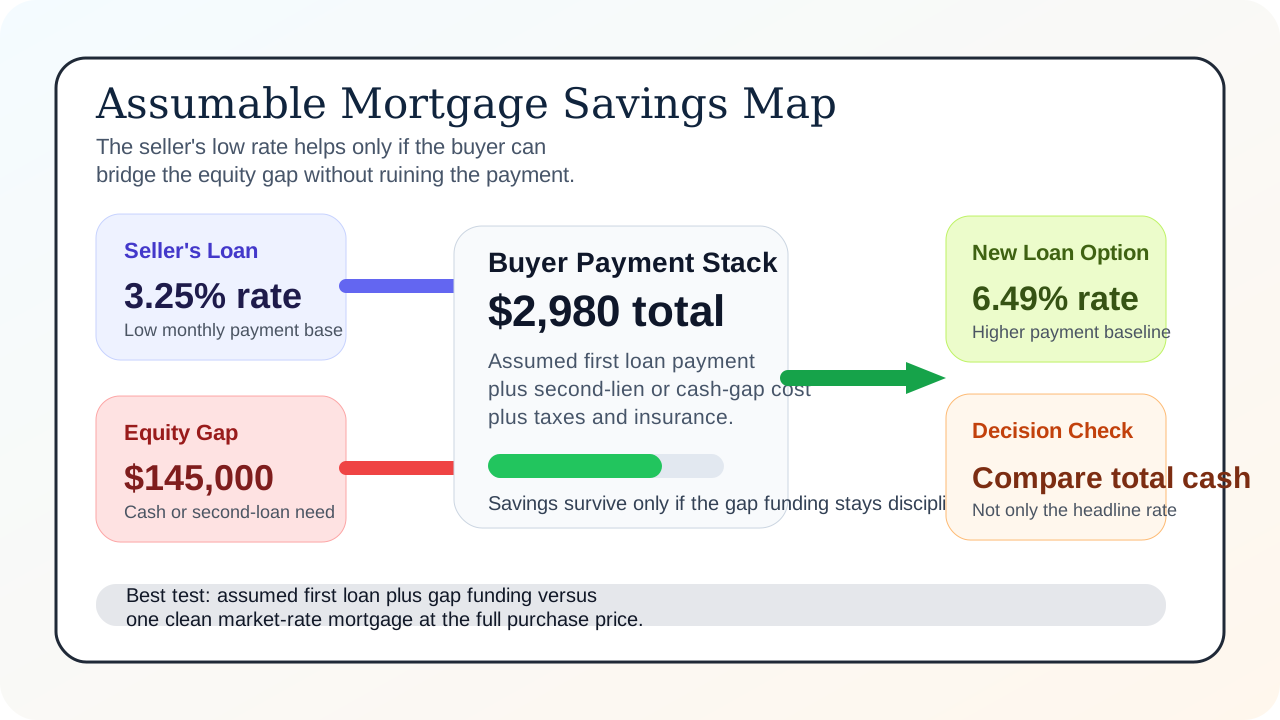
Model the fallback option first so you know what a new market-rate loan would cost.
Open the Mortgage CalculatorQuick answer: what an assumable mortgage calculator should compare
A useful assumable mortgage calculator should compare the existing assumed payment, the payment on a new loan at today's rate, the cash or second-loan amount needed to cover the seller's equity, and the total closing-cost picture.
If it only highlights the inherited low rate, it misses the problem that usually decides the deal: the old mortgage balance may be far smaller than the home's current sale price.
What people are obviously searching for
The head-term cluster shows strong purchase and financing-comparison intent:
- assumable mortgage calculator
- assumable loan calculator
- assumable mortgage savings calculator
- FHA assumable mortgage calculator
- VA assumable mortgage calculator
- USDA assumable loan calculator
- assumable mortgage monthly payment calculator
- assumable mortgage versus new loan calculator
- seller mortgage assumption calculator
- mortgage assumption value calculator
What people are really asking before making an offer
The long-tail questions are more revealing and closer to a transaction:
- How much lower is the payment if I assume the seller's 3% mortgage instead of taking a new 6.5% loan?
- How much cash do I need if the assumable loan balance is far below the home price?
- Should I use a second mortgage to cover the equity gap?
- Is an assumable FHA loan still worth it after MIP and closing costs?
- Does a VA assumption help if I am not a veteran?
- How long does an assumable mortgage approval usually take?
- Can the seller stay liable if the lender does not release them?
- Is it better to assume the loan or negotiate a lower price?
- Do I save enough if I plan to move again in a few years?
- What happens if the second loan rate wipes out the savings from the first loan?
Why assumable-mortgage intent is active right now
Current mortgage rates still make older loans valuable
Associated Press reported on July 10, 2026 that Freddie Mac's average 30-year fixed mortgage rate was 6.49%. In that rate environment, taking over an older government-backed mortgage at a much lower note rate can change the payment enough to create real buyer interest.
Recent coverage shows buyers are looking for hidden affordability edges
Kiplinger reported on June 18, 2026 that assumable mortgages are attracting attention again because buyers may be able to inherit lower rates and smaller closing costs than a brand-new mortgage. The same coverage also emphasized the catch: buyers still need to cover the difference between the home's current price and the remaining loan balance.
The real search problem is not the rate alone
That equity-gap problem is why searchers pair assumable mortgage questions with affordability math, second-lien questions, and closing-cost comparisons. The low-rate headline gets attention. The cash gap decides whether the deal is usable.
How to estimate an assumable mortgage with Calcsy
1. Price the market-rate fallback first
Use Calcsy's Mortgage Calculator with the target purchase price, expected down payment, current rate, and term. That gives you the baseline monthly payment you are trying to beat.
2. Isolate the assumed first-loan payment
If the seller's mortgage balance, rate, and remaining term are known, compare that payment path with the new-loan baseline. This is the part of the deal that creates the attraction.
3. Add the seller's equity gap back into the math
If the home sells for $500,000 and the assumable balance is only $340,000, the remaining $160,000 still has to come from cash, a second loan, or both. That second layer is where many “cheap mortgage” scenarios stop looking cheap.
4. Compare the whole monthly stack
Pair the low-rate first loan with the possible second-lien payment and compare the combined result against a normal new mortgage. The Closing Costs Calculator Guide and How Much House Can I Afford Calculator Guide help keep that payment inside the bigger housing-budget question.
When an assumable mortgage can help
The seller's rate is far below current market rates
This is the classic win case. A wide spread between the inherited rate and the current rate can create meaningful monthly savings and lower lifetime interest.
The equity gap is manageable
An assumption works better when the buyer has enough cash, gift funds, or low-cost secondary financing to cover the gap without breaking the rest of the plan.
The buyer has time to work through a slower process
Assumptions can involve more servicing friction and a longer timeline than a standard purchase loan. That matters less if the deal structure is strong and the purchase timeline has room.
When the calculator should make you more skeptical
The second loan is expensive enough to erase the savings
If the buyer fills the equity gap with a small but very expensive second mortgage, the assumed first loan can look better on paper than it feels in real cash flow.
The seller's low rate distracts from an overstretched price
A weak deal can still be weak even if the seller offers a rare low-rate mortgage. Buyers should compare the home price against local alternatives rather than letting the financing story dominate the whole decision.
The payment only works if nothing else changes
Property taxes, insurance, HOA dues, and reserve needs still matter. Run the combined housing burden through the framing in the Mortgage Calculator With Taxes and Insurance Guide and the Debt-to-Income Ratio Calculator Guide.
Common mistakes to avoid
Comparing interest rates without comparing balances
The balance on the assumable mortgage is usually the first thing people underweight.
Ignoring the second-lien cost
A cheap first mortgage plus an expensive second loan can still create an expensive blended outcome.
Skipping the closing-cost and timeline friction
Even when assumptions reduce some loan-closing costs, they do not erase every fee or process delay.
Assuming the deal is best just because it is unusual
Uncommon financing gets attention, but the right comparison is still a clean side-by-side monthly and cash-to-close test.
Related calculators and guides
- Mortgage Calculator for the standard market-rate fallback payment.
- Closing Costs Calculator Guide for the cash-to-close side of the comparison.
- VA Loan Calculator Guide if the assumable loan is VA-backed.
- USDA Loan Calculator Guide if the property may qualify for USDA financing instead.
- How Much House Can I Afford Calculator Guide for the broader affordability check.
FAQ
What should an assumable mortgage calculator compare?
It should compare the assumed-loan payment, the payment on a brand-new loan at current rates, the equity-gap funding requirement, and total closing costs.
Why can an assumable mortgage still be hard to afford?
Because the existing loan balance may cover only part of the purchase price, forcing the buyer to supply cash or more financing for the rest.
Do assumable mortgages only matter when rates are high?
They matter most when the seller's rate is far below the current market rate, because that is when the payment spread is big enough to matter.
Is assuming the mortgage always better than negotiating a lower price?
No. Sometimes a lower price helps more than unusual financing, especially if the equity gap is large.
Can I estimate the deal with one calculator?
Usually not perfectly. The cleanest workflow is to model the market-rate loan, then the assumed first loan, then any second-lien or cash-gap funding separately.
Research references
- Associated Press, July 10, 2026: Freddie Mac average 30-year mortgage rate update
- Kiplinger, June 2026: What Is an Assumable Mortgage and Could It Save You Thousands?
- The Week, June 2026: What's an assumable mortgage and how could one save you money?
- Washington Post, July 27, 2024: Assumable mortgages are growing, but come with catches