15-Year vs 30-Year Mortgage Calculator Guide: Compare Payment, Interest, and Flexibility
Searchers comparing a 15-year vs 30-year mortgage are usually past the theory stage. They are asking whether the lower total interest on a 15-year loan is worth the higher required payment in today's market, or whether a 30-year mortgage with optional extra payments gives them safer flexibility. In late June 2026, that decision is highly sensitive because rates remain elevated and the monthly payment gap still feels large.
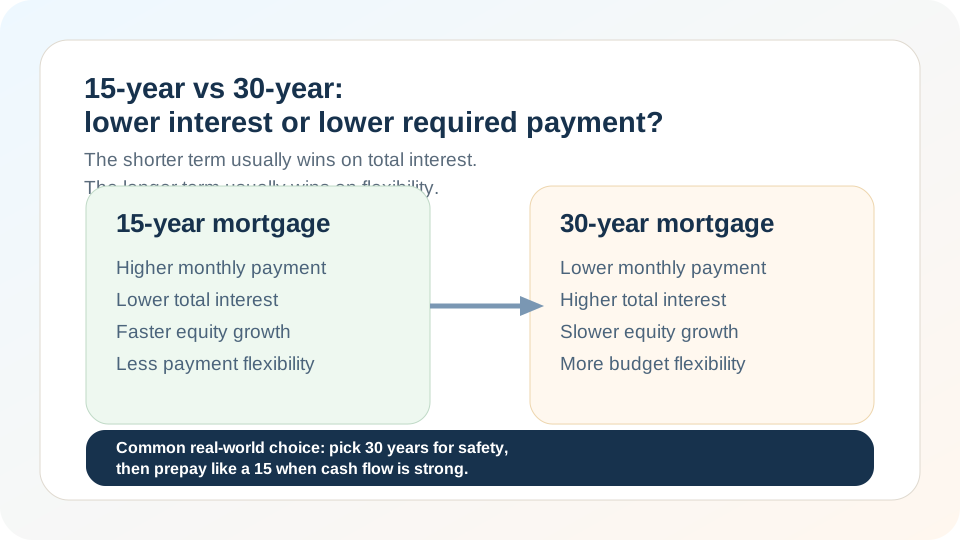
Run both term options with the same loan amount before you choose.
Open the Mortgage CalculatorQuick answer: what a 15-year vs 30-year calculator should reveal
A good comparison should show the monthly payment gap, the total interest difference, and how much optionality you give up by locking into the shorter term.
That last point matters because many borrowers are not only comparing cost. They are comparing risk tolerance, investing flexibility, and how tight the payment will feel if income or expenses change.
What people are obviously searching for
The direct intent terms are comparison-heavy and commercial:
- 15 year vs 30 year mortgage calculator
- 15 vs 30 mortgage
- 15-year vs 30-year payment calculator
- should I get a 15 or 30 year mortgage
- 15-year mortgage payment vs 30-year
- 15-year mortgage interest savings calculator
- 30-year mortgage with extra payments vs 15-year
- compare 15 and 30 year mortgage
- which mortgage term is better
- 15-year refinance vs 30-year refinance calculator
What borrowers are really trying to decide
The long-tail questions behind that comparison are where the real choice happens:
- Is the payment increase on a 15-year mortgage worth the interest savings?
- Would I be better off taking a 30-year mortgage and investing the difference?
- Should I choose a 30-year mortgage if my income is variable?
- How much faster do I build equity with a 15-year loan?
- Can I mimic a 15-year payoff by making extra payments on a 30-year mortgage?
- What happens if I choose 15 years and later need more monthly breathing room?
- Is a 15-year mortgage smarter if I plan to stay in the home a long time?
- How much does the current rate spread between 15-year and 30-year loans matter?
- Should first-time buyers prioritize lower payment flexibility over faster payoff?
- Does choosing 15 years make sense if I still need to build cash reserves?
Why this comparison matters more in June 2026
The rate gap still favors the shorter term, but the payment gap remains large
Freddie Mac reported on June 25, 2026 that the average 30-year fixed mortgage rate was 6.49% and the average 15-year fixed was 5.84%. That lower 15-year rate helps, but it does not erase the fact that the same principal balance is being repaid over half the time. The result is still a meaningfully larger monthly obligation.
Borrowers care about resilience, not only optimization
The 15-year argument usually wins on paper if a borrower can comfortably handle the payment forever. Real planning question is more cautious. People want to know what happens if childcare, insurance, taxes, repairs, or job risk make the higher payment feel expensive later.
The 30-year plus extra-payments strategy has become more popular
Many borrowers want the option to pay aggressively without being forced to do so every month. That is why current comparison intent often includes searches about 30-year mortgages with extra principal, voluntary 15-year-equivalent payments, and recast or refinance escape hatches if life changes.
How to compare 15-year and 30-year options with Calcsy
1. Keep the loan amount the same
Use Calcsy's Mortgage Calculator with the same loan amount and down payment assumptions for both runs. Changing too many variables at once hides the real term tradeoff.
2. Enter a realistic rate for each term
The shorter term often carries a somewhat lower rate, but not always enough to offset the higher required payment. Run both scenarios with realistic quotes or a conservative market estimate, not marketing headlines alone.
3. Compare payment, interest, and budget strain together
Total interest matters, but so does whether the shorter-term payment still leaves room for taxes, insurance, repairs, retirement saving, and ordinary life. If your housing budget is still in flux, the How Much House Can I Afford Calculator Guide is a useful companion.
15-year mortgage strengths
Lower total interest
You usually pay much less interest because the balance is amortized over fewer years.
Faster equity growth
A larger share of each payment goes to principal sooner, which can matter for future refinancing, selling, or borrowing options.
Cleaner debt-free timeline
Some borrowers value the certainty of a faster payoff more than the flexibility of a lower payment.
30-year mortgage strengths
Lower required payment
The biggest advantage is breathing room. A lower required payment can protect your budget when taxes, insurance, maintenance, or income volatility change.
More optionality
You can direct extra cash to emergency savings, retirement accounts, renovation costs, or extra principal when it fits. The Extra Payment Calculator Guide helps if you want to compare the optional-overpayment path.
Safer for uncertain timelines
If you may move, refinance, or face income changes before the shorter loan's benefits fully compound, the 30-year structure can be the more durable choice.
A useful middle-ground question
Would a 30-year mortgage plus aggressive extra payments fit better?
That strategy often appears in current planning question because it preserves the ability to scale back if life gets expensive. The tradeoff is behavioral: the plan works only if you actually make the extra payments consistently.
Common mistakes to avoid
Choosing the 15-year loan because it wins on paper alone
If the required payment leaves little room for repairs, taxes, saving, or short-term shocks, the mathematically cheaper loan can still be the weaker life choice.
Choosing the 30-year loan and never using the flexibility well
A lower payment helps only if the extra room is used intentionally. Otherwise the long-term interest cost may simply drift upward with no offsetting benefit.
Ignoring escrow and full housing cost
Term comparison should not stop at principal and interest. Taxes, insurance, HOA dues, and maintenance can decide whether the shorter payment is realistic.
Forgetting refinance or recast backup options
Borrowers sometimes think the initial term decision is irreversible. In practice, future refinance or recast choices can change the path if rates or cash position improve.
Related calculators and guides
- Mortgage Calculator for side-by-side term comparisons.
- Mortgage Payment Guide for the fixed-payment math behind each term.
- Extra Payment Calculator Guide if you are leaning toward a 30-year mortgage with voluntary prepayments.
- Refinance Calculator Guide if this comparison is really about replacing an existing loan.
- Mortgage Recast Calculator Guide if you want to reduce a future payment with a lump-sum principal reset instead of changing terms today.
FAQ
Is a 15-year mortgage always better than a 30-year mortgage?
No. It usually saves interest and builds equity faster, but the higher required payment can reduce flexibility and create more budget strain.
How much more is a 15-year mortgage payment?
It depends on the balance and the rate spread, but the payment is often materially higher because the same principal is being repaid over half the time.
Is it better to get a 30-year mortgage and pay extra?
For some borrowers, yes. It can preserve payment flexibility while still allowing a faster payoff, but only if the extra-payment discipline is real.
Why do some borrowers still choose 30 years even if it costs more?
Because cash-flow resilience matters. A lower required payment can be worth paying more interest if it protects savings, handles variable income better, or reduces stress.
When does a 15-year mortgage make the strongest case?
Usually when the payment is comfortably affordable, emergency reserves are already healthy, and the borrower strongly values faster equity growth and lower total interest.