Property Tax Calculator Guide: Estimate Annual Tax, Escrow Impact, and Home-Buying Budget
People searching for a property tax calculator are usually trying to fix an affordability blind spot. They may have already estimated principal and interest, but they still need to know how local property taxes change the full monthly housing cost, what an escrowed payment will really look like, and whether a home's assessed-value reality makes the listing price feel misleading. In a market where average mortgage rates are still above 6%, that missing tax line can decide whether a home feels manageable or stretched.
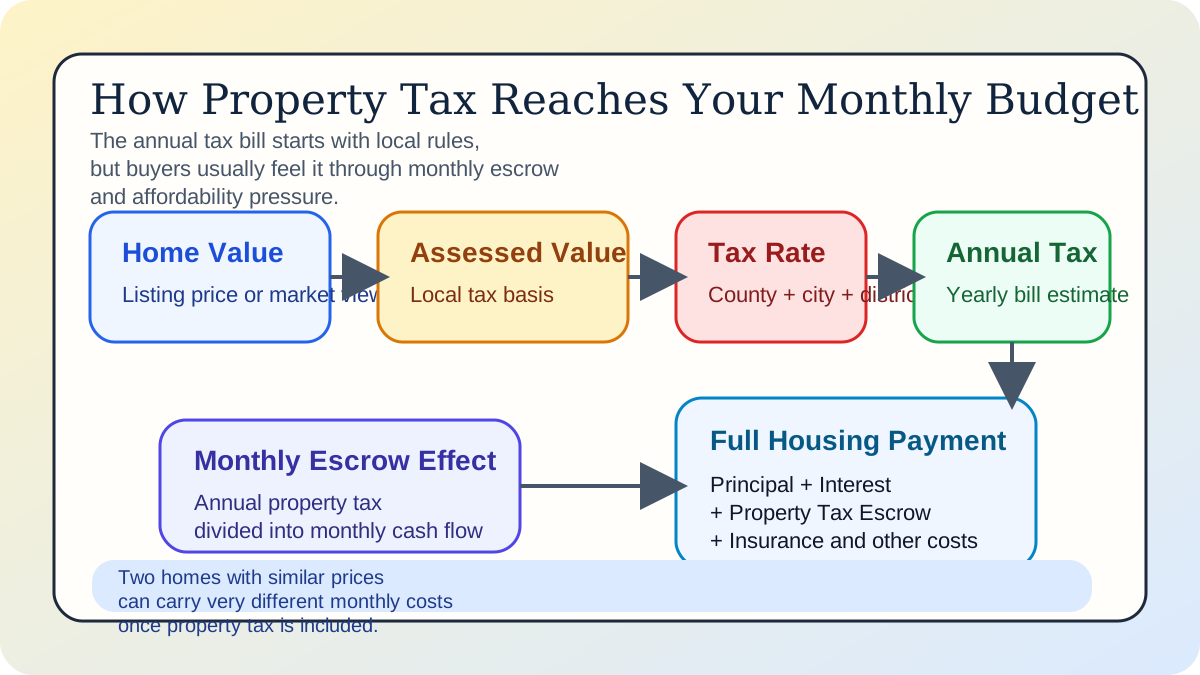
Run the base payment first, then add tax and escrow pressure to the budget.
Open the Mortgage CalculatorQuick answer: what a property tax calculator should do
A useful property tax calculator should turn assessed-value and local-tax assumptions into an annual estimate and then convert that number into a realistic monthly housing-cost impact.
The main use case is not tax trivia. It is affordability screening: deciding whether a home still works after taxes, insurance, and the rest of the carrying cost are included.
What people are obviously searching for
The obvious search cluster is broad but highly practical:
- property tax calculator
- real estate tax calculator
- house property tax calculator
- property tax estimate by home value
- mortgage calculator with property tax
- monthly property tax calculator
- property tax escrow calculator
- home tax rate calculator
- property tax and insurance calculator
- how much property tax will I pay
What people are really asking before they buy or appeal a bill
The long-tail intent is more specific and decision-heavy:
- How much house can I afford once property taxes are included?
- Why is the monthly payment so much higher after escrow?
- Does assessed value mean the same thing as market value?
- How do property taxes change after I buy a home?
- Can a lower list price still cost more because of taxes?
- How do I estimate taxes for a new construction home?
- Should I compare neighborhoods based on tax burden, not just price?
- Are HOA fees and property taxes part of the same bill?
- Can I deduct property taxes on my federal return?
- What part of the tax bill is not actually deductible?
Why property tax search intent stays strong
It directly changes the monthly payment
CFPB's mortgage rate comparison tool repeatedly frames affordability around the full payment, not just the note rate. That is why buyers search for property tax help after they already understand principal and interest. A house can look affordable until escrowed taxes are layered in.
Assessed value creates confusion fast
IRS Publication 530 explains that real estate taxes are generally deductible only when imposed uniformly by state or local governments and based on assessed value. That distinction matters because many buyers and owners mistakenly assume list price, market value, and tax-assessed value are interchangeable.
Escrow turns an annual number into a monthly budget problem
People do not experience property tax only as a year-end bill. On many mortgages it becomes part of the monthly payment through escrow, which is why property tax calculator searches often overlap with mortgage payment and affordability searches.
How to estimate property tax impact with Calcsy
1. Model the principal-and-interest payment first
Use Calcsy's Mortgage Calculator to estimate the loan payment from home price, down payment, rate, and term. That gives you the base payment before taxes and insurance distort the real monthly total.
2. Add a realistic annual property tax assumption
Property taxes vary by locality, assessment method, and exemptions. The right workflow is to build a local estimate, then divide it into a monthly budget effect rather than pretending the principal-and-interest payment is the whole story.
3. Re-check affordability using the full payment
The How Much House Can I Afford Calculator Guide and Mortgage Interest Calculator Guide both help show why taxes and insurance can materially change what looks safe on paper.
4. Keep cash-to-close separate from monthly tax burden
Many borrowers blend together closing costs, escrow setup, and ongoing taxes. The Closing Costs Calculator Guide is useful because it separates upfront escrow funding from the recurring monthly tax effect.
The biggest factors that change the answer
Local assessed value rules
Some markets assess closer to current value, while others use formulas, caps, or lagging updates. That is why two similarly priced homes can carry very different tax burdens.
Tax rate by county, city, and district
Property tax is often layered across multiple jurisdictions. School districts, municipalities, and county systems can all change the final burden even when home price looks similar.
Exemptions, caps, and owner status
Homestead rules, senior exemptions, veteran benefits, and local caps can all change what the final bill looks like. A raw calculator estimate is a starting point, not the last word.
Whether the loan escrows taxes
If the lender escrows taxes, the annual number becomes part of the monthly payment. That can improve budgeting discipline but also make a property feel less affordable than expected when the first payment estimate was too simplified.
Three property-tax comparisons that matter most
Home price versus carrying cost
Sometimes the better-priced house is not the cheaper house to own. Property tax can erase the apparent advantage of a lower list price.
Neighboring towns or school districts
Small location changes can produce meaningful annual tax differences. Search intent here is practical because buyers are often choosing between similar homes, not just calculating one property in isolation.
Current owner tax bill versus your future bill
The seller's current tax bill may not be your future tax bill if reassessment or ownership-change rules apply. That is one of the most common reasons buyers underestimate future housing cost.
Common mistakes to avoid
Using principal and interest as the full payment
This is the most common affordability mistake in home search. Taxes can add enough to change the price range you should shop.
Assuming assessed value equals current list price
It may be close, or it may not. Local assessment rules can lag or use different valuation methods.
Forgetting that not every charge on a tax bill is deductible
IRS Publication 530 distinguishes deductible real estate taxes from local benefits and other charges that may need different treatment.
Ignoring the escrow setup effect at closing
Even when the recurring monthly amount is manageable, initial escrow funding can make cash to close materially larger than expected.
Related calculators and guides
- Mortgage Calculator for the base principal-and-interest estimate.
- How Much House Can I Afford Calculator Guide for full-payment budgeting.
- Closing Costs Calculator Guide for escrow and prepaids.
- Mortgage Interest Calculator Guide for separating mortgage interest from taxes and insurance.
- Down Payment Calculator Guide for seeing how cash allocation and monthly payment interact.
FAQ
What should a property tax calculator show?
It should estimate the annual tax bill, translate that into a monthly impact, and help you judge the full housing payment.
Why does property tax matter so much for affordability?
Because it is part of the recurring ownership cost and can materially change which monthly payment feels safe.
Are property taxes the same as mortgage interest?
No. Property taxes are imposed by local governments, while mortgage interest is the lender's charge for borrowing.
Can I estimate tax from home price alone?
Only roughly. Local assessed-value rules, tax rates, and exemptions make a local estimate much more reliable than price alone.
Why is escrow important when estimating property tax?
Because escrow converts an annual property tax obligation into a monthly payment component that affects day-to-day affordability.