Negative Equity Car Loan Calculator Guide: Trade-In Gap, Payment Roll-In, Refinance, and Break-Even
As of July 13, 2026, negative-equity car-loan intent is active because auto affordability is still worsening. Road & Track reported last week that Edmunds found 24% of new-vehicle buyers chose 84-month-or-longer loans in Q2 2026, while average negative equity rolled into a new purchase reached $7,813. Searchers are not looking for a textbook definition. They are trying to decide whether to trade in now, refinance, make extra payments, or keep the current car until the loan catches up with the value.
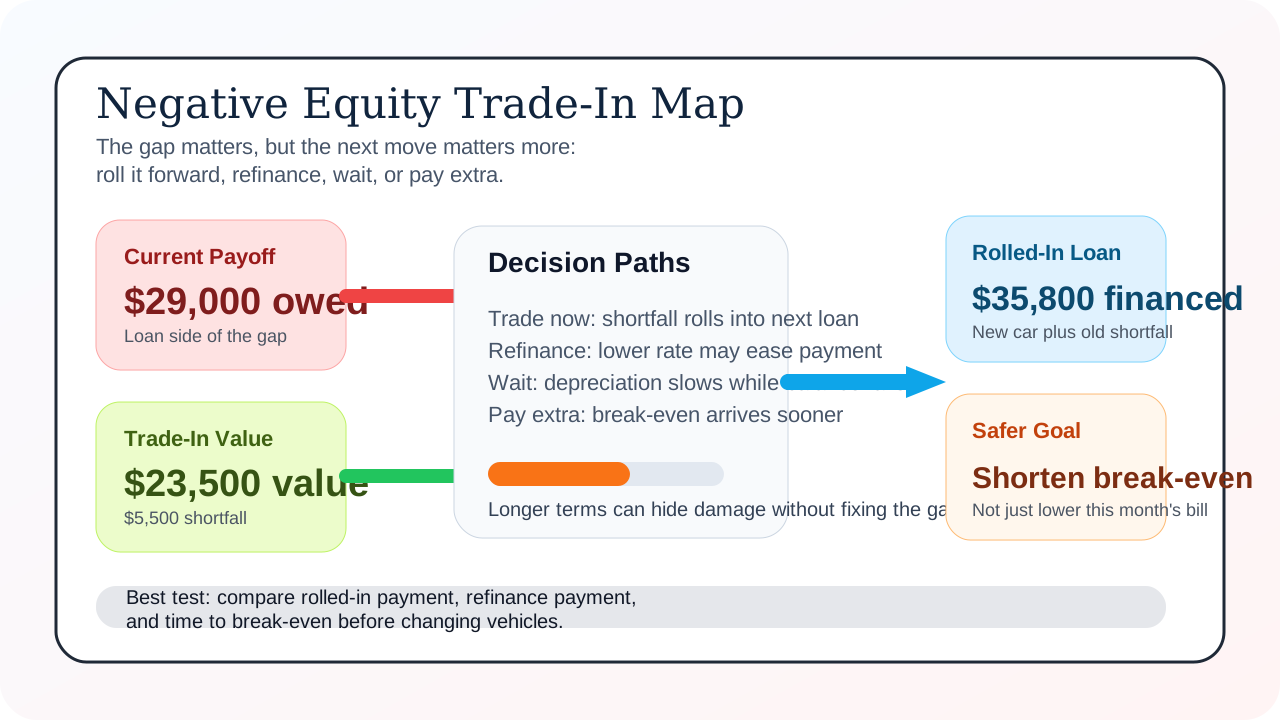
Model the current payoff and compare what a replacement or refinance loan would really cost.
Open the Car Loan CalculatorQuick answer: what a negative equity calculator should show
A useful negative equity car loan calculator should show the loan payoff, the car's estimated trade-in value, the size of the shortfall, and what happens if that shortfall is rolled into a replacement loan.
It should also help compare two other common options: refinancing the current balance and making extra principal payments until the loan gets closer to break-even.
What people are obviously searching for
The direct keyword set shows strong commercial and lender-comparison intent:
- negative equity car loan calculator
- upside down car loan calculator
- trade in negative equity calculator
- car loan payoff versus trade-in calculator
- roll negative equity into new car loan calculator
- underwater car loan calculator
- auto refinance negative equity calculator
- car trade-in payoff calculator
- car loan break-even calculator
- how much negative equity can I roll into a car loan
What borrowers are really asking before they act
The long-tail questions show the decision pressure more clearly:
- Should I trade in my car if I owe $6,000 more than it is worth?
- How much will my new payment jump if I roll in the old balance?
- Is it smarter to refinance or just keep paying extra?
- How long will it take to reach break-even if I add $100 a month?
- Can I refinance if my loan-to-value ratio is too high?
- How much negative equity is too much for a trade-in?
- Will a longer loan term make the situation worse?
- Should I wait another year before replacing the car?
- Can a dealership hide negative equity inside the monthly payment?
- What if my car is reliable but the payment is the real problem?
Why negative-equity intent is strong right now
Long loan terms are still expanding
Road & Track's July 2026 summary of Edmunds data reported that 36.5% of buyers in Q2 2026 chose loan terms of 73 months or longer, and nearly one-quarter chose 84 months or longer. That matters because long terms can delay the point where the loan balance falls below the vehicle's market value.
Average rolled-in shortfalls are still large
The same Edmunds data showed average negative equity rolled into a new purchase reached $7,813 in Q2 2026. That is not a small paperwork issue. It is a second problem loan being layered into the next vehicle decision.
Refinancing is not automatically cheap either
WSJ Buy Side reported on July 8, 2026 that the average auto refinance rate for fair-credit borrowers was about 8.05%, with typical fair-credit offers ranging roughly from 8.03% to 10.11%. That means “just refinance it” is not a universal solution. Rate improvement, term length, and loan-to-value limits all matter.
How to estimate negative equity with Calcsy
1. Start with the real payoff amount
Use the current payoff, not only the remaining principal shown on an old statement. The lender payoff is the number that matters if you sell, refinance, or trade today.
2. Compare payoff against realistic trade-in value
If the payoff is $29,000 and the trade-in offer is $23,500, the negative equity is $5,500. That is the funding gap the next decision has to absorb.
3. Model the rolled-in replacement loan honestly
Use Calcsy's Car Loan Calculator with the replacement vehicle price plus the shortfall. This is where many deals stop looking affordable once the hidden amount financed is exposed.
4. Compare the refinance and extra-payment alternatives
If the current car is still usable, compare that rolled-in scenario with a refinance path in the Cash-Out Auto Refinance Calculator Guide and a faster-paydown path in the Extra Payment Calculator Guide. Sometimes the best move is simply buying time.
When trading in may still make sense
The current vehicle is unreliable and replacement risk is bigger
If repair risk or safety issues make keeping the car unrealistic, the right calculator use is damage control: compare the least harmful replacement structure, not a fantasy zero-gap outcome.
The replacement vehicle is materially cheaper and more stable
Trading down can sometimes shrink the long-run damage if it avoids another high-price, long-term loan. The How Much Car Can I Afford Guide is the right companion for that check.
When waiting is usually stronger
The current car still works and the only pressure is discomfort with the payment
If reliability is acceptable, keeping the vehicle longer often gives the loan more time to catch up with depreciation.
The trade requires stretching the next term again
Rolling a shortfall into a 72- or 84-month replacement loan can lock the borrower into the same cycle again, only with a bigger starting balance.
Common mistakes to avoid
Focusing on the new payment without checking the new balance
A dealer can soften the monthly number by stretching the term while leaving the total debt load much worse.
Ignoring taxes and fees on the replacement vehicle
The rolled-in shortfall is only one part of the financing stack. Taxes and fees can widen the hole further.
Using refinance only to lower the payment
If the refinance lengthens the term too much, it may ease the month but delay break-even longer than expected.
Buying another expensive car while already underwater
This is the cycle that pushes negative equity forward from one deal to the next.
Related calculators and guides
- Car Loan Calculator for rolled-in trade-in and replacement-loan scenarios.
- Cash-Out Auto Refinance Calculator Guide for refinance tradeoffs and balance-risk framing.
- Extra Payment Calculator Guide for faster principal-reduction testing.
- How Much Car Can I Afford Guide if trading down is part of the recovery plan.
- Car Sales Tax Calculator Guide for replacement-vehicle out-the-door planning.
FAQ
What should a negative equity car loan calculator show?
It should show the payoff, the vehicle value, the shortfall, and what happens if that shortfall gets rolled into a new loan.
Why does rolling negative equity into a new loan usually hurt?
Because it raises the amount financed on the next vehicle and can keep you underwater for even longer.
Can refinancing fix negative equity?
Sometimes it can reduce payment or interest cost, but it does not erase the gap by itself. The useful question is whether it improves the path back to break-even.
When is waiting usually better than trading?
Usually when the current car is still reliable enough and the only way to trade is to roll a large shortfall into another long-term loan.
How can I get out of negative equity faster?
Common levers are extra principal payments, a lower-rate refinance if available, keeping the car longer, or choosing a cheaper replacement rather than a lateral move.
Research references
- Road & Track, July 2026: Edmunds data on 84-month loans and negative equity
- WSJ Buy Side, July 2026: auto refinance rates for fair-credit borrowers
- Associated Press, August 27, 2025: Edmunds on major car-buying mistakes and negative equity rollovers
- MarketWatch, May 2026: long-term loans and rising negative-equity trade-ins