Lease Buyout Calculator Guide: Compare Residual Value, Market Price, Financing, and Mileage Penalties
As of July 12, 2026, lease buyout intent is strongly commercial and unusually practical. Drivers are reaching the end of leases signed during a very different pricing environment, while used-car values, EV resale pressure, and current used-car financing rates have changed the answer. What people want now is not a generic explanation of lease buyouts. They want to know whether the residual value still beats the market, whether mileage and wear charges make returning the car expensive, and whether today's financing cost turns a reasonable buyout into a monthly-payment trap.
Estimate the buyout payment and total cost before you call the lender back.
Open the Car Loan CalculatorQuick answer: what a lease buyout calculator should show
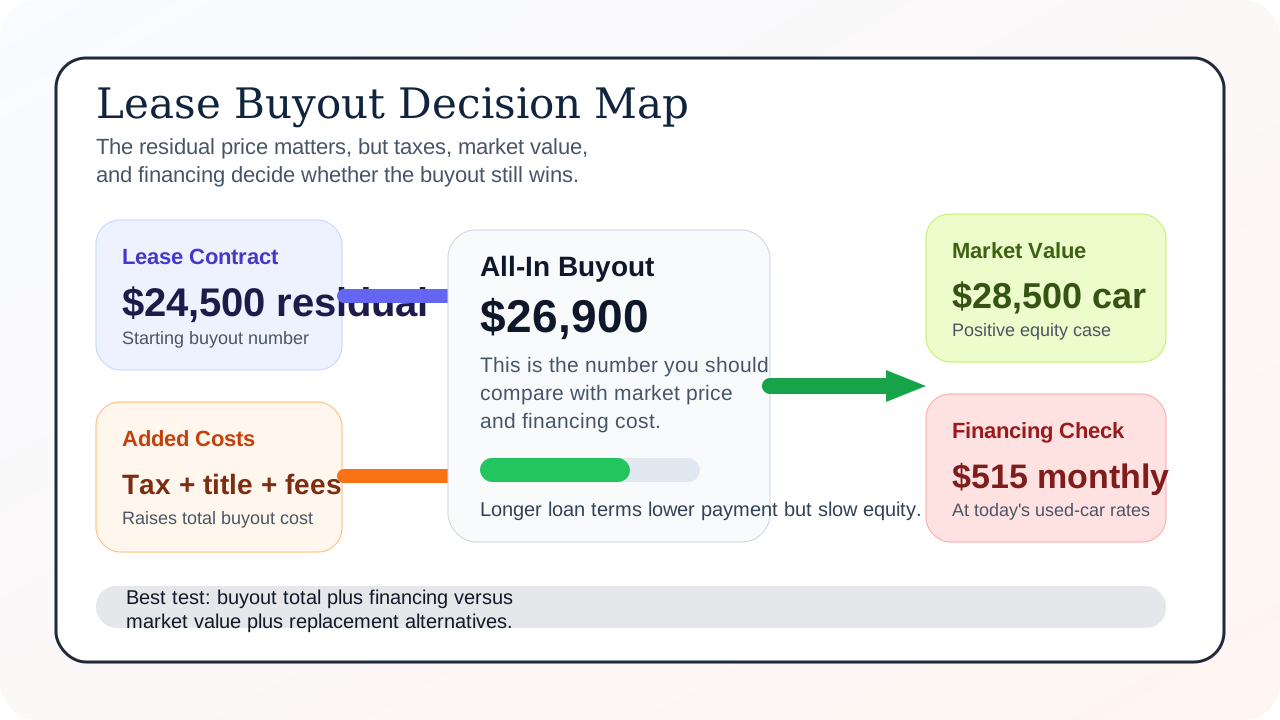
A useful lease buyout calculator should show the residual or payoff price, taxes and fees, financed amount, monthly payment, total interest, and the gap between the buyout cost and the car's current market value.
If it does not compare the lease contract number with the real market price of the car today, it misses the reason most people search for this tool.
What people are obviously searching for
The direct-query cluster is transactional and price-sensitive:
- lease buyout calculator
- car lease buyout calculator
- auto lease buyout calculator
- end of lease buyout calculator
- lease payoff calculator
- residual value calculator car lease
- lease buyout payment calculator
- lease buyout loan calculator
- lease purchase option calculator
- is my lease buyout worth it
What people are really asking before they decide
The deeper long-tail questions are where the real intent lives:
- Is my buyout price lower than what the same car costs on the used market?
- Should I buy out the lease to avoid mileage penalties?
- Do I still pay sales tax and registration if I buy my leased car?
- Is financing the buyout too expensive at today's used-car rates?
- Can I use lease equity as a down payment on another car instead?
- Is buying out an EV lease risky if used EV prices keep falling?
- Should I buy out the lease and sell the car myself?
- What fees get added to the residual value at buyout?
- Does wear-and-tear damage make a buyout smarter than returning the car?
- How do I compare a buyout against simply financing a different used car?
Why lease buyout intent is strong right now
Used-car financing is still expensive enough to change the answer
WSJ Buy Side's July 2026 auto-rate coverage put typical auto-loan pricing around 7% on average, with used-vehicle financing often costing more depending on credit and lender. That means a buyout can look attractive on vehicle price and still become expensive once financing is layered in.
Drivers are confronting long-loan pressure across the whole market
Road & Track, citing Edmunds data published July 6, 2026, reported that 24% of new-vehicle buyers used loan terms of 84 months or longer in Q2 2026. That matters here because lease-buyout shoppers are making the same affordability tradeoff: smaller monthly payment now versus slower equity growth and higher total interest later.
Off-lease EV supply is changing the math for some residual values
Car and Driver reported in February 2026 that large numbers of EV leases written during the subsidy-heavy 2023 to 2025 period are now maturing, increasing used EV supply and pressuring resale prices. That creates a more nuanced search question: some gas models may still carry useful lease equity, while some EV buyouts may look weak if market values have slipped below the contract residual.
The numbers that matter in a lease buyout
Residual or purchase-option price
This is the contract number many drivers focus on first. It is essential, but it is not the whole answer.
Taxes, registration, and buyout fees
Depending on the state and leasing company, the transaction can add sales tax, title and registration charges, and a buyout or processing fee. Those costs can move the total meaningfully.
Current market value
This is the comparison point that decides whether the lease contract still offers value. If the same vehicle is cheaper on the open market, the buyout may no longer be the bargain it first appears to be.
Financing cost
Used-car rates, term length, and lender fees shape the monthly payment and total interest. A fair residual value can still become a poor deal under a long high-rate loan.
Mileage and wear penalties avoided
If returning the car would trigger excess-mileage or wear charges, that avoided cost should be part of the comparison rather than an afterthought.
How to estimate a lease buyout with Calcsy
1. Build the true buyout amount
Add the residual or payoff price, expected tax, title, registration, and any buyout fee so you know the full transaction amount rather than only the contract number.
2. Model the financing cost
Use Calcsy's Car Loan Calculator to test the financed amount at several rates and terms. If the payment only works at a very long term, the buyout may be creating the same equity problem as an overpriced purchase.
3. Compare the buyout against the open market
Use real pricing references for similar vehicles and ask whether your lease price still beats those options after tax and financing are included. The Car Loan Calculator Guide helps frame that comparison.
4. Count the penalties you avoid by not returning the car
If your vehicle is over mileage or has repairable cosmetic wear, estimate those charges explicitly. That can materially improve the buyout case even when the residual value alone does not look amazing.
When a lease buyout can make sense
The car is worth more than the buyout price
If the market value is still above the residual and the financing is reasonable, the contract may be handing you usable equity rather than just an option.
You know the vehicle's history and want to avoid the replacement search
There is real value in keeping a car you already know, especially if comparable used inventory is expensive or uncertain.
Mileage and wear charges would be painful
A buyout can neutralize penalties that would otherwise make the return decision expensive.
When the buyout deserves more caution
The market value has fallen below the residual
This is a common stress case for some EVs and for vehicles whose used prices cooled faster than expected. In that situation, buying the same model elsewhere may be cheaper.
The financing term becomes the only way the payment works
If you need 72 or 84 months just to make the monthly number tolerable, the transaction may be affordable only on paper.
You could preserve lease equity by trading strategically
Some drivers are better served by using positive equity toward another purchase or lease rather than financing the buyout itself.
Common mistakes to avoid
Ignoring taxes and buyout fees
The residual value is not the total transaction cost, and that gap is often where the mistake happens.
Comparing the buyout only to your current lease payment
Your lease payment was based on a different structure and different period. The better comparison is against today's total purchase cost and market alternatives.
Forcing the deal to work with an extra-long used-car loan
That can create slow equity growth and a higher all-in cost than replacing the car with a better-priced alternative.
Skipping the sales-tax math
If your state taxes the purchase, review the logic in the Car Sales Tax Calculator Guide so the buyout does not look cheaper than it really is.
Related calculators and guides
- Car Loan Calculator for monthly payment, term, and total-interest estimates.
- Car Loan Calculator Guide for comparing auto-financing structures.
- Car Sales Tax Calculator Guide for registration and tax planning.
- How Much Car Can I Afford Guide for payment sanity checks before you commit.
- APR Calculator Guide for comparing fee-adjusted borrowing cost across lenders.
FAQ
What should a lease buyout calculator show?
It should show the buyout price, taxes and fees, financed amount, monthly payment, total interest, and the gap between that all-in cost and the car's market value.
When is a lease buyout usually worth considering?
Usually when the buyout price is favorable versus the market, when penalties would make returning expensive, or when the car still fits your needs better than replacing it.
Why can a lease buyout look good on price and still be a bad deal?
Because taxes, fees, and used-car financing can raise the real cost enough to erase the apparent savings.
Can I buy out the lease and then sell the car?
Sometimes yes, but you need to account for all taxes, fees, title timing, and resale friction before treating that as easy profit.
Are EV lease buyouts different right now?
Often yes. The recent wave of off-lease EV supply makes market-value checks especially important because some residual values may no longer look attractive.