Home Equity Loan Calculator Guide: Estimate Payments, Costs, and Risk
Home equity loan planning question in June 2026 is practical and cautious. People are not just looking for a payment formula. They are trying to decide whether a fixed-rate home equity loan is safer than a HELOC, whether current rates still make debt consolidation worthwhile, how much equity they can realistically tap, and what a second payment will do to a household budget that already includes a first mortgage. Recent rate roundups still place home equity borrowing in the roughly 8% range, so searchers want predictable payments more than abstract borrowing capacity.
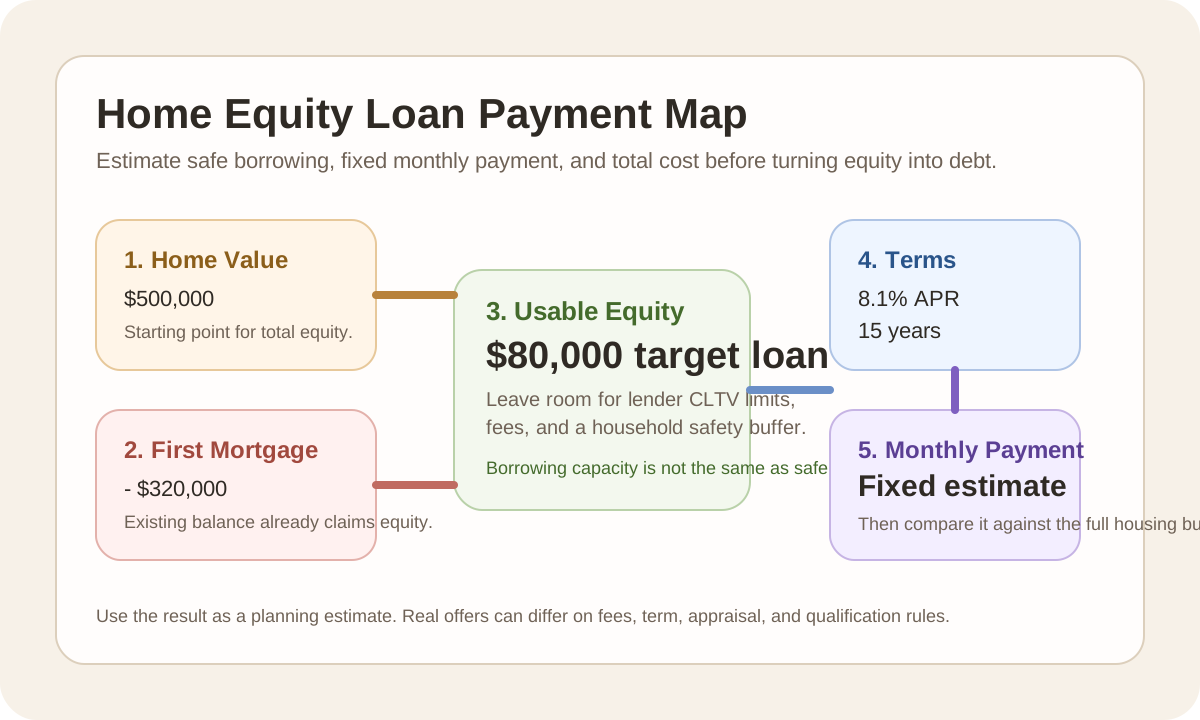
Model a fixed second-loan payment while you read.
Open the Loan Payment CalculatorQuick answer: what a home equity loan calculator should show
A useful home equity loan calculator should estimate a fixed monthly payment, total interest, and the budget impact of adding that payment to your existing housing costs.
It should also force you to think about fees, combined loan-to-value limits, and whether the project or debt payoff plan still makes sense once the house becomes collateral.
What people are obviously searching for
The direct intent cluster is commercial and comparison-heavy:
- home equity loan calculator
- home equity payment calculator
- second mortgage calculator
- fixed rate home equity loan calculator
- home equity loan monthly payment calculator
- home equity borrowing calculator
- debt consolidation home equity loan calculator
- home improvement loan calculator
- home equity loan rates calculator
- HELOC vs home equity loan calculator
What people are really asking before they borrow
The longer-tail questions show hesitation, not just curiosity:
- How much would a $50,000 home equity loan payment be?
- Is a home equity loan smarter than a HELOC when rates are still high?
- Can I afford a second payment on top of my mortgage?
- How much equity do I need to qualify?
- What fees should I expect before closing?
- Is using home equity to pay off credit cards too risky?
- Will a home equity loan hurt me if I move in a few years?
- Do lenders use home value or appraised value?
- Can I still borrow if my first mortgage rate is much lower?
- Is cash-out refinance better than a home equity loan right now?
How the payment math works
The calculator uses fixed-loan math
A standard home equity loan usually behaves like any other installment loan: you borrow a lump sum, get a fixed APR, and repay it with the same monthly payment over a set number of years. That makes Calcsy's Loan Payment Calculator a strong fit for first-pass estimates.
Equity determines the ceiling, not the safe budget
Lenders care about combined loan-to-value and your ability to repay. Your household should care about something stricter: whether the new payment still leaves room for taxes, insurance, repairs, savings, and ordinary volatility. That is why this topic overlaps with the budgeting caution in the How Much House Can I Afford Calculator Guide.
Fees can quietly change the real cost
Closing costs, appraisal charges, title work, and lender fees may be paid upfront or rolled into the borrowing decision. If you only compare the headline rate and ignore fees, the payment can look cleaner than the deal really is.
How to estimate a home equity loan with Calcsy
1. Start with the amount you would actually borrow
Do not start with "available equity" alone. Start with the cash need that has a clear purpose: one renovation phase, one debt-consolidation target, or one planned expense. Smaller borrowing is usually easier to control and easier to compare.
2. Run multiple APR and term scenarios
Use Calcsy's Loan Payment Calculator to test the same amount over 10, 15, and 20 years. A longer term can reduce the monthly payment while increasing total interest. A shorter term can improve total cost while making the monthly budget harder.
3. Add the second payment to your full housing picture
Home equity loan shoppers often isolate the new payment and forget the first mortgage, taxes, insurance, HOA dues, and maintenance reserve. Compare the result with the guardrails in the Mortgage Payment Guide so the second loan is not evaluated in a vacuum.
Why people often prefer fixed-payment clarity
Borrowers want predictability
With home equity borrowing costs still elevated in mid-June 2026, many People are leaning toward fixed-payment certainty instead of open-ended draw flexibility. They want to know whether a specific payment is tolerable before they submit an application.
HELOC comparison is part of almost every serious search
Even when someone types "home equity loan calculator," the real decision is often loan versus HELOC. A fixed loan is cleaner for a one-time project or debt payoff. A HELOC can fit staged spending better, but variable-rate risk makes monthly planning less stable.
Cash-out refinance remains a live alternative
Some homeowners are not sure whether to add a second loan or replace the first mortgage entirely. That is why home equity planning question still overlaps with break-even thinking and the tradeoffs covered in the Refinance Calculator Guide.
Common home equity loan scenarios
Home improvement with a defined budget
A fixed-rate home equity loan is easiest to model when the project has a known cost and timeline. The calculation question is simple: can the completed payment plan fit the budget without squeezing normal housing costs?
Debt consolidation
This is a practical planning category because the advertised payment reduction can look compelling. The risk is that unsecured debt becomes debt backed by the house. If the spending problem continues, the borrower can end up with both new credit-card balances and a second mortgage.
Large one-time expenses
Medical costs, education bills, or family support needs sometimes push homeowners toward equity borrowing. In these cases, the monthly payment estimate matters because the loan may outlast the original emergency.
Mistakes to avoid
Borrowing to the approval limit
Lender approval does not automatically mean long-term affordability.
Ignoring total interest for the sake of a lower payment
A long term can make the monthly number easier while making the total borrowing cost much heavier.
Forgetting that the home secures the debt
The OCC's consumer guidance makes this point directly: if you cannot make the payments, foreclosure risk is real.
Skipping comparison shopping
Home equity loans vary meaningfully on APR, fees, prepayment terms, and closing structure. Rate alone is not enough.
Related calculators and guides
- Loan Payment Calculator for monthly payment, total paid, and total interest on a fixed-rate borrowing scenario.
- Loan Payment Calculator Guide for the base installment-loan formula behind the estimate.
- Refinance Calculator Guide if you are weighing a second loan against replacing the first mortgage.
- How Much House Can I Afford Calculator Guide for payment-first housing budget guardrails.
- Debt Payoff Calculator Guide if the real goal is eliminating expensive revolving debt.
FAQ
How is a home equity loan payment estimated?
Use the loan amount, APR, and term to calculate a fixed monthly payment and the total interest across the full repayment period.
Is a home equity loan better than a HELOC?
It is usually better when you need one lump sum and want predictable payments. A HELOC is more flexible, but the payment may move if the rate changes.
Can I use a home equity loan for debt consolidation?
Yes, but it increases the stakes because missed payments can put the home at risk.
What fees should I expect?
Common costs can include appraisal, title, application, and closing fees. Lenders structure them differently, so compare the full cost, not just the rate.
What is the biggest mistake borrowers make?
They focus on approval size instead of payment durability and total cost.