HELOC Payment Calculator Guide: Estimate Draw-Period Interest, Repayment Shock, and Safer Borrowing
As of June 29, 2026, HELOC planning question is driven by homeowners trying to unlock equity without giving up an older first-mortgage rate. They want to know what the payment looks like during the draw period, how badly it can jump when repayment starts, whether a variable rate tied to prime still makes sense, and whether a HELOC is safer or riskier than a fixed home equity loan. Recent HELOC coverage also shows a newer concern: some lenders now require larger initial draws, which changes the cost math from day one.
Model a fixed repayment scenario while you read.
Open the Loan Payment CalculatorQuick answer: what a HELOC payment calculator should show
A useful HELOC payment calculator should show the draw-period payment, the estimated repayment-period payment, and how rate changes alter both.
It should also show the credit line relative to home value and existing mortgage debt, because payment math alone is not enough when your home is the collateral.
What people are obviously searching for
The direct keyword set is commercial and often tied to imminent borrowing:
- HELOC payment calculator
- HELOC calculator
- home equity line of credit payment calculator
- interest only HELOC calculator
- HELOC repayment calculator
- HELOC monthly payment calculator
- HELOC draw period calculator
- HELOC rate calculator
- HELOC versus home equity loan calculator
- how much HELOC can I afford
What homeowners are really asking before signing
The long-tail questions reveal where the risk sits:
- Why is my HELOC payment so low now and why can it jump later?
- How do I estimate the payment after the draw period ends?
- What happens if prime rate rises after I open the line?
- Is a HELOC smarter than refinancing a low-rate first mortgage?
- Should I use a HELOC for renovations, debt payoff, or emergency liquidity?
- How much equity do I need for a meaningful line of credit?
- What is the difference between a HELOC and a fixed home equity loan payment?
- Can a lender require me to draw part of the line immediately?
- How dangerous is using a HELOC for credit card debt?
- What payment can I handle if the draw period ends while rates are still high?
Why HELOC intent is strong in June 2026
Homeowners do not want to replace cheap first mortgages
Current searchers often have a first mortgage they do not want to touch. That makes HELOC intent stronger than plain refinance intent because the line can unlock equity without resetting the entire housing loan.
Variable-rate risk is back in the decision
Kiplinger reported in March 2026 that HELOCs were again gaining popularity, but also warned that lender structures are changing and many lines still sit in the mid-7% range. That means borrowers are actively searching for payment estimates that include rate movement, not just a single teaser snapshot.
Repayment shock is the hidden search problem
People often type a simple HELOC payment query when what they really fear is the jump from interest-only draw payments into principal-and-interest repayment. A calculator that ignores that shift is the wrong tool for the real question.
How to estimate a HELOC payment with Calcsy
1. Start with the amount you expect to draw, not just the line limit
A HELOC might approve a larger limit than you plan to use. Model the amount you will actually draw first, especially if the line is for a staged renovation or occasional liquidity rather than one immediate expense.
2. Separate the draw period from the repayment period
During the draw period, many HELOCs allow interest-only payments. During repayment, principal gets added and the payment can jump. Use Calcsy's Loan Payment Calculator to approximate the later fixed-repayment phase, then compare it with the lower interest-only period you see at the start.
3. Compare HELOC math with fixed alternatives
If you want a lump sum and predictable payments, the Home Equity Loan Calculator Guide is a direct companion. If you are weighing broader housing-payment pressure, the Mortgage Payment Guide helps keep the total monthly obligation in view.
4. Check the purpose of the borrowing, not just the rate
Using home equity for renovations is a different risk profile from using it to cover recurring budget shortfalls. If the goal is debt cleanup, compare the HELOC path with the more conservative framing in the Debt Consolidation Loan Calculator Guide.
The payment structure most borrowers miss
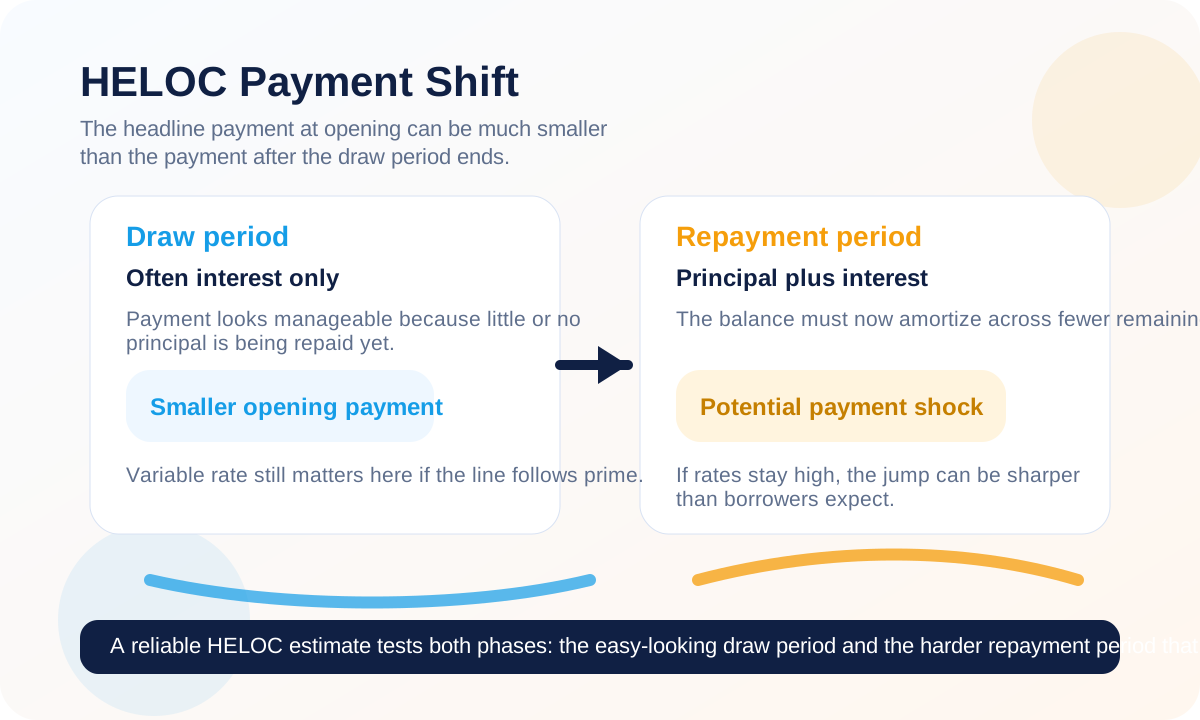
Draw-period payment
This is often interest only. It can look manageable because you are not repaying much principal yet.
Repayment-period payment
Once the line closes to new draws, the existing balance has to be repaid across the remaining term. If the rate is still variable, the new payment can be materially higher than borrowers expect.
Prime-linked uncertainty
Because many HELOCs move with prime, your payment is not just about today's number. It is about what the line costs if rates stay elevated or move higher while you still owe the balance.
Common HELOC scenarios
Renovation funding in stages
This is the classic use case. Flexibility matters, and borrowers may only want to pay interest on the portion actually drawn while work progresses.
Bridge liquidity without refinancing the first mortgage
Homeowners sitting on a strong old mortgage rate often prefer a HELOC over cash-out refinance because it leaves the first loan untouched.
Debt payoff backed by home equity
This can lower interest cost, but it also converts unsecured debt into debt backed by the home. The payment may improve while the downside gets more serious.
Common mistakes to avoid
Planning around the draw-period payment only
If the later repayment payment does not fit your budget, the opening payment does not matter much.
Ignoring lender-specific draw requirements
Some 2026 HELOC offers require a large initial draw. That changes interest cost immediately and can remove some of the flexibility homeowners expect.
Using the full line because it is available
Approval amount is not the same thing as safe borrowing capacity.
Using home-secured debt to solve a spending problem
A HELOC can be a useful tool, but it is a dangerous fix for structural monthly overspending.
Related calculators and guides
- Home Equity Loan Calculator Guide for fixed-rate second-mortgage comparisons.
- Mortgage Payment Guide for the broader housing-payment picture.
- Refinance Calculator Guide if you are comparing HELOC borrowing against replacing the existing mortgage.
- Debt Consolidation Loan Calculator Guide if the HELOC is being considered for debt cleanup.
- Loan Payment Calculator for a repayment-phase estimate once you know the balance and target term.
FAQ
What should a HELOC payment calculator show?
It should show the current draw-period payment, the later repayment-period payment, and how variable-rate changes affect each phase.
Why can a HELOC payment jump after the draw period ends?
Because many lines start with interest-only payments and later switch to principal plus interest, sometimes while the rate is still variable.
Is a HELOC better than a home equity loan?
It depends on whether you need borrowing flexibility and can tolerate variable-rate risk, or whether you want fixed payments from the start.
Can I use a HELOC for debt consolidation?
You can, but the risk changes because unsecured debt becomes debt backed by your home.
What is the biggest mistake borrowers make?
They budget for the opening payment and never test whether the later repayment payment still works.