Construction Loan Calculator Guide: Estimate Draw Payments, Down Payment, Interest Reserve, and Build-to-Perm Cost
As of July 15, 2026, construction-loan intent is active because buyers are getting squeezed from both sides: finished homes are still expensive, and custom-home budgets are harder to trust. The Associated Press reported on July 10, 2026 that the average 30-year fixed mortgage rate rose back to 6.49%. Last month, The Wall Street Journal reported fresh pressure on lumber, copper, diesel, and aluminum costs. And on July 11, 2026, MarketWatch reported that the latest federal housing bill is aimed partly at boosting supply and speeding construction. Searchers are not asking only whether they can build. They are trying to estimate whether the construction phase, the draw schedule, and the permanent payment still fit their cash flow once the real cost stack is included.
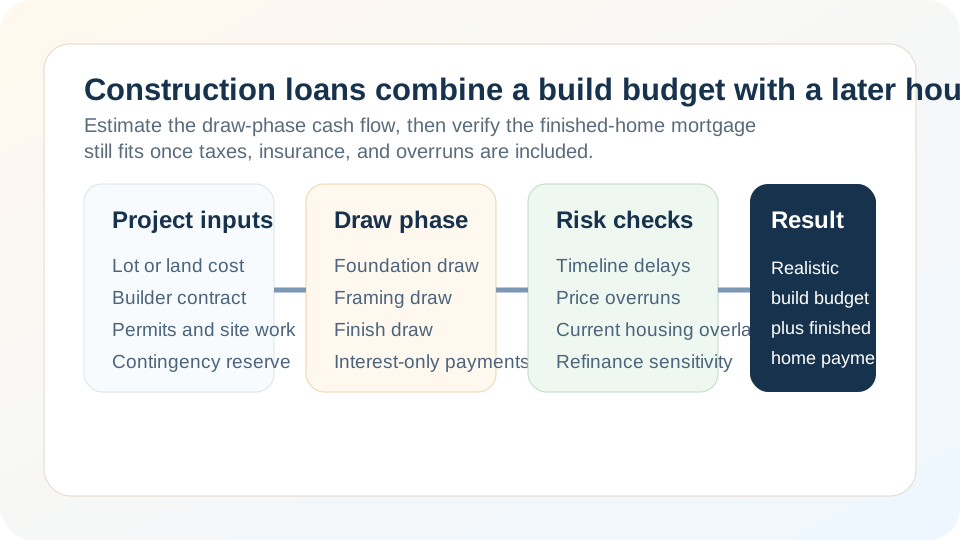
Start with the permanent mortgage payment, then work backward into the build budget.
Open the Mortgage CalculatorQuick answer: what a construction loan calculator should show
A useful construction loan calculator should show the total project budget, the likely interest-only payment during the draw phase, the cash needed beyond the base contract, and the permanent mortgage payment after the build converts or refinances.
That means land, permits, contingency, builder draws, rate assumptions, and post-build taxes and insurance all need to be visible in the same decision.
A construction loan is not only permission to build. It is permission to build on purpose. The strongest projects start when the numbers are clear enough that the house can be designed around your life instead of your anxiety.
What people are obviously searching for
The direct-intent layer is straightforward and commercial:
- construction loan calculator
- home construction loan calculator
- construction-to-permanent loan calculator
- build a house loan calculator
- new construction mortgage calculator
- construction mortgage calculator
- construction draw payment calculator
- owner-builder loan calculator
- land and construction loan calculator
- construction loan monthly payment calculator
What searchers are really trying to solve
The long-tail questions reveal the pressure behind the search:
- Do construction loans cover the land purchase too?
- How much down payment do I need for a build-to-perm loan?
- Why does the payment rise during construction?
- Do I pay interest on the full loan or only on the amount used?
- How much contingency should I add for overruns?
- Can I qualify if I already have a mortgage on my current house?
- What happens if the build runs late and the loan term expires?
- Is owner-builder financing harder than using a licensed general contractor?
- Should I buy the lot separately before applying?
- How do I know if the finished-home payment will still be affordable?
Why construction-loan search intent is strong right now
Finished-home affordability is still weak
AP reported on July 10, 2026 that Freddie Mac's average 30-year fixed rate climbed to 6.49%. That keeps many buyers comparing custom-build math against resale-home pricing instead of assuming one route is automatically cheaper.
Materials and budget volatility are back in the conversation
The Wall Street Journal reported last month that housing projects were dealing with higher costs for copper, lumber, diesel, and aluminum. For construction-loan shoppers, that turns contingency from a footnote into a core financing question.
Supply policy is making homebuilding more visible
MarketWatch reported on July 11, 2026 that the newest federal housing bill is designed in part to ease construction barriers and increase supply. Even before policy effects reach the ground, it pushes more search demand toward build-versus-buy comparisons.
Construction lending still works differently from ordinary mortgage lending
WSJ Buy Side explained last month that construction loans are typically short-term, draw-based products that often use interest-only payments during the build. That structure is exactly why shoppers look for calculators instead of generic mortgage articles.
How to estimate a construction loan with Calcsy
1. Start with the finished-home payment, not the build dream
Use Calcsy's Mortgage Calculator to estimate the long-term payment after construction ends. If that finished payment is already too high, the construction phase does not save the deal.
2. Separate land, build contract, and contingency
Searchers often use one number for everything. That is too blunt. Keep the lot cost, builder contract, and contingency distinct so you can see which part is really stretching the project.
3. Treat draw-phase interest as its own budget line
Many construction loans charge interest only on the amount already disbursed. Early payments may look manageable, but they can rise as the project reaches framing, mechanicals, and finishes.
4. Add the costs borrowers underestimate first
Permits, surveys, utility connection, driveway work, retaining walls, landscaping, and temporary housing can all pressure the cash plan. Pair this guide with the Closing Costs Calculator Guide and Property Tax Calculator Guide so the cash-to-close and monthly escrow sides stay honest.
What a strong construction-loan estimate should compare
Custom build
Best when location and layout matter enough to justify more planning, more moving parts, and a more disciplined budget.
Buy existing
Best when speed, simplicity, and a known monthly payment matter more than getting every room and finish exactly right.
Wait and strengthen
Best when the project only works if costs stay perfect. More cash and more reserves usually create a better build later.
Construction-to-permanent versus stand-alone construction loan
A build-to-perm path may reduce duplicate closing friction, while a stand-alone structure can create flexibility if rates or lenders change before completion. The point of the calculator is not to guess the better product. It is to expose what each path does to cash and risk.
Buying land first versus financing land inside the project
Some borrowers use existing lot equity as part of the down-payment story. Others need both land and build costs financed together. Those are not equivalent scenarios, and the calculator should not blur them.
Licensed builder path versus owner-builder path
Owner-builder intent is real, but qualification is often stricter. If the lender views the project as riskier, approval standards, reserve expectations, and contingency planning usually tighten.
Target budget versus overrun tolerance
If the numbers only work in the best-case scenario, the plan is fragile. A construction loan should survive some delay, some price pressure, and some change-order reality.
When the construction-loan path may look stronger
You already own a good lot or can bring lot equity into the deal
That can improve the capital stack quickly, especially if the land value meaningfully offsets the new cash you would otherwise need at closing.
You care more about layout fit than resale inventory convenience
Some shoppers are not trying to outsmart the housing market. They are trying to build the right house once, in the right location, with fewer compromise costs later.
You can still afford the permanent payment if rates stay elevated
That matters more than hoping a refinance rescue appears later. If the finished-home budget only works after a future rate drop, the plan is too dependent on timing.
You want a house that solves five-year problems, not only this year's inventory problem
The hidden upside of a successful build is not bragging rights. It is fewer compromise moves later, fewer expensive remodels, and a home that fits the way you already know you live.
When the build may be weaker than it first appears
The lender payment looks manageable only because you excluded site work and contingency
That is a common spreadsheet victory and a common real-world miss.
You need both temporary housing and a current mortgage during the build
Searchers often focus on the future home payment and ignore the overlap months where cash flow is at its tightest.
The project timeline leaves no room for delays
Permitting, weather, subcontractor scheduling, and material lead times are not edge cases. They are ordinary construction realities.
Mistakes to avoid
Using only a standard mortgage calculator
A mortgage calculator is necessary, but by itself it misses draw timing, contingency, and project-cash sequencing.
Confusing interest reserve with project affordability
Whether interest is paid monthly from cash flow or financed into the structure, the cost still exists. Hiding it does not make the project safer.
Assuming the builder contract is the full project budget
Lot prep, utility work, and owner-selected upgrades are where many budgets drift fastest.
Planning the loan around the best possible finish date
If one delay breaks the budget, the build is undercapitalized.
Related calculators and guides
- Mortgage Calculator for the finished-home monthly payment.
- How Much House Can I Afford Calculator Guide for working backward from safe monthly cost.
- Closing Costs Calculator Guide for lender fees, prepaids, and cash-to-close planning.
- Property Tax Calculator Guide for monthly escrow realism after completion.
- Down Payment Calculator Guide for cash-allocation tradeoffs.
FAQ
What should a construction loan calculator include?
It should include land cost, build budget, contingency, down payment, draw-phase interest, and the permanent mortgage payment after the build is done.
Why does the payment change during the build?
Because many construction loans charge interest only on the amount already drawn, so the payment can increase as more of the budget gets used.
Do construction loans cover land too?
Sometimes they do, but not every lender structures it the same way. That is why separating land and build assumptions matters.
What is the biggest budgeting mistake?
Ignoring contingency and site costs while focusing only on the builder's base contract.
How should I judge whether building is still affordable?
Start with the finished-home payment, then check whether the draw phase, reserves, and overlap housing costs are still manageable before completion.