Cash-Out Refinance Calculator Guide: Estimate New Payment, Equity Taken, and Break-Even Risk
As of July 6, 2026, cash-out refinance intent is less about chasing a lower rate and more about deciding whether tapping equity is worth replacing an older first mortgage. In the first week of July 2026, average 30-year rates were still around the mid-6% range, while millions of homeowners remain anchored to earlier low-rate loans. That creates a different calculator question from the 2020 to 2021 refinance boom. Searchers are not just asking, "How much cash can I pull out?" They are asking, "How much does my payment jump, how much cash do I net after costs, and should I use a HELOC instead so I do not reset the whole mortgage?"
Model the replacement loan while you read.
Open the Mortgage CalculatorQuick answer: what a cash-out refinance calculator should show
A good cash-out refinance calculator should show the old mortgage payment, the new payment, the cash left after closing costs, and the break-even logic for replacing the current loan.
If it only shows the new payment, it misses the main reason people hesitate in 2026: giving up a cheap first mortgage can be more expensive than the cash-out looks at first glance.
What people are obviously searching for
These are the direct keyword intents driving the page:
- cash-out refinance calculator
- cash out refinance calculator
- cash out mortgage calculator
- refi cash out calculator
- cash-out refi payment calculator
- home equity cash out refinance calculator
- cash-out refinance closing cost calculator
- cash-out refinance monthly payment calculator
- cash-out refinance break-even calculator
- cash-out refinance vs HELOC calculator
What homeowners are really asking before they submit an application
The long-tail question layer is more revealing:
- Is cash-out refinance worth it if my current mortgage rate is under 4%?
- How much cash do I actually receive after refinance closing costs?
- Should I use a HELOC instead of replacing my first mortgage?
- How much can my monthly payment rise if I pull out equity now?
- What is the break-even point if the new rate is much higher than my old one?
- Does cash-out refinance make sense for renovations but not for debt payoff?
- How much equity do lenders usually let me access safely?
- Is taking cash out to consolidate debt too risky if my home is collateral?
- How do I compare a 15-year and 30-year cash-out refinance?
- What happens if I need cash but do not want to lose my current mortgage rate?
Why cash-out refinance intent looks different in July 2026
Rates are lower than recent peaks, but still high enough to make replacement painful
On July 3, 2026, the Associated Press reported Freddie Mac's average 30-year fixed mortgage rate at 6.43%. That is down from a year earlier, but it still leaves a large gap versus the rates many homeowners locked in several years ago.
The refinance decision is competing with the lock-in effect
Kiplinger noted on June 29, 2026 that refinancing had not broadly become attractive again, even as rates moved a little lower. That is why a cash-out refinance search now often reflects a need for equity access rather than enthusiasm about resetting the loan.
Home equity products are competing directly with each other
Kiplinger's spring 2026 HELOC coverage also highlighted a market reality that matters here: many homeowners want access to equity without disturbing the existing first lien. That makes the real search intent a comparison problem, not a single-product problem.
How to estimate a cash-out refinance with Calcsy
1. Write down the current mortgage terms before you model anything new
You need the current balance, current payment, and current rate. Without that baseline, a new loan quote looks more attractive than it really is because there is nothing to compare it to.
2. Model the replacement mortgage as if it were a new purchase loan
Use the Mortgage Calculator with the proposed new loan amount, new rate, and new term. That gives you the base payment for the refinance side of the decision.
3. Subtract closing costs from the gross cash-out estimate
Cash-out refinance is not just old balance versus new balance. Closing costs, title work, lender fees, and prepaid items can shrink the net cash materially. The Closing Costs Calculator Guide helps frame that gap.
4. Compare the refinance path against second-lien alternatives
If the existing first mortgage rate is exceptionally good, the right comparison may be a HELOC Payment Calculator Guide or a Home Equity Loan Calculator Guide, not just another refinance quote.
The payment math most people miss
Old balance versus new balance
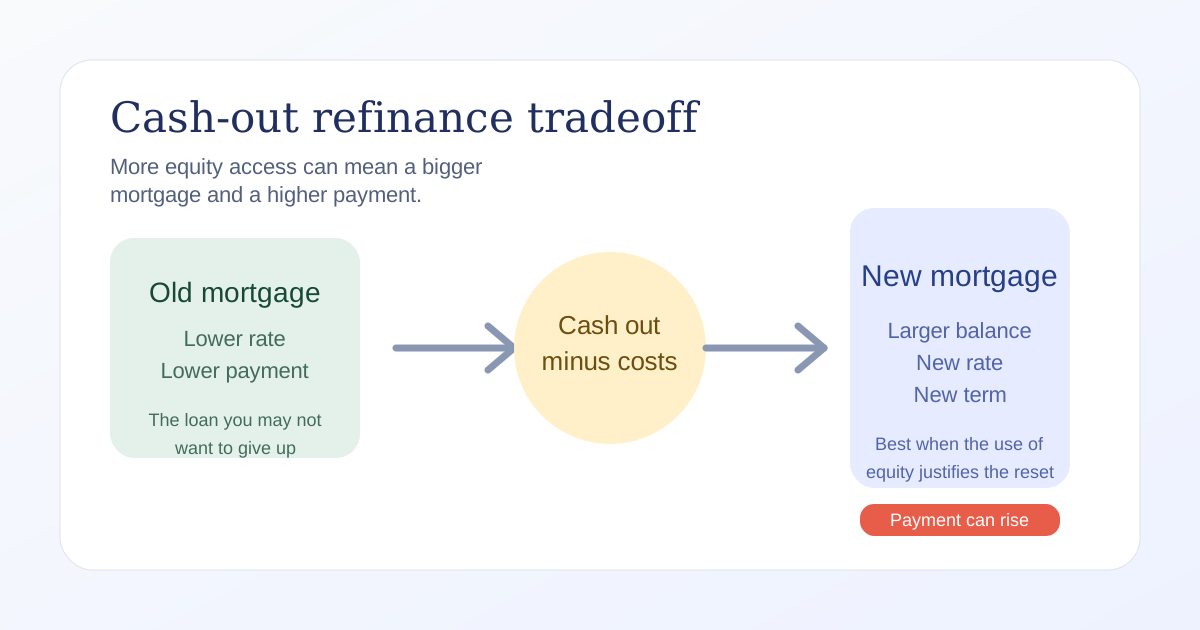
The new loan is usually larger because it has to pay off the existing mortgage, cover costs, and create the cash proceeds. That means the borrower is not just refinancing. They are refinancing and adding debt at the same time.
Old rate versus new rate
If the old mortgage is much cheaper than the current market, the new payment can jump even when the cash-out amount looks moderate. This is the core risk that makes 2026 searches more cautious.
New term versus remaining term
Stretching the loan back to 30 years can soften the monthly payment, but it can also increase lifetime interest dramatically. That is why the 15-Year vs 30-Year Mortgage Calculator Guide is relevant to refinance shoppers too.
When cash-out refinance can make sense
Large renovation with clear property or lifestyle value
If the project is substantial and the homeowner wants one structured payment, cash-out refinance can still be cleaner than stacking short-term debt.
Debt restructuring where the old mortgage rate is not especially low
If the current first mortgage is already near prevailing rates, the penalty for replacing it may be small enough that the cash-out path deserves a serious look.
Need for a fixed payment instead of variable borrowing
Some homeowners prefer a single fixed-rate mortgage over a variable HELOC, especially if they want certainty more than flexibility.
When another equity product may be better
You want to preserve a low first mortgage rate
This is the most obvious case for comparing against a HELOC or home equity loan. Replacing a 3% or 4% mortgage with a mid-6% loan can be expensive even if the equity is there.
You only need a smaller amount of cash
If the cash need is modest relative to total home equity, replacing the full first mortgage may be overkill.
You want staged borrowing instead of one lump sum
A HELOC can be more natural if the money will be used in phases, such as a renovation completed over time.
Mistakes that make cash-out look better than it is
Ignoring the old payment entirely
The question is not whether the new payment is manageable in a vacuum. It is whether the cash received justifies the change from what you already had.
Counting gross proceeds instead of net proceeds
Closing costs are not a rounding error in refinance math. They directly reduce the cash available for the goal you care about.
Using home-secured debt for a recurring spending problem
Debt backed by the house can fix a short-term liquidity issue while worsening the long-term risk profile if the real problem is overspending.
Assuming a shorter future holding period will not matter
If you may move soon, a refinance with meaningful closing costs becomes harder to justify because the time to recover those costs is shorter.
How Calcsy helps compare the decision
Calcsy is strongest when you use it for scenario testing rather than for a single yes-or-no answer. Run the replacement mortgage in the Mortgage Calculator, compare the costs in the Refinance Calculator Guide, then test whether a second-lien structure through the HELOC vs Home Equity Loan Calculator Guide preserves more flexibility. That workflow usually surfaces the real answer faster than chasing one lender's marketing pitch.
Related calculators and guides
- Mortgage Calculator for the replacement-loan payment estimate.
- Refinance Calculator Guide for break-even framing.
- HELOC Payment Calculator Guide if you want to preserve the first mortgage.
- Home Equity Loan Calculator Guide for fixed second-lien comparisons.
- Closing Costs Calculator Guide for estimating how much cash really reaches you.
FAQ
What should a cash-out refinance calculator show?
It should show the old mortgage payoff, the new payment, the net cash after closing costs, and the comparison between old and new monthly obligations.
Why is cash-out refinance intent different in 2026?
Because many owners still have older low-rate mortgages, so replacing the first lien is now a tradeoff question, not a routine rate-drop opportunity.
When is a HELOC worth comparing against cash-out refinance?
When you want to keep a favorable first mortgage rate or only need part of your available equity.
What is the biggest mistake homeowners make?
They focus on how much cash they can pull out before testing whether the payment and total borrowing cost still make sense.
Can cash-out refinance be useful for renovations?
Yes, especially if the project is large and you prefer one structured fixed payment, but it still has to beat the alternatives after costs.