Balance Transfer Calculator Guide: 0% APR, Transfer Fees, Monthly Payment, and Promo Deadline
As of July 17, 2026, balance-transfer search intent is tightly tied to credit-card payoff pressure, not casual rewards shopping. The Philadelphia Fed said on July 13, 2026 that large-bank card borrowers were still spending but also managing revolving debt more carefully in the first quarter, while current market reporting still puts many card APRs in the 20% range. That explains why searchers want a calculator that answers the real question: after the transfer fee, the promotional window, and the payment required to finish on time, does a 0% offer actually beat staying where you are?
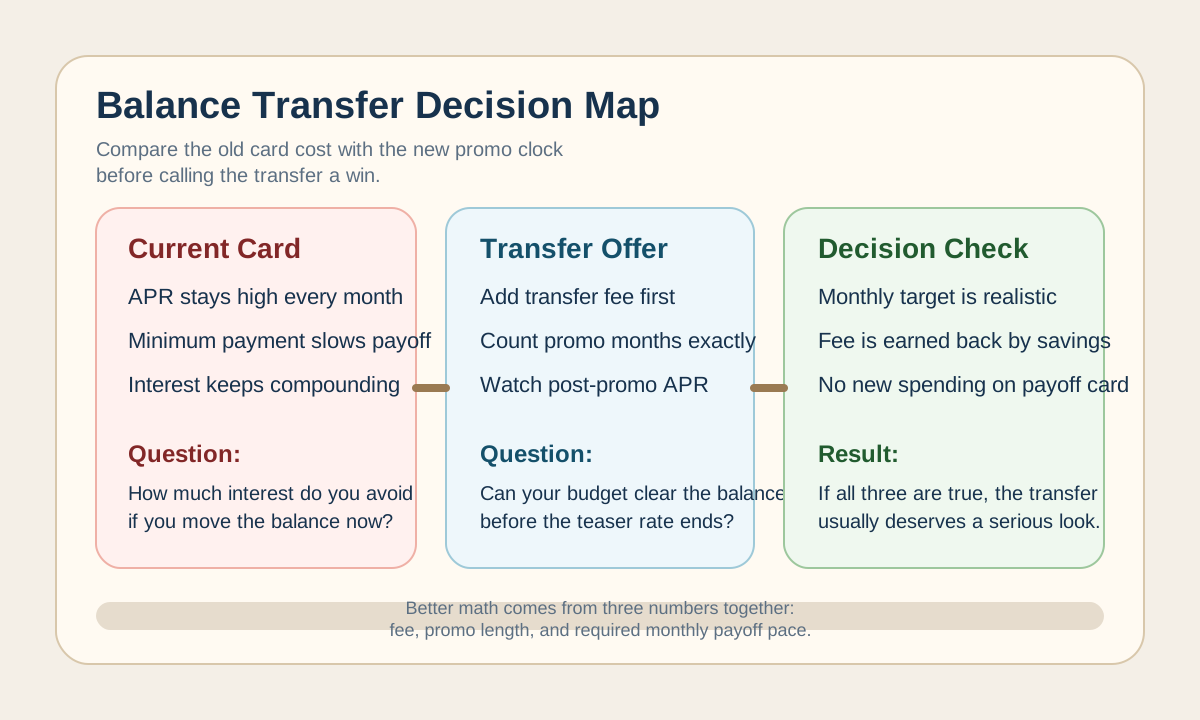
Model the fixed monthly payoff target while you read.
Open the Loan Payment CalculatorQuick answer: what a balance transfer calculator should show
A useful balance transfer calculator should show the transfer fee, the zero-percent or low-rate promotional period, the monthly payment needed to clear the balance before expiration, and the cost difference versus staying on the current card.
If it only shows a smaller interest number without the fee and deadline, it is not answering the real borrowing question.
What people are obviously searching for
The direct keyword cluster is high intent and close to action:
- balance transfer calculator
- credit card balance transfer calculator
- 0 apr balance transfer calculator
- balance transfer savings calculator
- balance transfer fee calculator
- monthly payment for balance transfer
- pay off balance transfer before promo ends
- best balance transfer card calculator
- credit card transfer interest calculator
- should I do a balance transfer
What people are really asking before they click apply
The useful long-tail questions reveal the actual decision pressure:
- How much do I need to pay each month to finish before the 0% offer ends?
- Does a 3% to 5% transfer fee wipe out the savings?
- Is a balance transfer still worth it if I cannot finish in 12 months?
- What happens when the promotional APR expires with a balance left?
- Should I choose a transfer or a debt consolidation loan instead?
- Will a new card approval hurt my score before I even transfer the debt?
- Can I transfer multiple cards onto one promo offer?
- Does using the new card for purchases ruin the payoff math?
- How do I compare a 0% offer with a lower-fee nonzero APR offer?
- What if I need payment relief but my income is uneven month to month?
Why balance-transfer intent is active right now
Card APRs are still expensive enough to keep payoff urgency high
Forbes Advisor's current rate roundup says the Federal Reserve's May 2026 data showed average credit-card interest on balances incurring interest at 22.15%. When the baseline APR is that high, even a temporary zero-percent window creates strong search intent.
Borrowers are trying to convert revolving debt into a finish line
The Philadelphia Fed's July 13, 2026 first-quarter narrative said delinquency rates had stabilized and minimum-payment behavior was improving. That does not remove the pain of high APR debt. It means more borrowers are actively looking for a structured way out rather than passively floating on minimums.
The fee question is part of the main query now
Consumers are more aware that a zero-percent teaser does not mean a free transfer. CFPB guidance says a card issuer is allowed to charge a balance-transfer fee on a zero-percent offer, so the fee math is not a side note. It is part of the decision.
How to estimate a balance transfer with Calcsy
1. Freeze the amount you are actually moving
Use today's transfer target, not the balance you remember from last month. If you keep adding purchases to the old card, the comparison gets noisy fast.
2. Add the transfer fee before celebrating the promo APR
Many offers still charge around 3% to 5%, or a minimum flat amount. That fee becomes part of the new balance, which means the payoff target is higher than the original card balance.
3. Work backward from the promo deadline
Use Calcsy's Loan Payment Calculator to estimate the fixed monthly payment required to clear the transferred balance over the promotional period. Even though a credit card is not a perfect installment loan, this gives you the payoff pace you are trying to hit.
4. Compare the transfer with non-card alternatives
If you are not confident you can finish before the teaser rate ends, compare the same debt through the Debt Consolidation Loan Calculator Guide and the Credit Card Payoff Calculator Guide. Many balance-transfer searches are really plan-choice searches.
The comparison points that matter most
Transfer fee
This is the immediate cost of moving the debt. A fee-heavy offer can still win, but only if the avoided interest is larger.
Promotional period length
A longer 0% window reduces the required monthly payment. That makes the plan more forgiving, which matters more than a marketing headline when cash flow is tight.
Post-promo APR
If a meaningful balance remains when the promo expires, the back-end APR can matter almost as much as the teaser rate.
Behavior risk
If the old card stays open and spending continues, the transfer can become an addition to the debt stack rather than an exit from it.
When a balance transfer usually fits well
You can realistically finish within the promotional window
This is the clearest win case. The fee is known, the payoff target is visible, and the interest avoided is easy to defend.
You need a lower-cost bridge, not long-term borrowing
A balance transfer is usually strongest when it buys disciplined payoff time, not when it becomes the permanent home for debt you still cannot service.
Your credit is strong enough to qualify for the good offers
Searchers often assume every balance-transfer ad is available to them. In practice, qualification determines whether the math is excellent, mediocre, or irrelevant.
Mistakes that ruin the math
Ignoring the fee
A zero-percent rate does not erase an upfront transfer cost. If the fee alone is hundreds of dollars, it needs to be earned back.
Using the new card for purchases
This can complicate grace-period behavior and make the balance harder to track. The cleanest transfer plan treats the new card like a payoff lane, not spending room.
Picking a promo length that does not match your budget
A 12-month offer is not automatically better than an 18-month offer if the shorter window creates a monthly payment you cannot sustain.
Counting on a second transfer later
Some borrowers assume they can just roll the debt again when the promo ends. That might not be available, and it is weak planning even when it is.
Related calculators and guides
- Loan Payment Calculator for the monthly payoff target needed to finish before the promotional rate expires.
- Credit Card Payoff Calculator Guide for the stay-put payoff case.
- Debt Consolidation Loan Calculator Guide for a fixed-rate alternative when the promo window looks too tight.
- APR Calculator Guide for understanding the rate-versus-fee comparison more clearly.
- Paycheck Calculator Guide if the real question is what monthly payment your income can actually carry.
FAQ
What should a balance transfer calculator show?
It should show the fee, the promo period, the payment needed to finish on time, and the cost difference versus staying on the current card.
Do zero-percent balance transfers still charge a fee?
Usually yes. Many offers still charge a balance-transfer fee, which is why the upfront cost belongs in the comparison.
When is a balance transfer usually worth it?
Usually when the fee is smaller than the interest avoided and your payment plan is strong enough to clear most or all of the balance before the promotional rate ends.
What is the biggest mistake people make?
They focus on the teaser APR and never calculate the monthly payment needed to actually use the teaser well.
Should I transfer if I cannot finish before the promo ends?
Maybe, but the case gets weaker. At that point you should compare the remaining balance and likely post-promo APR against fixed-payment alternatives.