APR Calculator Guide: Compare Loan Cost, Fees, and Monthly Payment
APR People are usually close to a decision. They are comparing loan offers, trying to understand why one lender’s rate looks low but the total cost feels high, or checking whether a car loan, personal loan, or mortgage quote is actually competitive once fees are included.
Model a payment scenario using APR, amount, and term.
Open the Loan Payment CalculatorQuick answer: what APR helps you compare
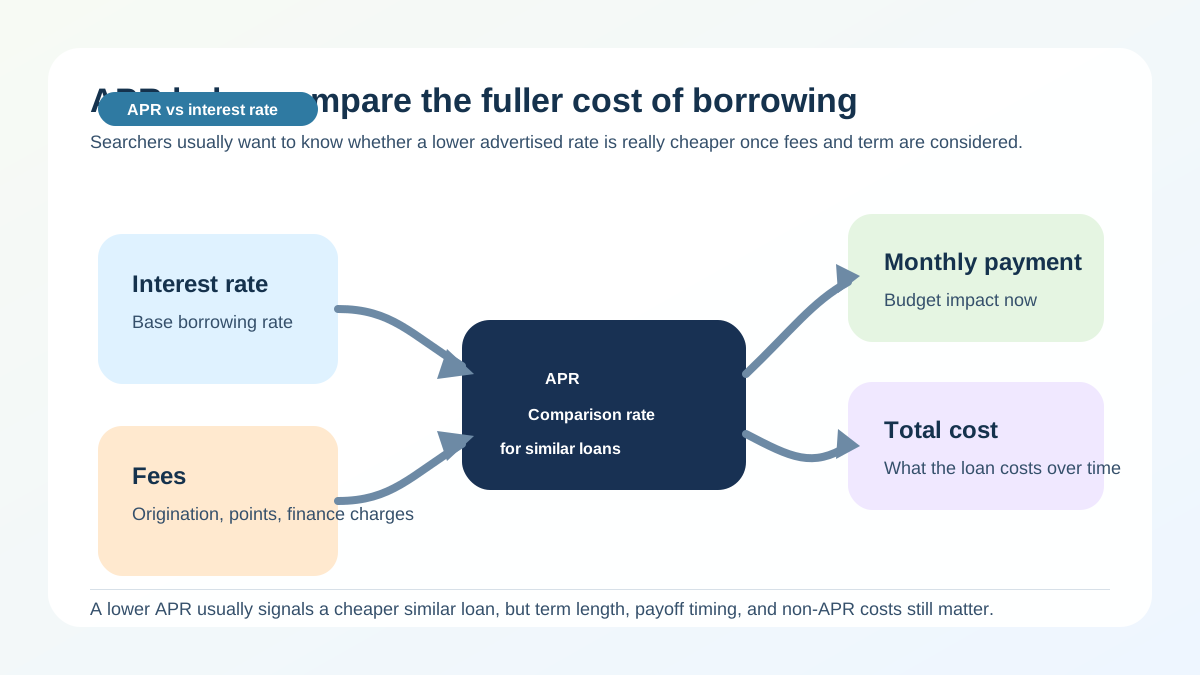
APR is designed to help you compare the annual cost of borrowing across similar loan offers, not just the stated interest rate.
That matters because two loans with the same rate can still cost different amounts if one includes origination fees, discount points, or other finance charges.
What people are obviously searching for
Current APR intent clusters around comparison shopping and cost clarity:
- APR calculator
- loan APR calculator
- interest rate vs APR
- car loan APR calculator
- personal loan APR calculator
- APR monthly payment calculator
- mortgage APR calculator
- APR vs APY
- effective APR calculator
- finance charge calculator
What people are really trying to figure out
The deeper question intent behind APR searches is usually one of these:
- Why is APR higher than the interest rate on my loan offer?
- Which lender is actually cheaper after fees?
- Does a lower monthly payment mean the loan is better?
- What is a good APR for my credit profile?
- Should I compare APR or monthly payment first?
- How do loan term and APR work together?
- Does 0% APR beat a cash rebate on a car?
- Can APR still mislead me if I plan to pay off early?
- What costs are not included in APR?
- How do I compare personal loan, auto loan, and mortgage quotes the right way?
What APR means in practice
1. APR is broader than the stated rate
The interest rate is the base cost of borrowing. APR is intended to express a fuller annual borrowing cost so people can compare offers more fairly. In U.S. lending, that disclosure framework is tied to the Truth in Lending Act, which is why APR appears so prominently in loan offers and ads.
2. APR is most useful when the loans are similar
APR comparison works best when the loan type, term length, and repayment structure are close to identical. Comparing a 36-month personal loan with a 72-month auto loan or a mortgage you may refinance soon is less straightforward.
3. Fees can change the real ranking
If one lender advertises a lower interest rate but adds an origination fee, its APR may end up above a competitor with a slightly higher rate and lower fees. That is why shoppers who search “APR calculator” are often trying to compare the total package, not just the monthly payment.
How to use an APR calculator with Calcsy
Start with three inputs you can trust
Use the loan amount, quoted APR, and repayment term in Calcsy’s Loan Payment Calculator. That gives you a clean monthly payment estimate, total paid, and total interest for a fixed-rate scenario.
Then compare offers, not just one quote
Run the first offer. Then rerun the same amount and term with the second lender’s APR. If a loan includes meaningful upfront fees, note them separately as part of the total cost review, because not every real-world expense shows up the same way in every calculator or ad.
Check whether the lower payment is actually cheaper
A longer term can make a payment feel attractive while increasing total interest. Searchers often think they want “lowest monthly payment,” but what they really need is the cheapest acceptable loan structure.
APR versus interest rate: a simple example
Imagine two offers for the same borrowing amount and term:
- Offer A: slightly lower interest rate but noticeable origination fee
- Offer B: slightly higher interest rate but lower upfront fees
Offer A can look cheaper in a headline ad while Offer B ends up being the better total-cost deal. That is why planning question around “APR vs interest rate” remains strong across mortgages, personal loans, and car loans.
Where APR can still mislead
When you will repay early
APR often assumes the loan runs for the scheduled term. If you expect to refinance, sell the car, or pay off the balance much sooner, the fee impact can land differently than a full-term APR comparison suggests.
When the costs are outside the narrow finance charge
Some costs that affect affordability may not be reflected neatly in APR, depending on the product and lender structure. That is why serious shoppers still review cash needed upfront, monthly payment, and total interest alongside APR.
When you compare different loan categories
A competitive mortgage APR and a competitive personal-loan APR live in different markets with different risk profiles. “Good APR” is always relative to loan type, term, and borrower profile.
Common mistakes to avoid
Focusing on rate without checking fees
A low rate can hide a more expensive borrowing package.
Focusing on payment without checking total cost
Longer terms reduce the monthly number but can raise the total amount paid.
Comparing unlike loans
APR is best for similar offers. Changing term or loan structure changes the meaning of the comparison.
Ignoring repayment strategy
If you plan to pay extra every month, your best offer may differ from the one that looks best under a full-term assumption. That is where a debt payoff plan becomes part of the borrowing decision.
Related calculators and guides
- Loan Payment Calculator for fixed-payment scenarios using amount, APR, and term.
- Car Loan Calculator for auto financing scenarios with down payment and trade-in value.
- Loan Payment Calculator Guide for the monthly payment formula and total interest basics.
- Car Loan Calculator Guide for APR-driven auto payment comparisons.
- Debt Payoff Calculator Guide if you are comparing borrowing cost with a repayment strategy.
FAQ
What is the difference between APR and interest rate?
The interest rate is the base borrowing rate. APR is designed to capture a broader annual cost that may include certain fees and finance charges.
Why is APR sometimes higher than the interest rate?
Because fees can be folded into the broader cost measure. If the loan has meaningful finance charges, APR often ends up above the headline rate.
Is APR enough to compare every loan offer?
No. It is a strong comparison tool, but term length, monthly payment, payoff timing, and costs outside the disclosed APR still matter.
Does a lower APR always mean a better loan?
Usually for similar loans, yes, but not automatically. If one loan gives you more flexibility, a shorter term, or lower upfront cash requirements, the decision can be more nuanced.
Can I use a standard loan calculator as an APR calculator?
Yes for fixed-rate comparison work. Enter amount, APR, and term to estimate payment and total interest, then compare that output across offers.