Reverse Mortgage Calculator Guide: Age 62+, Home Equity, Cash Flow, and HECM Tradeoffs
As of July 10, 2026, reverse mortgage calculator intent is highly practical. Searchers are usually not browsing out of curiosity. They are trying to solve a live cash-flow problem: stay in the house longer, reduce monthly strain, and understand whether a Home Equity Conversion Mortgage can create enough breathing room without creating a worse problem for future flexibility, heirs, or taxes and insurance obligations.
Estimate the baseline housing payment before comparing options.
Open the Mortgage CalculatorQuick answer: what a reverse mortgage calculator should show
A useful reverse mortgage calculator should show more than a headline proceeds estimate.
It should help you think through age eligibility, expected cash-flow relief, the cost of a rising loan balance, and whether the reverse mortgage actually beats alternatives such as downsizing, a HELOC, or a home equity loan for your situation.
What people are obviously searching for
- reverse mortgage calculator
- HECM calculator
- reverse mortgage age 62 calculator
- how much can I get from a reverse mortgage
- reverse mortgage payment calculator
- reverse mortgage proceeds calculator
- reverse mortgage line of credit calculator
- reverse mortgage lump sum calculator
- HUD reverse mortgage calculator
- reverse mortgage cost calculator
What people are really asking before they talk to a lender
- Am I old enough yet, or do I need to wait until 62?
- Can I stay in the house if I stop making regular mortgage payments?
- What happens to the balance if I live in the home for another 15 years?
- Will my spouse be protected if only one person seems eligible first?
- Do my heirs have to pay the full balance in cash?
- What happens if property taxes or insurance become hard to keep up with?
- Is a reverse mortgage smarter than selling and downsizing?
- Would a HELOC or home equity loan be cheaper if I can still handle payments?
- How much of my home equity am I really using up to solve this cash-flow gap?
- Should I use a calculator for a line of credit option or a lump sum option first?
What the official consumer guidance says
Age and eligibility start with a hard threshold
The CFPB says the most common type of reverse mortgage, a Home Equity Conversion Mortgage, is only for homeowners who are 62 and older. That is why age-based search intent is so strong and why a calculator often starts with the youngest borrower, not just the home value. Calcsy's Age Calculator can help with age timing if someone is close to the threshold.
No required monthly mortgage payment does not mean no homeowner obligations
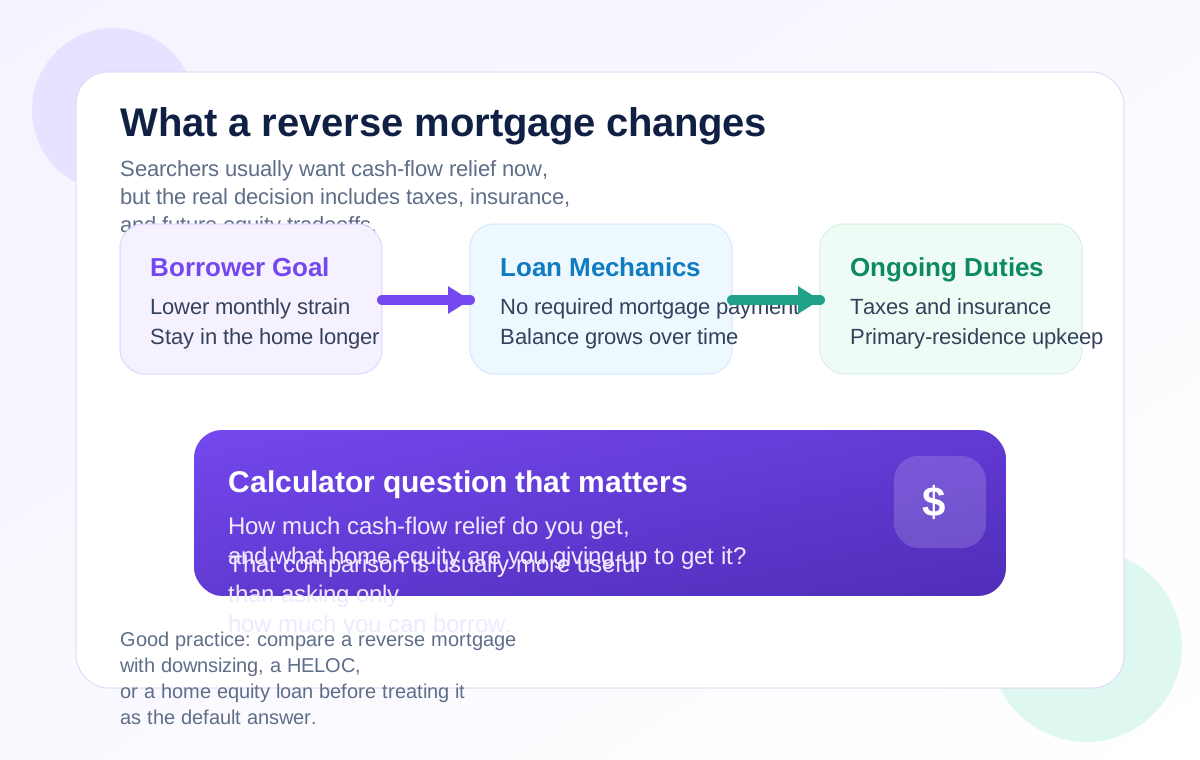
The CFPB also explains that reverse mortgage borrowers do not make monthly mortgage payments, but they still must pay property taxes, homeowners insurance, keep the property as a principal residence, and maintain the home. This is one of the biggest gaps between search intent and real decision quality.
The balance grows, and that is the core tradeoff
Official consumer guidance is direct: interest and fees are added to the loan balance each month, so the amount owed grows over time while home equity falls. That is why a calculator should frame the result as a tradeoff, not a windfall.
Why this topic has current search intent
Retirement cash-flow pressure drives the query
Current reverse mortgage searches usually come from homeowners who are house-rich and cash-flow-sensitive. The question is less about maximizing proceeds and more about whether removing a required mortgage payment creates enough room to stay put without creating a worse long-term constraint.
Searchers want a side-by-side choice, not a standalone product pitch
Recent consumer-facing coverage has focused on real comparisons between reverse mortgages and other home-equity products. That matches what calculators need to do: compare outcomes instead of treating the reverse mortgage as the default answer.
People are thinking about heirs and exit paths earlier
The strongest long-tail questions now tend to involve surviving spouses, heirs, move-out timing, and whether the house must be sold. Those are decision-intent queries, not top-of-funnel education queries.
How to use Calcsy before you even estimate reverse-mortgage proceeds
1. Measure the baseline payment problem first
If the homeowner still has a forward mortgage, use Calcsy's Mortgage Calculator to document the payment that is causing strain. That gives you the clean comparison point: what expense is the reverse mortgage actually removing?
2. Compare against other home-equity options
Use the HELOC Payment Calculator Guide and the Home Equity Loan Calculator Guide to test whether a payment-based option is still manageable. If a smaller equity loan solves the gap without a permanent no-payment structure, that matters.
3. Check age timing and home horizon honestly
A reverse mortgage is usually a stronger fit when staying in the home is a real long-term goal. If a move, downsizing, or family relocation is likely soon, the setup costs and complexity may be harder to justify.
The reverse mortgage calculation questions that matter most
How much cash-flow relief do I get?
That is usually the first and best question. If removing the required mortgage payment only solves a small share of the problem, the product may be carrying too much long-term cost for too little immediate benefit.
What keeps being added to the balance?
Because interest and fees are added over time, the balance grows in the background. A responsible calculator discussion has to acknowledge that rising balance instead of focusing only on upfront proceeds.
What obligations stay with me?
Taxes, insurance, maintenance, and principal-residence requirements remain part of the deal. A homeowner who cannot reliably cover those costs should not treat a no-payment structure as a complete fix.
When a reverse mortgage can make sense
Stay-put retirees with meaningful equity and limited cash flow
If the goal is to remain in the home, avoid required monthly mortgage payments, and preserve near-term cash flow, the search intent is aligned with what the product does best.
Households that have ruled out cleaner alternatives
The product becomes more rational when a HELOC, home equity loan, refinance, or downsizing path does not solve the problem as cleanly.
When another answer may be better
If a move is likely in the near future
Short holding periods can make the setup cost and complexity harder to justify.
If the homeowner can still handle a smaller payment-based product
A HELOC or home equity loan may preserve more long-term equity when the cash-flow gap is modest and predictable.
If taxes and insurance are already difficult to manage
A reverse mortgage does not remove those duties. If those costs are the real failure point, the product can still end badly.
Common mistakes to avoid
Treating it like free money
The CFPB is explicit that a reverse mortgage is a loan, not free money. The balance grows because interest and fees are added over time.
Ignoring spouse and heir questions until late
Many of the most important long-tail searches happen because families did not ask enough questions at the start.
Comparing only the upfront cash number
The better comparison is monthly relief versus future equity given up. That is the decision math that actually matters.
Forgetting the home still has to be maintained
A reverse mortgage can reduce one burden while leaving several others in place. Good calculator content needs to say that plainly.
Related calculators and guides
- Mortgage Calculator for baseline housing-payment math.
- Age Calculator for eligibility timing and age-based planning.
- HELOC Payment Calculator Guide for a payment-based alternative.
- Home Equity Loan Calculator Guide for fixed-payment equity borrowing.
- Cash-Out Refinance Calculator Guide for another home-equity comparison path.
FAQ
What should a reverse mortgage calculator show?
It should estimate available proceeds, expected cash-flow relief, and the effect of a growing loan balance over time.
Do reverse mortgage borrowers still pay taxes and insurance?
Yes. They still need to pay property taxes, homeowners insurance, maintain the property, and keep it as their principal residence.
Can someone get a reverse mortgage before age 62?
For the most common HECM program, no. Official CFPB guidance says it is for homeowners who are 62 and older.
Does a reverse mortgage need to be repaid later?
Yes. The loan is repaid when the borrower no longer lives in the home, and the balance usually gets resolved through sale, payoff, or estate handling.
Why do people compare reverse mortgages with HELOCs or home equity loans?
Because the best answer is not always the one with no required monthly mortgage payment. Sometimes a smaller, simpler equity product preserves more long-term flexibility.